Since my last article on second round prospects, we’ve seen the ping-pong ball gods reward the Wizards, and the draft combine gives us a better understanding of the physical tools of the players the Suns might select at 47.
In another case of “I hate being right”, most of the players I identified as possibilities back in April have seen their draft stock steadily rise. As a result, players that intrigued me the most (Jefferson, Okorie, Ejiofor, Veesaar, and Chinyelu in particular) now appear to be late first or early second round picks, and likely to go about 12-15 spots too high unless the Suns trade up. Another player (JT Toppin) has elected to go back to college after an injury shortened his senior year. Flory Bidunga seems likely to follow.
Advertisement
The draft combine measurements were kind to Baba Miller, Rueben Chinyelu, and Zuby Ejiofor. The latter may sneak into the late first round as a result. Josh Jefferson and Milan Momcilovic did not do themselves any favors, however. Momcilovic may well slip all the way back to 47 now. Bruce Thornton also fared poorly and may fall out of the draft altogether.
After all this movement, four players have been popping up in mock drafts for the Suns that look both interesting and potentially available at 47. While I loved Ejiofor, Veesaar, Okorie, and Chinyelu, they’re very unlikely to be available when the Suns pick. I think Ejiofor, in particular, could contribute right away. I’m much less excited about these next four: they mostly seem like two-way players who might develop into useful reserves.
So, in order of best first, here are four more players that would make sense for the Suns, and that I’ve seen go to them in one or more mock drafts. The analysis of draft positions is based on 16 recent mock drafts and big boards from various well-known sources.
Trevon Brazile is a highly athletic, 6’10”, 226-pound power forward with an elite 7’4” wingspan and notable bounce, profiling as a modern stretch-four and vertical spacer. He brings immense physical upside and defensive versatility but is often evaluated as a developmental project due to inconsistent offensive aggression and fluctuating half-court feel.
Advertisement
Key Statistics
31.5 MPG, 13.0 PPG, 7.3 RPG, 1.6 APG, 3.1 stocks, 52.5 FG%, 34.1 3FG%, 71.7 FT%
Strengths
-
Elite Physical Profile: Possesses NBA-level size and length, highlighted by a massive wingspan and a 41.5″ vertical, allowing him to play well above the rim.
-
Vertical Spacing: A dynamic lob threat and explosive rim runner who thrives in the dunker spot, on pick-and-rolls, and in transition.
-
Shooting Upside: Capable of stretching the floor as a stretch-big, showing the ability to knock down catch-and-shoot threes and project as a floor-spacer.
-
Defensive Versatility: Uses his length and impressive foot speed to switch onto smaller guards on the perimeter, while offering strong weakside shot-blocking and transition defense.
Weaknesses
-
Offensive Creation: Lacks a highly creative handle and struggles to generate his own offense in isolation, relying mostly on set plays or put-backs.
-
Inconsistent Motor & Feel: Can drift in games and sometimes lacks aggressiveness off the ball, leading to quiet stretches where he isn’t heavily involved in the offense.
-
Defensive Discipline: Has shown tendencies to be foul-prone, which has at times mitigated his overall impact as a rim protector, though this has improved over his college career
-
Injury History: Dealt with a significant ACL tear in his sophomore season, but recovered well enough to dominate the draft combine
-
Age: 23.45 years at the time of the draft; his remaining upside is an open question, given his lack of feel for the game.
Draft Range
Between 36 and 57 in the 13 mock drafts he appeared in.
Why the Suns Should Take a Look
Trevon Brazile absolutely annihilated the combine as perhaps the best athlete there, tying for the top overall score at Tawny Park Metrics. Standing reach equal to Rasheer Fleming, big wingspan, leaps out of the gym, agility and acceleration better than most point guards, 8 inches shorter and 30 pounds lighter than him. Oh, in addition to being a long, athletic, mobile big man who can switch on all five positions, he shoots threes at a respectable percentage, and his mechanics are smooth with high release, good arc, and good back spin. He shoots 43% from three when left unguarded. He doesn’t turn the ball over, has his foul rate under control, and posts a respectable Box Plus Minus.
Advertisement
The reason he’s not a lottery pick is that he’s more of an athlete than a basketball player. He lacks killer instinct, his attention waxes and wanes, and his fundamentals are “meh”. He has the physical tools to be a number one pick, but his issues are all between the ears. He’s a 5th-year senior, and it’s debatable if he will ever “get it”. However, of all the players in this article, he has by far the most upside. If it ever does “click” for him, he could be a surprise all-star or all-defensive team player.
NBA Comparison
Amir Johnson most likely, but Aaron Gordon if it all comes together for him.
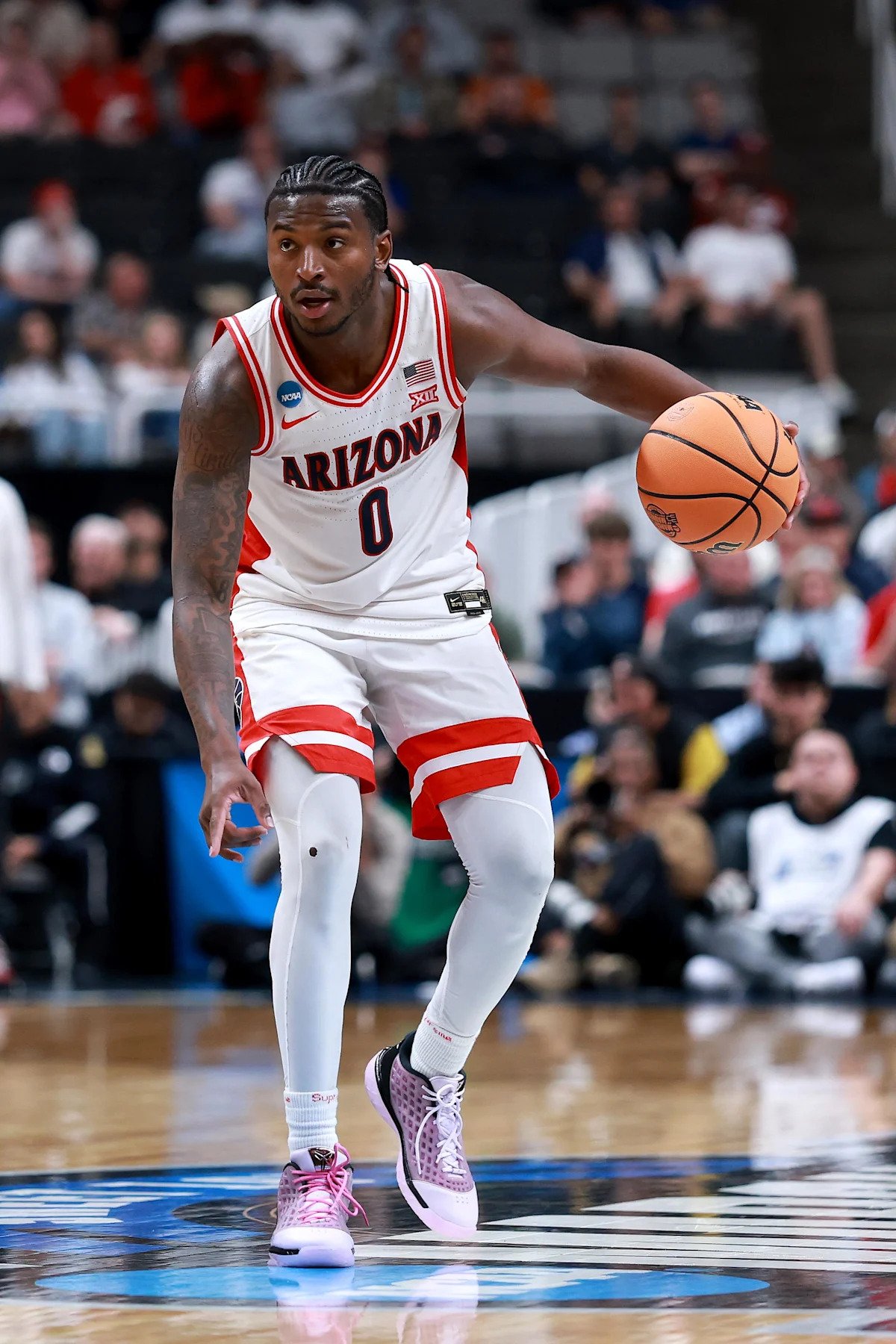
Jaden Bradley (Arizona, Senior, PG)
Jaden Bradley is a highly experienced, 6’3″ pass-first point guard who established himself as a premier floor general and the Big 12 Player of the Year at the University of Arizona. Known for his physical downhill play, elite free-throw rate, and on-ball defensive tenacity, he projects as a reliable, high-IQ backup guard in the NBA.
Key Statistics
30.6 MPG, 13.3 PPG, 3.4 RPG, 4.4 APG, 1.4 steals, 46.3 FG%, 39.4% 3FG%, 80.9 FT%
Advertisement
Strengths
-
Rim Pressure & Free Throw Drawing: At around 205 pounds, Bradley possesses excellent size and strength for his position. He uses a quick first step, body control, and clever footwork to get downhill and initiate contact. He is elite at drawing fouls and consistently gets to the charity stripe.
-
Playmaking & Pace: He operates as a traditional, pass-first floor general. He avoids over-dribbling, plays at a steady, controlled tempo, and excels at running the pick-and-roll.
-
Defensive Tenacity: Bradley plays with a high motor and gets after it on the defensive end. His strength and 6’6″ wingspan allow him to pressure the ball full-court and guard multiple positions.
-
Winner’s Mentality: He brings significant championship DNA, having played meaningful roles for title-winning and contending teams at Alabama, Arizona, and throughout his final season
Weaknesses
-
Perimeter Shooting Consistency: While he has shown flashes of improvement, outside shooting remains a primary concern. Teams may sag off him and dare him to shoot from beyond the arc.
-
Playstyle Limitations: He thrives with the ball in his hands and in college-style systems. It remains to be seen how smoothly he will transition to an off-ball, floor-spacing role in the NBA.
-
Half-Court Scoring Versatility: He prefers driving right and can be reliant on mid-range pull-ups when the lane is clogged, making him somewhat predictable against set NBA defenses.
Draft Range
The highest draft position in 13 mock drafts was 41. He went undrafted in three of the 16.
Why the Suns Should Take a Look
Jaden Bradley is one of those generally unexciting players who made it this far based on his discipline and basketball IQ more than raw physical talent or supernatural situational awareness. He graded out at the combine as slightly above average athletically as a point guard. Defensively, he’s aces with a great feel for the game at both ends. The most common criticism of him was his shooting, but in 2025-26 he raised his three-point percentage to more than respectable 39.4%.
Advertisement
The biggest problem with Bradley is that it is tough to look at him and find anything he’s elite at. His profile kind of screams perennial third-string point guard. That’s not the worst thing in the world, but his upside seems very limited, but with a solid floor. Given how well Booker did in the past next to a defensively solid, pick-and-roll point guard, Bradley might be a good fit culturally.
NBA Comparisons
Izaiyah Nelson is a 6’9”, 219-pound center/forward high-motor defensive specialist and rim-runner. After transferring from Arkansas State, Nelson dominated the American Athletic Conference during his senior year, taking home AAC Player of the Year, Defensive Player of the Year, and Newcomer of the Year honors. He recently reinforced his draft stock at the NBA Draft Combine, showcasing a rare mix of elite length and functional lateral quickness that projects well into a modern NBA energy-big role.
Advertisement
Key Statistics
27.3 MPG, 15.9 PPG, 9.6 RPG, 1.2 APG, 3.0 stocks, 56.1 FG%, 14.3 3FG%, 72.5 FT%
Strengths
-
Elite Physical Tools & Motor: Nelson optimizes every inch of his length, utilizing a 7’3″ wingspan and a massive standing reach to heavily impact the game on the borders. He plays with an incredibly high, relentless motor, making him a constant double-double threat.
-
Pick-and-Roll Defensive Versatility: Unlike many traditional low-major bigs, Nelson boasts exceptionally smooth footwork and excellent lateral speed. He tracks smaller guards tightly on switches, possesses the baseline recovery time to execute clean drop blocks, and can confidently defend out to the three-point line in five-out schemes.
-
Offensive Glass Mastery: Nelson is an absolute menace on the offensive boards, hunting out-of-area rebounds and easily converting physical putback dunks over heavy traffic.
-
Pro-Ready Screening: Out of handoffs and high pick-and-rolls, he acts as a hard “wall-setter”. He absorbs defensive contact rather than slipping early, creating direct separation advantages for his ball handlers before rolling aggressively to catch lobs.
Weaknesses
-
Lack of Perimeter Modernization: Nelson’s offensive utility is strictly confined to the paint. He shot an abysmal 14.3% from beyond the arc on low volume as a senior, signaling that he offers virtually zero floor-spacing threat out of the gate.
-
Self-Creation Limitations: He cannot reliably generate his own look off the bounce and relies almost entirely on drop-offs, cuts, lobs, and second-chance opportunities to score.
-
Lack of Ideal Center Bulk: Weighing 219 pounds, he can still give up deep post positioning against heavier, physical NBA interior bigs and occasionally struggles to finish inside if he cannot exploit his initial vertical pop. He projects as more of a 4 in the NBA.
Draft Range
His highest position was 44th in one of the 10 mocks he was picked in. Went undrafted in six out of 16 mocks.
Why the Suns Should Take a Look
The Suns desperately needed rebounding, length, and defense from a power forward this year. Nelson is extremely raw offensively, but he’s an exceptional offensive rebounder and great at generating steals.
Defensively, he fits the Suns’ switching defensive scheme, and his aggressive, high-energy style is seemingly “aligned” with Ott’s philosophy. The plus-minus statistics suggest he’s great at setting screens and slipping them for amazing dunks. Izaiyah Nelson also had a very good showing at the draft combine (though not as good as Trevon Brazile), both in terms of vertical leap and agility.
Advertisement
The downside is that he doesn’t space the floor at all, and it’s hard to see how he would mesh with Ighodaro or Williams. However, he might be an intriguing fit next to Maluach if Man-Man keeps developing his three-pointer. All in all, Nelson projects as a potential two-way player upgrade over Isaiah Livers.
NBA Comparisons
Jeremy Fears, Jr. (Michigan State, Sophomore, PG)
Jeremiah (Jeremy) Fears, Jr.is an undersized (6’0” barefoot, 196 pounds), gritty point guard with elite playmaking vision, a high motor, and advanced ball-handling skills. He excels at generating paint touches, slashing to the rim, and drawing fouls, but he struggles with outside shooting consistency and can be prone to turnovers with a high offensive usage rate. Note: it is widely expected that Fears will return to MSU.
Advertisement
Key Statistics
32.4 MPG, 15.2 PPG, 2.4 RPG, 9.4 APG, 1.3 steals, 43.1 FG%, 32.1 3FG%, 88.5 FT%
Strengths
-
Dynamic Slashing & P&R: Exceptional at navigating ball screens and using creative change-of-pace dribbles to get to the basket. He scores efficiently at the rim for his size.
-
Elite Free Throw Creation: He draws contact at a very high rate and converts efficiently at the free-throw line (historically shooting around 85%).
-
Playmaking Vision: Possesses great court vision, frequently executing drive-and-kick passes, wraparounds, and no-look feeds.
Weaknesses
-
Shooting Limitations: His three-point shooting remains a work in progress. Defenses are known to sag off him, which can clog the half-court spacing when he operates off the ball.
-
Physical Profile: Measured at around 6’2″ barefoot with average length, he is slightly undersized for a modern NBA lead guard. He isn’t the most explosive athlete, making it occasionally tough for him to finish over length in the paint without relying on floaters or drawing contact.
-
On-Court Discipline: His intense competitive nature has occasionally boiled over into visual frustration or controversial physical plays, including multiple highly scrutinized technical fouls during rivalry games.
Draft Range
His highest position was 47th in two of the three mocks he was picked in. Went undrafted in 13 out of 16 mocks, though he showed up in the low 60s in three other mock drafts.
Why the Suns Should Take a Look
Former GM James Jones and others have observed in the past that prospects need to have at least one elite skill to survive in the NBA, and Fears’ skill is playmaking. He might have been the best pure point guard in college basketball last year, leading the nation at 9.4 APG. However, assists and assist-to-turnover ratios historically have been mediocre predictors of success in the NBA. For every Ja Morant or Trae Young, there are two Yuri Collinses or Jalen Moore’s. Fears’ mediocre three-point shooting, below-average height, wingspan, and reach are all red flags in the modern NBA for a point guard.
Advertisement
However, I noticed something looking at historical data. Players who lead NCAA Division 1 schools in APG fall into one of two categories: guys who went to major schools and go on to really good NBA careers (Morant, Young, Ball), and guys who went to smaller schools and never panned out (Moore, Collins). While APG isn’t a great indicator of success by itself, APG and school size together are. Fears led the NCAA in APG, and he went to a big school and faced top-level competition, which bodes well for his future.
That said, I think there’s a significant chance the Suns take him at 47 if he doesn’t withdraw from the draft and return to MSU for several reasons.
First, there’s the Michigan State connection with Owner Matt Ishbia. He loves his Michigan State guys, and there’s a zero percent chance he hasn’t been watching Fears. If Fears unexpectedly decides to stay in the draft, I would take it as a huge sign that Ishbia has made Fears a promise of a guaranteed NBA contract, especially given his feisty, tough, intense play style is aligned with the Phoenix team concept.
Fears’ weaknesses also aren’t as they appear at first glance. His super-high free throw percentage and relatively young age strongly suggest that his three-point percentage will improve over time. He’s still 6’1 or 6’2 in shoes, and the advanced metrics say he isn’t a liability on defense due to his excellent agility, strength, and vertical leap, which all graded well at the combine. His defensive box plus minus was a stronger positive than his (slightly) negative defensive rating, per Tankathon.
NBA Comparisons
Jaden Ivey, Markelle Fultz, Tyus Jones
Most of the players I was really stoked about when I started looking at the draft have either returned to college or risen out of range of the Suns’ pick. All of the players here project as two-way players, except perhaps Fears, if Ishbia has decided that he’s willing to make promises of guaranteed, multi-year money for an MSU alumnus. (Seriously, I wouldn’t put it past him: if Fears doesn’t drop out of the draft, I’d drop a wad of money on the Suns picking him, it’s the only reason he wouldn’t).
Advertisement
Multiple mocks have shown the Suns picking each of these new players, and which one the Suns select says a lot about what the Suns are looking for. Brazile is a swing for the fences, take a flyer on a guy kind of move, and he’s the only one I could see developing into a high-quality starter. Izaiyah Nelson is a safe pick if you’re looking for the next Lou Amundson, high-energy, low-skill power forward to provide a spark from the deep bench and keep practice competitive. Jaden Bradley is a low-risk, low-reward sort of deep bench, third-string point guard who you can trust to not do anything incredibly dumb in limited minutes. Jeremy Fears has a higher ceiling than Nelson or Bradley if he figures out his three-point mechanics. Given his free-throw percentage, I believe he will.
If you made me rank these four players in terms of my own personal preference, I’d say Brazile, Fears, Nelson, and Bradley from most to least.

