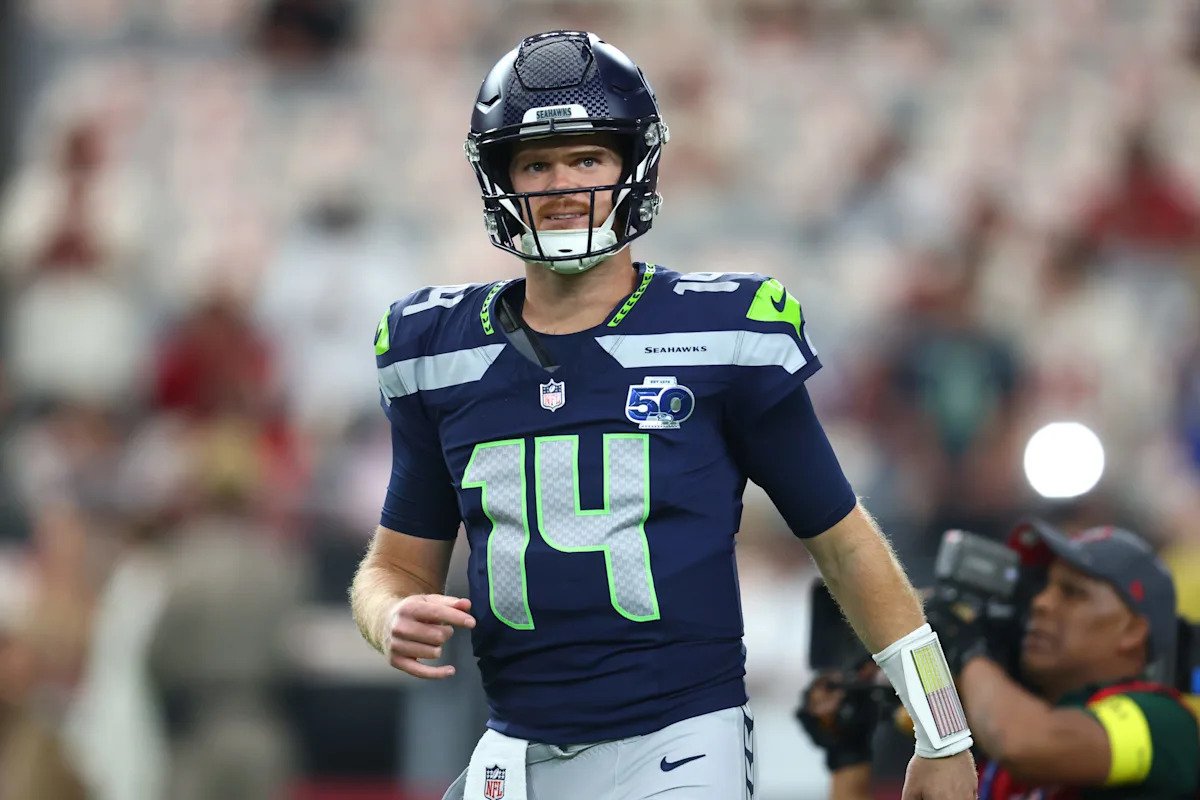
The Seattle Seahawks are experiencing a different kind of Hail Mary this season.
Team of destiny? Perhaps. Higher power? Definitely. At least on paper, it’s commonly accepted that there needs to be a separation between church and state. However, there’s nothing in the rulebook that requires a separation between church and football team.
Advertisement
It’s probably safe to say that wasn’t a thought back then.
Sam Darnold and the Seahawks don’t need the extra help, but they certainly won’t turn it down either. One of the bigger longshots heading into the 2025 season, Seattle has done nothing but exceed expectations all year long.
Now they are one win from being crowned champions for the second time in franchise history, when nobody believed in them.
Well, maybe except for one person with friends in high places who might’ve had the script back in May.
Here’s what to know about the Pope’s unlikely impact on the Seahawks.


What is the Seahawks Pope Theory?
Every time a new pope has been elected since 2000, the Seahawks have won at least 13 regular-season games, been the No. 1 seed in the NFC playoffs and reached the Super Bowl.
Advertisement
Don’t believe us?
There have three new popes elected since the turn of the century – Pope Benedict XVI in 2005, Pope Francis in 2013 and Pope Leo XIV in 2025.
In 2005, Seattle went 13-3 in the regular season to capture the No. 1 seed in the NFC over the Chicago Bears – the team that conveniently finished with the No. 2 seed this season as well. Led by MVP running back Shaun Alexander, Seattle faced little resistance on the road to Super Bowl 40, defeating Washington and Carolina by at least two scores before falling short against the Pittsburgh Steelers in the big game.
Fast forward to 2013 and we’ll see a similar story, but with a different ending.
Advertisement
It was another 13-win season for the Seahawks and they claimed the No. 1 seed after staving off the San Francisco 49ers for the NFC West crown, just like they did this season.
The 2013 Seahawks capped off the season with a 43-8 blowout win over the Denver Broncos in Super Bowl 48 – the first in franchise history.
That brings us to the present day, where this version of the Seahawks blended the previous two Pope-inspired runs.
With one extra game on the table, Seattle decided to win that as well to finish the regular season with 14 wins. They staved off the 49ers in the division and the Bears in the conference en route to the No. 1 seed. They faced, for the most part, little resistance on their way to Super Bowl 60.
Advertisement
Now it’s all about the finish.
The Seahawks are only batting .500 in the big game after a new pope is elected. That batting average would be enough to get into the Baseball Hall of Fame, but that doesn’t matter for a football team.
If anything, the theory has shown to have its limits. The age-old saying, “you can lead a horse to water but you can’t make it drink it,” appears to apply here.
The Pope and his friends have guided Seattle to the big game, but it’s up to the players to win the Super Bowl.
This article originally appeared on USA TODAY: Seahawks ‘Pope Theory’ explained: How conclave powered Super Bowl run

