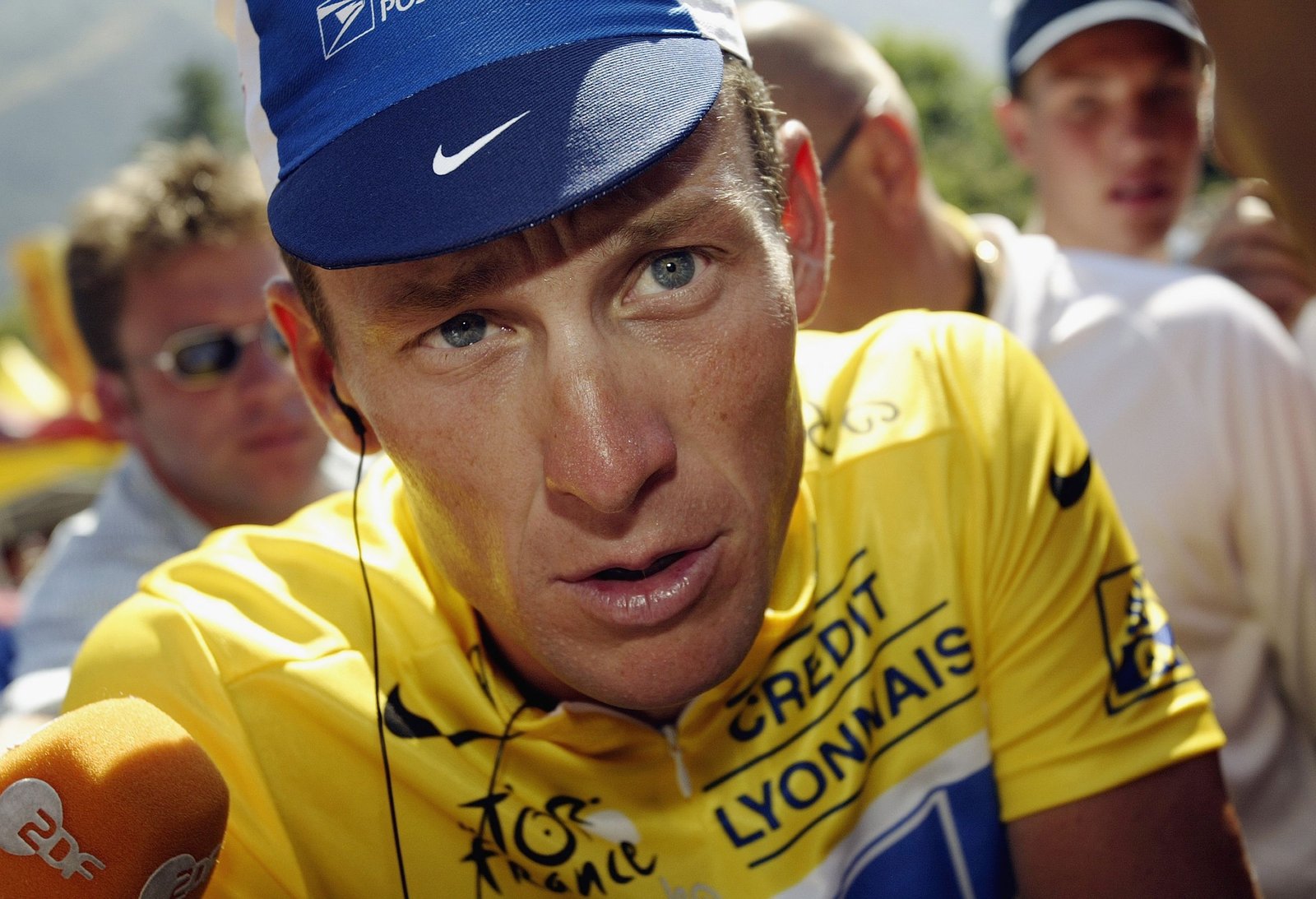
Here’s a game. Turn to the person nearest to you and ask them to name a pro cyclist, past or present. If they’re British, I predict that they’ll be able to stumble towards Bradley Wiggins and Chris Hoy, although if they’re Welsh they’ve probably got Geraint Thomas somewhere in their locker. Victoria Pendleton is a possibility, if they were really into London 2012.
If they’re Australian, Cadel Evans will be up there. If they’re American, perhaps Greg LeMond has made an impact on their consciousness, especially if they’re over 40. This game becomes a bit less predictable if the person is from mainland Europe, because the sport has made a bit more of an impression on the continent, but let’s assume that they’re not, for the game.
News editor at Cycling Weekly, Adam brings his weekly opinion on the goings on at the upper echelons of our sport. This piece is part of The Leadout, a newsletter series from Cycling Weekly and Cyclingnews. To get this in your inbox, subscribe here. As ever, email adam.becket@futurenet.com – should you wish to add anything, or suggest a topic.
Over 15 years on from his retirement, over two decades since his last Tour de France ‘win’, Armstrong still dominates the popular consciousness of cycling. That’s partly because he was an American success story, bigger than the sport, a rider who could appear on US network talk shows, dominate the front and back pages, hang out with presidents, date a celebrity.
It’s also because of his fall, the frontman of the most-tainted era of cycling, the rider who doped his way to a record number of Tours de France, whose comeback from cancer paved the way for a career built on cheating. It would not be too strong to suggest that road racing suffered a terminal setback in the USA, potentially across the world, because of Armstrong’s rise and fall.
Lance is still a big deal. In the past days, news of a biopic about the Texan has emerged, suggesting that Austin Butler – nominated for a best actor Oscar for Elvis – will play the American, and it will be directed by Edward Berger, known for All Quiet on the Western Front and Conclave. Apparently, it caused a bidding war across Hollywood, and the film has the rights to Armstrong’s story, and that he will be involved too.
This is not the first film about Armstrong. There was 2013’s The Armstrong Lie, 2014’s Stop at Nothing, 2015’s The Program, and 2020’s Lance. Three of these might have been documentaries, while the new project is a drama, but his story is pretty well told. Do we need another? The news will certainly have created groans from all those cycling fans who lived through the dark times and the aftermath, who know the story inside and out.
This is naive, of course, it almost doesn’t matter if the story has been told before; it is a good tale, the Icarus-like saga of Armstrong’s near-death, recovery, inexorable rise, the doping, the apology, the crying on Oprah, and much more. Hollywood doesn’t need a good reason to plough the same furrow, see the endless rehashing of the same superhero films, or the upcoming four-part series about The Beatles.
Perhaps the right question, then, is will this be good for cycling? The sport that has struggled to escape the long shadow that Armstrong cast over it, has struggled to move on from the suspicion that everyone might be doping. A new film about the controversial rider does little to alleviate that.
However, all publicity is good publicity. There is a chance that, should this film be good and successful, people might wish to watch the Tour de France to discover the real thing. Our sport remains inaccessible to many, a confusing myriad, so if they get the portrayal of it right, if the film is a hit, then it’s not implausible that it could bring new people in. I hoped Tour de France: Unchained would do something similar, but that was culled before its time.
That’s if they get it right, of course; I’m half expecting cobbles at Liège-Bastogne-Liège, an odd portrayal of what the Tour actually is, possibly even not much cycling at all, just an engrossing portrayal of the enigmatic Lance. A film could capture the beauty of the sport, though, and show it to a whole new audience. This would be positive.
I’ll probably watch the film, and with the names attached to the project so far, it might even be pretty good. However, what I really want is a world where people know who Tadej Pogačar and Pauline Ferrand-Prévot are, and cycling could truly move on from Lance Armstrong. I’m not sure I have the answers to that, though.
This piece is part of The Leadout, the offering of newsletters from Cycling Weekly and Cyclingnews. To get this in your inbox, subscribe here.
If you want to get in touch with Adam, email adam.becket@futurenet.com.
Explore More

