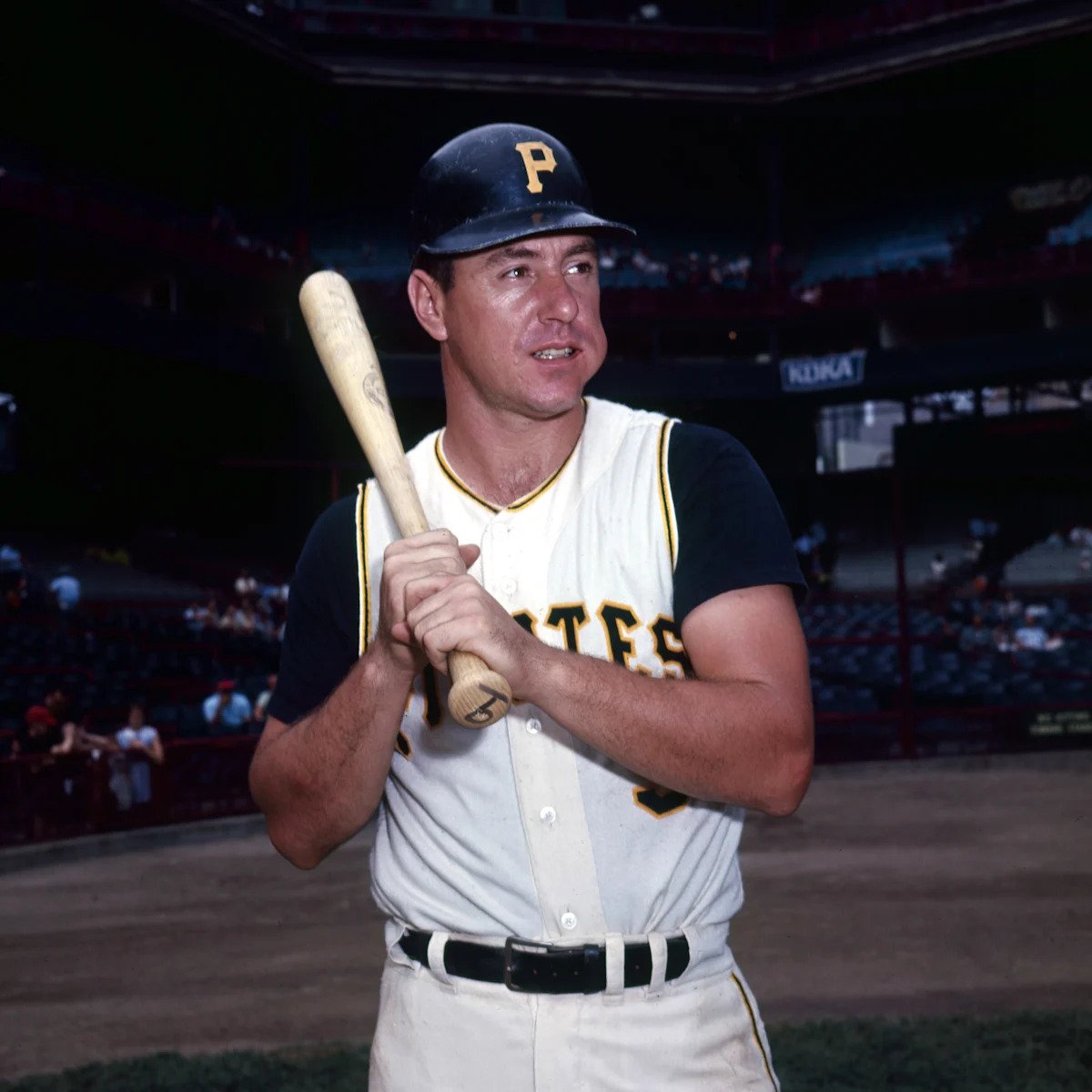
The Pittsburgh Pirates and Major League Baseball community learned of the passing of second baseman, Bill Mazeroski, on Saturday morning after he passed away on Friday evening. Mazeroski was 89.
Mazeroski leaves behind a legacy as one of the most accomplished defensive second baseman in baseball history, and of course lives on in the minds of fans for having one of the greatest hits of all time. Make no mistake, “Maz” was not known for being a world renowned slugger, but in the biggest moments of the postseason, he always seemed to show up for his Pirates over his 17-year career.
Advertisement
The Wheeling, West Virginia native was the model of consistency at second base for the Pirates where he would play out his entire Hall of Fame Career. As a youth he was a three-sport star, excelling in baseball, football and basketball. Maz showed enough promise in baseball to be drafted by Pittsburgh at age 17 in 1954, originally as a shortstop. He would make the switch to second base after his rookie season, and was then a primary fixture in the Pirates’ lineup from 1956-1972.
Mazeroski was voted into Cooperstown in 2001 as a member of the Veterans Committee. His lack of offensive accolades kept him out of the Hall of Fame for years, as he never quite had the numbers that most others at his position had to be considered worthy of induction. Mazeroski had the lowest on-base percentage and batting average of any second baseman inducted into Cooperstown while also having the lowest amount of stolen bases. Maz finished his playing career with a slash line of .260/.299/.367 along with 2016 hits and 138 home runs.
“Defensive wizard” and “hard nosed hustle” is instead was Maz was known for, and made it a point to show that those qualities proved he belonged in the Hall of Fame during his induction speech.
“I think defense belongs in the Hall of Fame,” Mazeroski said. “Defense deserves as much credit as pitching, and I’m proud to be going in as a defensive player.”
Despite the knocks against his offense, Mazeroski is widely considered one of the greatest defenders in the history of the game. He holds the major league record for most double plays turned as a position player, led the National League nine times in assists as a second baseman and was an eight-time Gold Glove defender. When he retired in 1972 he had an all time fielding percentage of .983, was a ten time All-Star and two time World Series champion.
Advertisement
Mazeroski’s career for most is highlighted by one play that made him a baseball legend. The 1960 World-Series between the Pirates and New York Yankees went all the way to a Game Seven, hosted at Forbes Field in Pittsburgh. The Pirates had their share of high caliber players, but this truly was a lopsided matchup on paper. Roberto Clemente was just beginning to come into his prime and Dick Groat was the NL MVP that season. However, the Yankees had an all-time great roster that included the likes of Yogi Berra, Mickey Mantle, Roger Maris, Bobby Shantz and Elston Howard; all of these players were former or future MVPs with Maris being the MVP of the American League in 1960.
The Yankees would go on to score 55 runs in the series, the most by any one team in World Series history. Meanwhile Pittsburgh scored a lowly 27 runs and were on the losing end of three blowouts in the series, but would come out victorious in the close games and of course in game seven.
The Pirates don’t go on to win the World Series without their defensive leader, Mazeroski. In the bottom of the ninth inning, pitcher Ralph Terry took the mound and up came Maz, the score was 9-9. With a 1-0 count, Mazeroski turned on a pitch and smashed the historic long drive over the left field wall of Forbes Field and raced around the bases as the Pittsburgh Pirates were World Series Champions. The historic home run is still the only walk off home run to decide a Game Seven in World Series history. It is widely considered one of the greatest hits of all time and turned in to the perfect dinner party story for Mazeroski, one that he said he never got tired of telling.
“I don’t know it’s out. I don’t know it’s a home run. But I know I’m going to end up on third if he misplays that ball off the wall,” Mazeroski recalled in 2015. “So I’m busting my tail getting around there, and by the time I hit second base, I looked down the line and the fans went crazy. From second base, I didn’t touch the ground all the way in.”
“Because it’s a fun thing. I could’ve been on the other end of it and struck out or something, Mazeroski said in 2015. “I’m glad I wasn’t on that end of it. I was on the good end of it.”
Following Mazeroski’s retirement in 1972, he spent a brief time coaching the Seattle Mariners and as an infield instructor at Pirates’ Spring Training in Bradenton, somewhere that he would make annual visits to following his playing career. In 1987 the Pirates retired Mazeroski’s number nine and in 2010 on the 50th anniversary of his historic home run, Maz was immortalized in bronze as Pittsburgh unveiled a statue in his honor depicting his race around the bases following his iconic walk off.
Advertisement
MLB Commissioner Rob Manfred released a statement upon learning of the news that Maz had passed.
“Bill Mazeroski was synonymous with one of the greatest home runs in baseball history for more than 65 years,” Manfred said. “While his bat delivered the first walk-off, series-ending home run in the history of our Fall Classic in 1960, it was Bill’s glove that earned him recognition from the Baseball Hall of Fame in 2001. The career Pirate was an eight-time Gold Glove second baseman, a position he played upon the guidance of Hall of Fame executive Branch Rickey. Bill understood that a run saved in the field was as important as a run driven in. Bill’s lifetime of hard work and humility was a perfect illustration of the city he represented on the diamond. On behalf of Major League Baseball, I extend my deepest condolences to Bill’s family, his friends across our game, and all the loyal fans of Pittsburgh.”
Mazeroski will forever be a prominent figure on the game of baseball and certainly in the city of Pittsburgh as one of the greatest Pirates of all time. His career accolades speak for themselves, and the heroics of the World Series are forever sealed in the memories of those who were there and the stories they tell their descendants about the day they saw or listened to Mazeroski go deep in Forbes Field to win the World Series.

