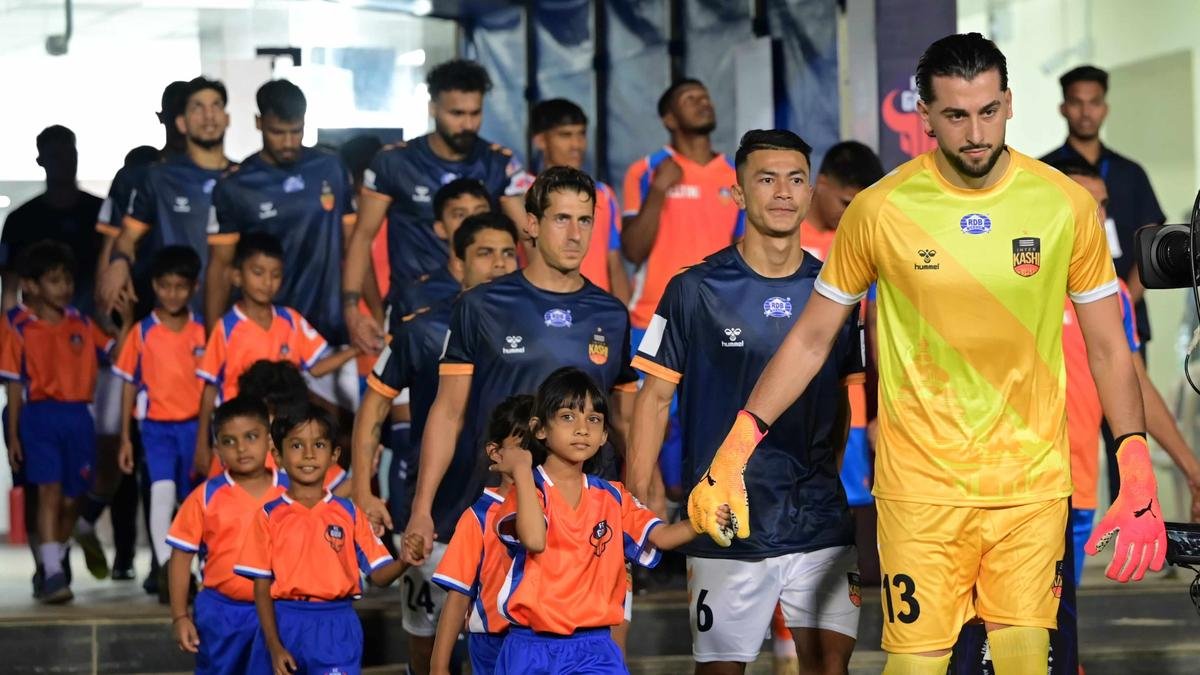
On a pleasant February morning, away from the urban cacophony and dust, silence fractured gently — first with bursts of laughter and then the rhythmic thud of leather on natural grass.
The I-League champion Inter Kashi was training at FC Madras in Mahabalipuram, Chennai. The team had won a pre-season friendly against Chennaiyin FC the previous day, but there was no room for complacency.
Coach Antonio Lopez Habas, a hard taskmaster, stood watching. At times, the 68-year-old discussed player movements with assistant Carlos Fonseca and shook his head at every miss.
““We’re not setting long-term targets. We’re taking it one game at a time . . . Above all, we must keep competing and build a solid team for the future.””Antonio Lopez Habas, Inter Kashi head coach
In a country where the men’s football pyramid had stood frozen for seven months, Habas knew time was invaluable and preparation the ultimate currency.
Kashi joined the I-League — the second division of men’s football in India — through corporate entry in 2023 and secured promotion to the Indian Super League (ISL) within two seasons.
“When I joined the club around November 2023, it was just a few months old, and we were trying to make a mark. I clearly felt that the only thing that gives you visibility is the trophy,” Prithijit Das, president and CEO of Inter Kashi, told Sportstar.
Prithijit was one of the architects of Atletico de Kolkata, the inaugural ISL champion in 2014, and he roped in ISL veterans Arindam Bhattacharya (champion with ATK) and Peter Hartley (Shield winner with Jamshedpur FC) at Kashi.
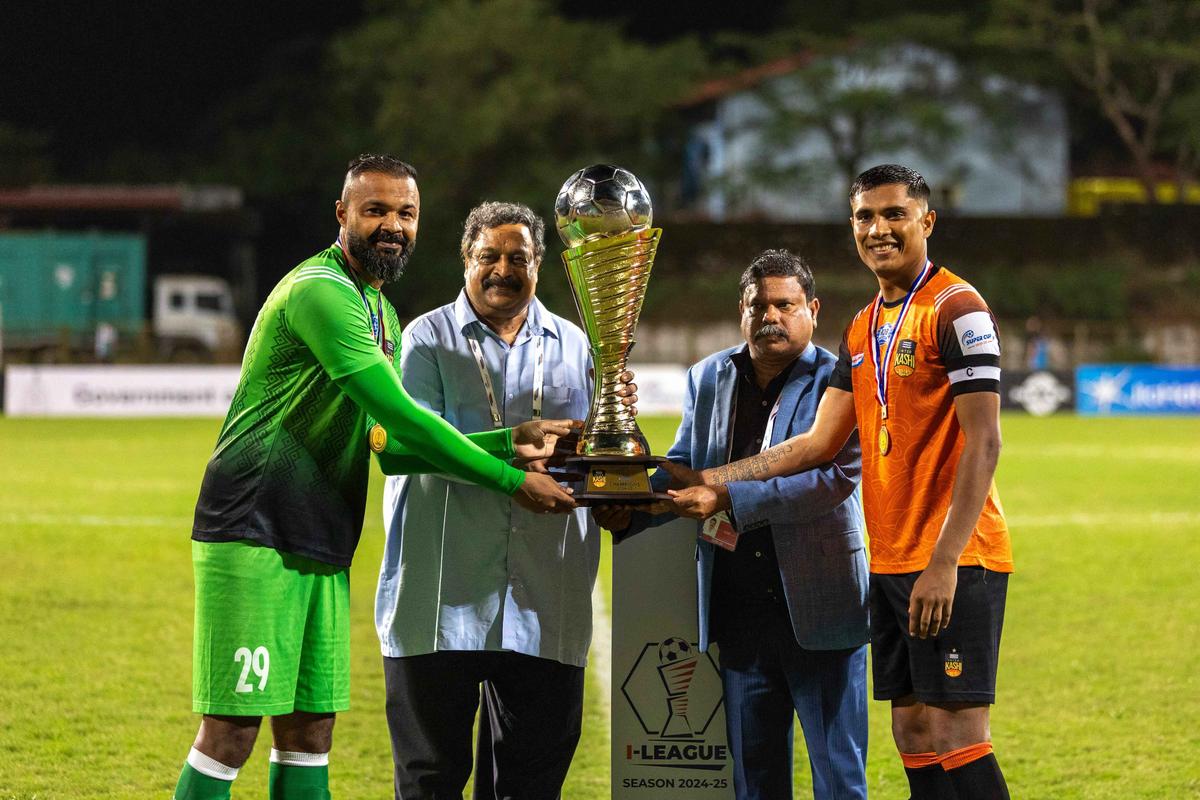
A fitting farewell: Arindam Bhattacharya (extreme left), one of the earliest signings of the club, played his last match for the club the day it officially lifted the I-League title.
A fitting farewell: Arindam Bhattacharya (extreme left), one of the earliest signings of the club, played his last match for the club the day it officially lifted the I-League title.
Inter Kashi finished an impressive fourth in its maiden season, three spots shy of promotion. Work remained to realise the ISL dream.
“In our head, we were very clear: we will do what it takes to be champions on and off the pitch next season,” Prithijit says.
The club signed players with recent European and ISL experience. In came Domi Berlanga, who had featured in the UEFA Europa Conference League qualifiers, and Iceland international Joni Kauko, who moved from ISL Shield winner Mohun Bagan.
To top it all, Habas, the ISL’s most successful manager, came on board. Ten months later, Kashi was champion.
“We’ve managed to get promoted, which is very difficult because the I-League is a very tough competition due to its infrastructure, schedules and travel. We’ve achieved it, and now we have to maintain our identity and stay in the ISL,” Habas said, in a conversation with Sportstar.
“I’m very grateful to him for taking up this challenge. When you have the recipe and you get the best chef, you get the best biryani,” Prithijit adds.
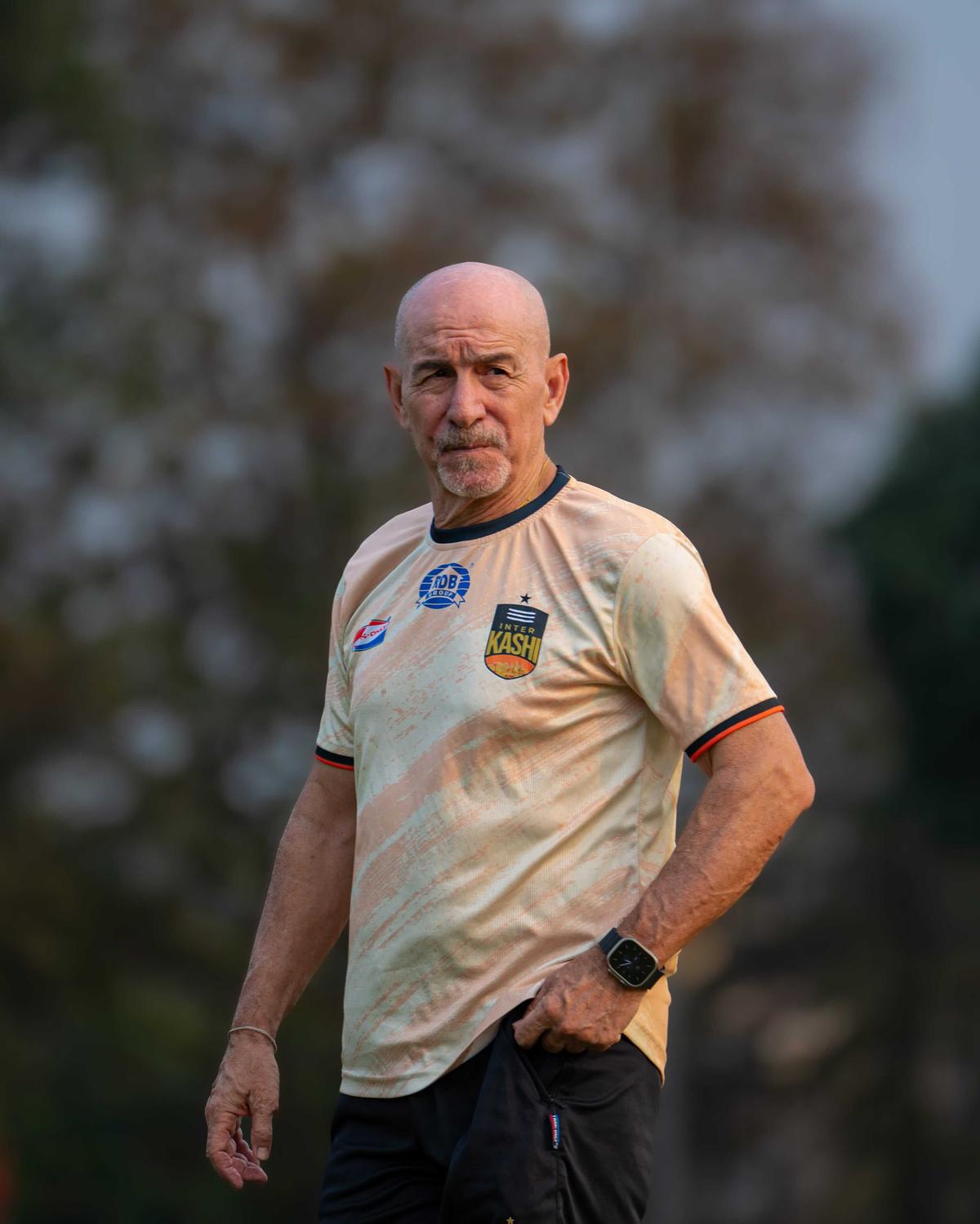
Gaffer at work: In a country where the men’s football pyramid had stood frozen for seven months, Habas knows time is invaluable and preparation the ultimate currency.
| Photo Credit:
Inter Kashi Media/MD Firdoush Mallick

Gaffer at work: In a country where the men’s football pyramid had stood frozen for seven months, Habas knows time is invaluable and preparation the ultimate currency.
| Photo Credit:
Inter Kashi Media/MD Firdoush Mallick
But Kashi would soon discover that the recipe for success required a tedious 315-day wait before they could savour its reward.
From rightfully winning the title and physically lifting the trophy to finally playing in the ISL, more than twice the duration of an entire I-League season had passed.
A four-point deduction by the All India Football Federation’s (AIFF) Appeal Committee briefly made Churchill Brothers the provisional leader at the end of the final matchday. The decision was later revoked by the Court of Arbitration for Sport, restoring Inter Kashi as champion.
“We played our last I-League match on April 6 (3-1 against Rajasthan United), and our instinct was clear that we had won the title. Our management assured us that we were right, both on and off the pitch,” said captain Sumeet Passi.
But the deadlock between the AIFF and Football Sports Development Limited (FSDL) — the body that owns the league — kept pushing the competition further back.
“Indian football needs stability and good organisation because pyramids aren’t built from the top down. You build from the bottom up.”Antonio Lopez Habas, Inter Kashi coach
“The long break, staying at home — if the future is uncertain, how long can a player train?” Passi said. “It’s not easy when you don’t have a deadline,” new signing Alfred Planas Moya said.
“For some months, we actually felt that maybe even after winning the I-League, we might not be able to play in the ISL. Those were very stressful times,” Prithijit added.
The ISL typically starts in September. But the impasse pushed the league well beyond its usual calendar slot.
Several clubs — including Mohun Bagan Super Giant, Kerala Blasters and Odisha FC — suspended first-team operations. Foreign players such as Adrian Luna (loan), Alaaeddine Ajaraie (loan) and Tiri (free transfer), left on loan or permanent transfers.
“It should never happen again. It reflects a lack of professionalism. The players, referees and even coaches have families (to feed). And the public has no football to watch,” Habas says.
“There is such a large population here that there can be three major sports, not just one. I absolutely respect cricket — people in India can love whatever sport they want. But imagine if there had been seven months with no cricket instead of football. It would have been chaos.
“Indian football needs stability and good organisation because pyramids aren’t built from the top down. You build from the bottom up.”
A ray of hope finally appeared when Sports Minister Mansukh Mandaviya announced that the league would go ahead.
“In December-January, the Federation worked overnight. The ISL interim committee worked through Christmas and found a solution. On February 14 — Valentine’s Day — for the love of football, it started again,” Prithijit says.
Habas’s step down to the I-League had allowed him to test the waters across both tiers. So did his players. In its ISL opener, the team nearly defeated Super Cup champion FC Goa, eventually drawing 1-1 — the first time a newly promoted side earned a point in its league debut. “We have mutual respect for all teams, but we will not be scared of any team,” said Planas.
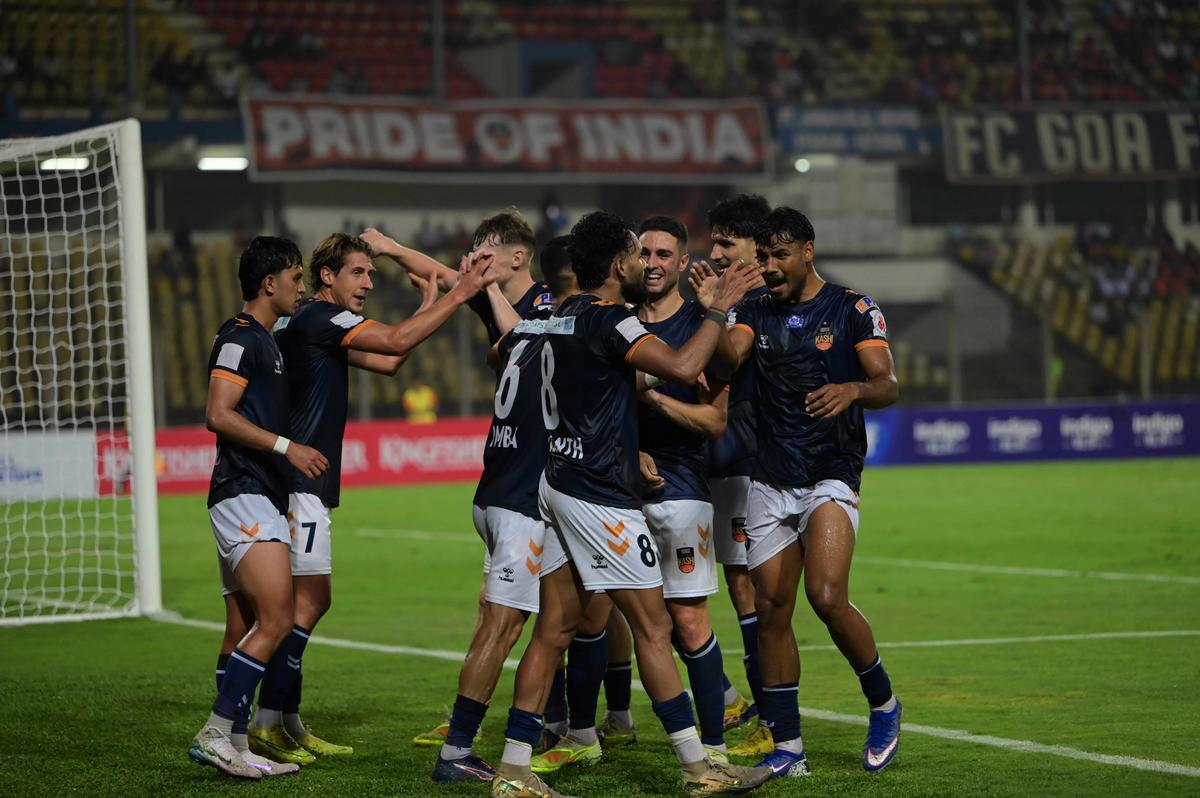
The glass ceiling stands broken: Prasanth K (No. 8) scored Inter Kashi’s first-ever goal in the ISL as his team drew 1-1 with FC Goa in their ISL opener.
| Photo Credit:
Inter Kashi Media/MD Firdoush Mallick
The glass ceiling stands broken: Prasanth K (No. 8) scored Inter Kashi’s first-ever goal in the ISL as his team drew 1-1 with FC Goa in their ISL opener.
| Photo Credit:
Inter Kashi Media/MD Firdoush Mallick
“We’re not setting long-term targets. We’re taking it one game at a time,” Habas adds. “That has to be our reality. Above all, we must keep competing and build a solid team for the future.”
Title validates ambition; home validates identity. Ironically, Kashi has never played a senior official game in its home city of Varanasi.
“When we started, the infrastructure needed to run an elite club was not available in Uttar Pradesh. We played one game in Lucknow at the Ekana Stadium, but the federation said the ground was not at the (required) level, which is why we had to go and play in Kalyani (West Bengal),” Prithijit said.
The club is building a football-specific stadium in the Bhelupur locality of Varanasi, which will serve as its home venue.
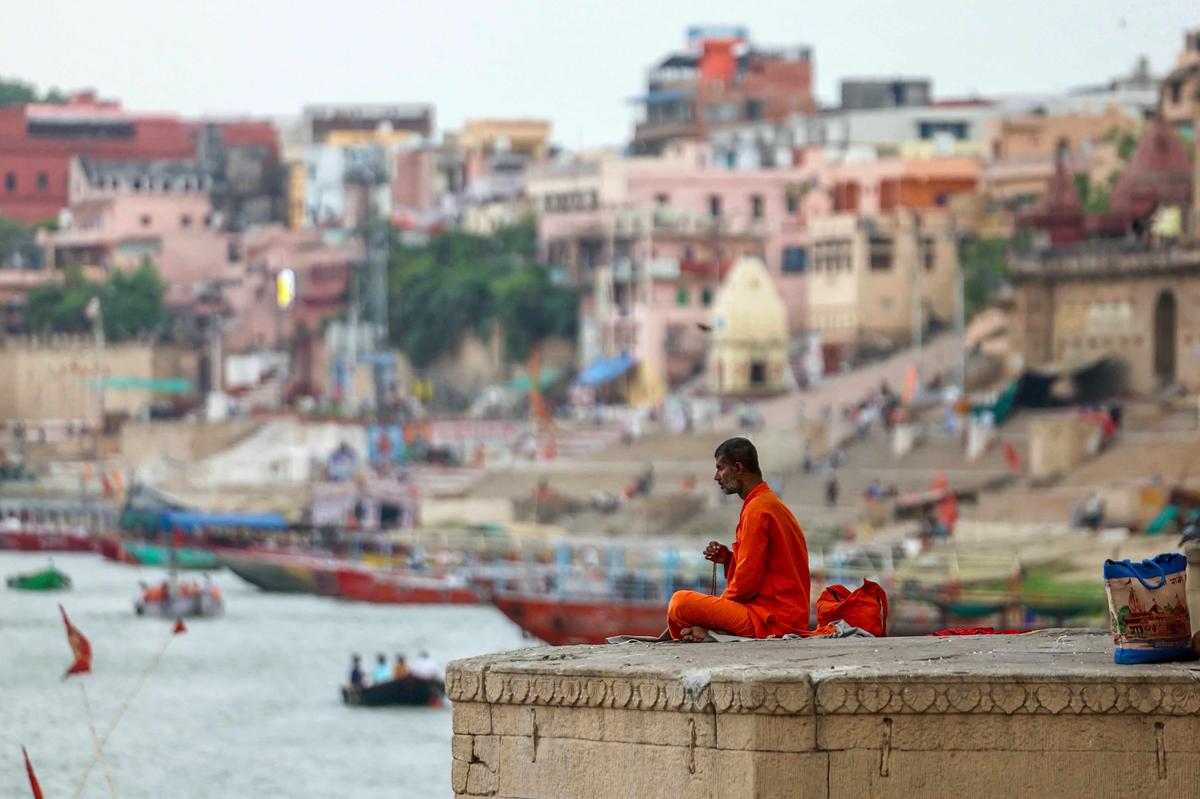
Way back home: Inter Kashi, which started with Kalyani as its first base, hopes to settle in the city it originated from, and is making arrangements to return to Varanasi at the earliest.
| Photo Credit:
AFP
Way back home: Inter Kashi, which started with Kalyani as its first base, hopes to settle in the city it originated from, and is making arrangements to return to Varanasi at the earliest.
| Photo Credit:
AFP
“We have a full academy set-up in Kashi and our own ground for youth matches. We hope that soon we will be able to play our first-team matches at home as well.”
Inter Kashi, much like Varanasi, has learned to be steady like the Ganges and patient like the ghats.
But only time will tell whether the cheers that echoed through Mahabalipuram on that February morning will one day be heard back home — helping the beautiful game blossom in a non-footballing state.
Published on Feb 28, 2026

