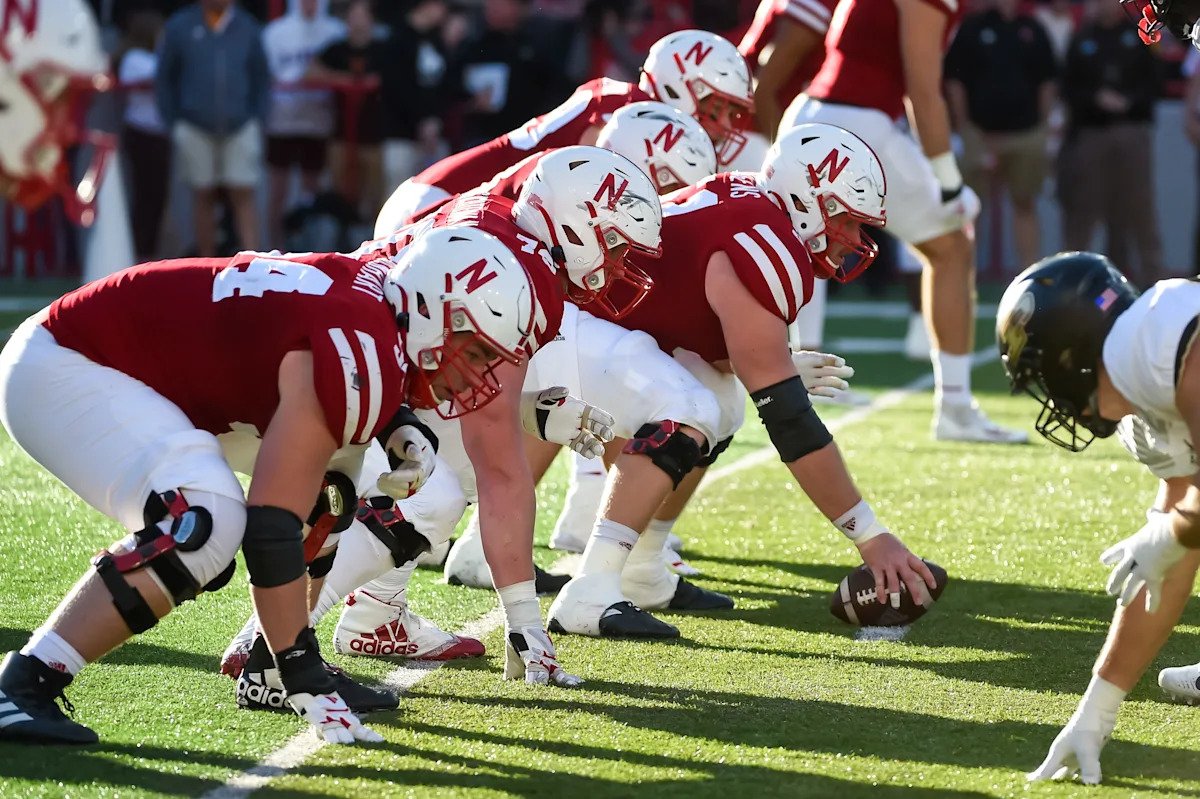
Looking back at the 2025 season, Nebraska’s year took a sharp turn for the worse against Minnesota. The Huskers were sacked nine times in that game — a staggering number even for a program that has endured inconsistent offensive line play through much of the 2000s.
For Matt Rhule and offensive coordinator Dana Holgorsen, that game crystallized a problem that had been brewing all season. With a porous line struggling to protect the quarterback, the playbook effectively shrank overnight. Add in a pocket passer with limited mobility in Dylan Raiola, and it spelled trouble for Nebraska’s offense.
Advertisement
This offseason, the mission has been clear: rebuild the offensive line with experienced bodies and new coaching voices capable of changing the trajectory of the unit.
New Year, New Blood
It’s hard to argue that Nebraska didn’t upgrade its talent through the transfer portal.
The Huskers added Brendan Black from Iowa State Cyclones football, Tree Babalade from South Carolina Gamecocks football, and Paul Mubenga from LSU Tigers football.
Pair those additions with returning starters Elijah Pritchett and Justin Evans, and — at least on paper — Nebraska suddenly has the experienced, physical front it needs to compete in the Big Ten Conference trenches.
Advertisement
Black in particular looks like a cornerstone piece. At 6-4 and 320 pounds, he arrives in Lincoln with 30 career starts for the Cyclones at guard. Combine that interior size and experience with the athleticism of Evans and the Huskers could finally have the ingredients needed to revive the run game between the tackles — something Nebraska has struggled to establish consistently.
Clean Sweep With the Coaches
The roster isn’t the only area that received a facelift.
Geep Wade is now tasked with turning around Nebraska’s offensive line. Wade built a strong reputation as a recruiter in the South, and his offensive lines at Georgia Tech Yellow Jackets football were known for their run-heavy approach and comfort operating in space.
Advertisement
If Nebraska can get its massive guards and tackles pulling and moving downhill, that could open opportunities for quarterback Anthony Colandrea and the stable of running backs to create explosive plays.
Wade will be assisted by Lonnie Teasley, who arrives as the run game coordinator after serving as offensive line coach at South Carolina Gamecocks football. Like Wade, Teasley is known as a strong recruiter, and the pairing gives Nebraska a coaching duo with deep ties in the South and a track record of developing linemen.
Of course, reputations only go so far. The real test will come when the season begins. But on paper, Nebraska now has two coaches with the experience and résumé to reshape the unit.
Words Are Nice — Results Matter
One interesting development this spring is just how much praise the offensive line has received from inside the program.
Advertisement
That’s notable because Matt Rhule has largely avoided offseason hype since the disappointing finish to last year. The messaging around spring practice has been relatively subdued — focusing on work and development rather than bold predictions.
That makes the glowing feedback surrounding the offensive line stand out even more.
For a position group that has often been the anchor dragging down the offense in recent years, optimism is welcome. Still, offensive line play is the ultimate prove-it position. Spring praise and offseason optimism mean very little if they don’t translate into protection, push, and production on Saturdays.
Nebraska doesn’t need this group to be perfect.
Advertisement
But if the new-look line can simply be solid, physical, and dependable, it might be the difference between another frustrating season and an offense that finally finds its footing.
For the Huskers, the hype up front isn’t just talk.
It’s a necessity.

