Hope springs eternal when it comes to baseball teams, both in the major leagues as well as with fantasy baseball squads. Some of the biggest importers of hope each season are those “shiny new toys” — highly touted rookies who have yet to disappoint, bringing tons of promise and optimism to the table.
The list you’re about to read is strictly for fantasy purposes and is a spin on my real-world value top 100 list, which is heavily influenced by scouts, executives and my own scouting looks. I don’t play fantasy anymore, but I do help some friends with their teams, and I get the big-picture adjustments from the baselines of my other lists: defense doesn’t matter, position matters a little, speed doesn’t really matter unless they steal bases, lean to position players over pitchers, etc. This list will generally be in the order of that list, only after accounting for those factors, projected playing time and how well I think they’ll adjust to the big leagues in 2026 specifically.
I’ve done this exercise for years now, and have always left international free agents out of it. This year, however, there are more of those than usual that technically still have prospect status by some definitions: position players Munetaka Murakami, Kazuma Okamoto, Sung-Mun Song and pitchers Tatsuya Imai, Cody Ponce, and Ryan Weiss. Still, the point of this exercise is to shed some light on younger players with unclear roles and limited MLB experience with (almost always) no contractual reason to promote them, so I’m placing my focus there.
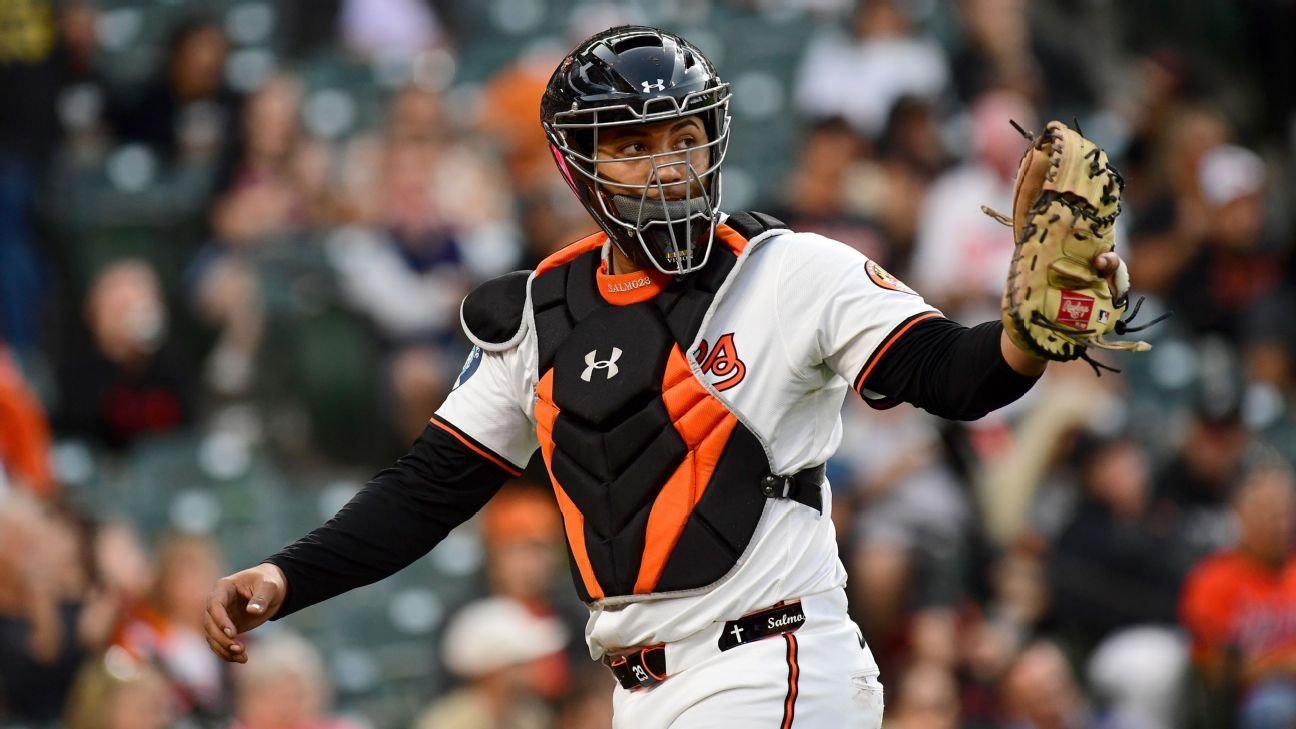
1. Samuel Basallo, C, Baltimore Orioles
It’s hard to keep Basallo out of the top spot as he’s likely to qualify as a catcher (although he will likely DH more regularly than catch) and hit 20 or so homers, albeit with a lower average. Basallo has good feel to get to his power in games, so I think of him as an HR threat with a more ordinary average (say .240 to .250 most years) as opposed to a player with big hit-tool questions whose profile may fall apart against better pitching.
2. Sal Stewart, 1B, Cincinnati Reds
Positional concerns are mostly what keeps Stewart from the top spot, because he’s a better hitter with comparable short-term home run upside, even if Basallo has more raw power. Stewart may play some third base as he’s fine over there, but it seems like the Reds are lining him up to be the everyday first baseman. I’d expect something more like .270 with 20 homers from Stewart, with a much higher floor (but a little less ceiling) and likely with just first base eligibility.
3. Konnor Griffin, SS, Pittsburgh Pirates
The question of the spring is how Pittsburgh will react to the “high highs” of Griffin’s performance thus far: three homers and no other hits through his first six games. He is the best prospect in baseball — by a mile — and also has arguably the best tools in the minors, but has played just 21 games above A-Ball. I’d expect a fine average and 20-something homers on an annual basis along with at least 20 stolen bases and shortstop eligibility, but he’s more likely to play 50 games than 150.
4. JJ Wetherholt, SS, St. Louis Cardinals
Following the Brendan Donovan trade, Wetherholt is now the favorite for the team’s everyday second base job, but he’s good enough defensively to be an average defender at shortstop and fill-in if needed. He has a wide base of skills — average or better at hit, power, and speed, along with a strong eye. As such, Wetherholt offers a high floor, like Stewart, but not quite the upside of Griffin or Basallo, who could go supernova.
5. Carter Jensen, C, Kansas City Royals
Jensen, like Basallo, looks set to be the starter at DH and also backup catcher, so you’ll get the catcher eligibility without the everyday wear and tear. Jensen has real on-base skills and a good feel for in-game power, along with sneaky athleticism for a catcher. Assume a more medium ceiling: think .240 or .250 with 12-15 homers for this year.
6. Justin Crawford, OF, Philadelphia Phillies
He’s the son of Carl Crawford and looks set to be handed the center field job for the Phillies from Opening Day. Yes, that means stolen bases (42 and 46 in the last two seasons) and a pretty good average (.313 and .334) with mistake power (9 and 7 HR). There’s still a bit of work to do defensively, and I’m still not sure exactly what his MLB offensive profile looks like since he’s a somewhat singular talent doing something at the plate (60% ground balls, over 40% opposite field on all balls in play) that most hitters aren’t trying to do.
7. Nolan McLean, RHP, New York Mets and 8. Trey Yesavage, RHP, Toronto Blue Jays
These two are both well-known to fans as McLean was key down the stretch for the Mets and should be their second-best starter this year. Meanwhile, Yesavage was a postseason star for the Blue Jays. Long-term, McLean’s more fluid delivery and breaking ball quality offer more short- and long-term upside, but Yesavage should be just as good — if not better — in the short-term due to his mid-90’s heater and dastardly splitter.
9. Kevin McGonigle, SS, Detroit Tigers
McGonigle likely doesn’t come up until around the middle of the season, but could be a five-category monster when he does. He hit .305 with 19 homers and 10 stolen bases in 88 games last year while being young for each level, with more walks than strikeouts. He has the tools and underlying stats to back that up, all while hitting left-handed and playing shortstop. If someone in your league is trying to overpay to get Griffin, wait a bit and take McGonigle. If Griffin doesn’t break camp with the Pirates, you may have the better 2026 option.
10. Moises Ballesteros, C, Chicago Cubs
Ballesteros is the third Opening Day DH who will also function as a backup (or possibly third, if Miguel Amaya is carried) catcher and should really hit this year. He’s ranked a bit lower as I’m not positive he gets catcher eligibility, offers little in the way of speed, and may only hit 12-15 homers with a .260-275 average. A slow start also means other options like Matt Shaw, Michael Conforto, or Jonathon Long could be given his spot.
Five who just missed
Bubba Chandler, RHP, Pirates
Carson Benge, OF, Mets
Dylan Beavers, OF, Orioles
Bryce Eldridge, DH, San Francisco Giants
Chase DeLauter, OF, Cleveland Guardians
Chandler is just behind the other two arms for me as I think his strikeout rate and ERA will come up just short of theirs. The next four are all hitters who don’t offer a ton of positional value, but are all set to break camp in the everyday lineup. Benge and Beavers have a power/speed element while Eldridge is all homers with a low average and little speed. DeLauter is somewhere in-between, but has been hurt quite often.
Late cuts
Logan Henderson, RHP, Milwaukee Brewers
Owen Caissie, OF, Miami Marlins
Andrew Painter, RHP, Phillies
These three are all in my Top 100 and are set to break camp in key roles, so they should at least be mentioned in this same neighborhood. Henderson should open in the Brewers rotation, but his fringy breaking ball holds his upside below the first three arms mentioned. Caissie has a nice power/speed combo, but big contact questions that could eat into his playing time. Painter seems to be fully back from years of arm issues, but is looking more like a third/fourth starter for 2026 as he tinkers with his pitch shapes and dials in his command.
Sleepers who appear to be breaking camp with a starting role — or a path to one
George Valera, OF, Guardians
Abimelec Ortiz, 1B/OF, Washington Nationals
Zach Cole, OF, Houston Astros
Nick Yorke, 2B, Pirates
Jhostynxon Garcia, OF, Pirates
Alex Freeland, SS, Los Angeles Dodgers
Carter Baumler, RHP, Texas Rangers
Valera, Ortiz, and Cole are slated for platoon everyday roles while Yorke, Garcia, and Freeland are in more part-time roles with a shot to play into more. Cole has huge tools, but scary strikeout issues while Ortiz could be a nice, cheap option for power. Baumler is one to keep an eye on, with a shot to work his way into a later relief spot.
Elite hitting prospects with a chance for a first-half promotion
Aidan Miller, SS, Phillies
Colt Emerson, SS, Seattle Mariners
Walker Jenkins, OF, Minnesota Twins
Travis Bazzana, 2B, Guardians
Carson Williams, SS, Tampa Bay Rays
Jett Williams, SS, Brewers
Jacob Melton, OF, Rays
Joe Mack, C, Marlins
Harry Ford, C, Nationals
Emerson is getting a long look in Mariners camp and Ford is likely the long-term answer that arrives sometime in 2026. Jenkins has durability issues but could be a franchise player. Miller is likely the answer if any of the infielders for the Phillies are set to miss real time. The same goes for Jett Williams and the Brewers infield (and maybe even outfield). Melton has big tools and a Jake Fraley/Justyn-Henry Malloy platoon is something he could perform his way into beating out.
Elite pitching prospects with a chance for a first-half promotion
Payton Tolle, LHP, Boston Red Sox
Jonah Tong, RHP, Mets
Trey Gibson, RHP, Orioles
Parker Messick, LHP, Guardians
Robby Snelling, LHP, Marlins
Connelly Early, LHP, Red Sox
Connor Prielipp, LHP, Twins
Brandon Sproat, RHP, Brewers
J.R. Ritchie, RHP, Atlanta Braves
Rhett Lowder, RHP, Reds
Didier Fuentes, RHP, Braves
Jaxon Wiggins, RHP, Cubs
This is a long list because many of these names are far more reliant on opportunity, as opposed to talent. Tolle and Early have been marginalized a bit behind veteran additions but have ROY upside. The same holds true for Tong, though he’s still tinkering with pitch shapes to avoid giving up too much damage. Gibson and Prielipp also need a spot to open and there’s some relief risk, but real stuff. Messick and Snelling are safe mid-rotation types once they get their shot. Wiggins has huge raw stuff and may be broken into the big leagues in relief. However, he’s a command tweak away from potential frontline ability.
Elite prospects that could debut late, but still of interest
Thomas White, LHP, Marlins
Gage Jump, LHP, Athletics
Liam Doyle, LHP, Cardinals
Jesus Made, SS, Brewers
Max Clark, OF, Tigers
Leo De Vries, SS, Athletics
George Lombard, SS, New York Yankees
A.J. Ewing, OF, Mets
Ralphy Velazquez, 1B, Guardians
Ryan Waldschmidt, OF, Arizona Diamondbacks
Michael Arroyo, 2B, Mariners
These players are all likely to see second-half debuts, if at all. Even so, they could be impactful enough to keep your eye on during the season. White, Jump, and Doyle are all tracking like second/third starters but could all come up for late-relief help in a pennant race or spot starts. Made, Clark, and De Vries are among the best prospects in baseball and will have had huge seasons if they’re in this conversation. Lombard could be a second-half shortstop solution for the Yankees, while Ewing is a personal favorite who could be turning the corner into elite as we speak. Velazquez, Waldschmidt, and Arroyo are hit/power combo types that could rake their way into late-season debuts.
Demanding an honorable mention
Max Anderson, 2B, Tigers
Zac Veen, OF, Colorado Rockies
Ryan Clifford, RF, Mets
Luis Gastelum, RHP, Cardinals
Carson Whisenhunt, LHP, Giants
River Ryan, RHP, Dodgers
Before we go, let’s be sure to note some other spring standouts. Anderson doesn’t get as much attention as McGonigle and Clark (and rightfully so), but he could be a steady everyday option before either of them gets the shot — if a spot opens. Veen looks literally like a different person and Colorado may be the place for him to tap into his newfound power, but we don’t know much yet. Clifford’s fantasy value is mostly for homers, but he’s really good at it. Gastelum is a potential late-inning sleeper due to his plus-plus changeup and the overall youth movement in St. Louis. Whisenhunt’s velocity has been way up early in the spring and he may also be a different guy now, with his plus-plus changeup intact. Ryan missed the 2025 season due to elbow surgery and is a 27-year-old prospect due to his late-blooming nature, but he has plus stuff and a chance to start.

