Ted Carter was only weeks into his tenure as Ohio State’s president when he made his first major hire.
It was January 2024, and Carter had to pick a successor to the retiring Gene Smith.
The significance was not only owed to the stature of Smith, a beloved administrator who had been a mainstay as the school’s athletic director for nearly two decades, but also the tumultuous period within college sports.
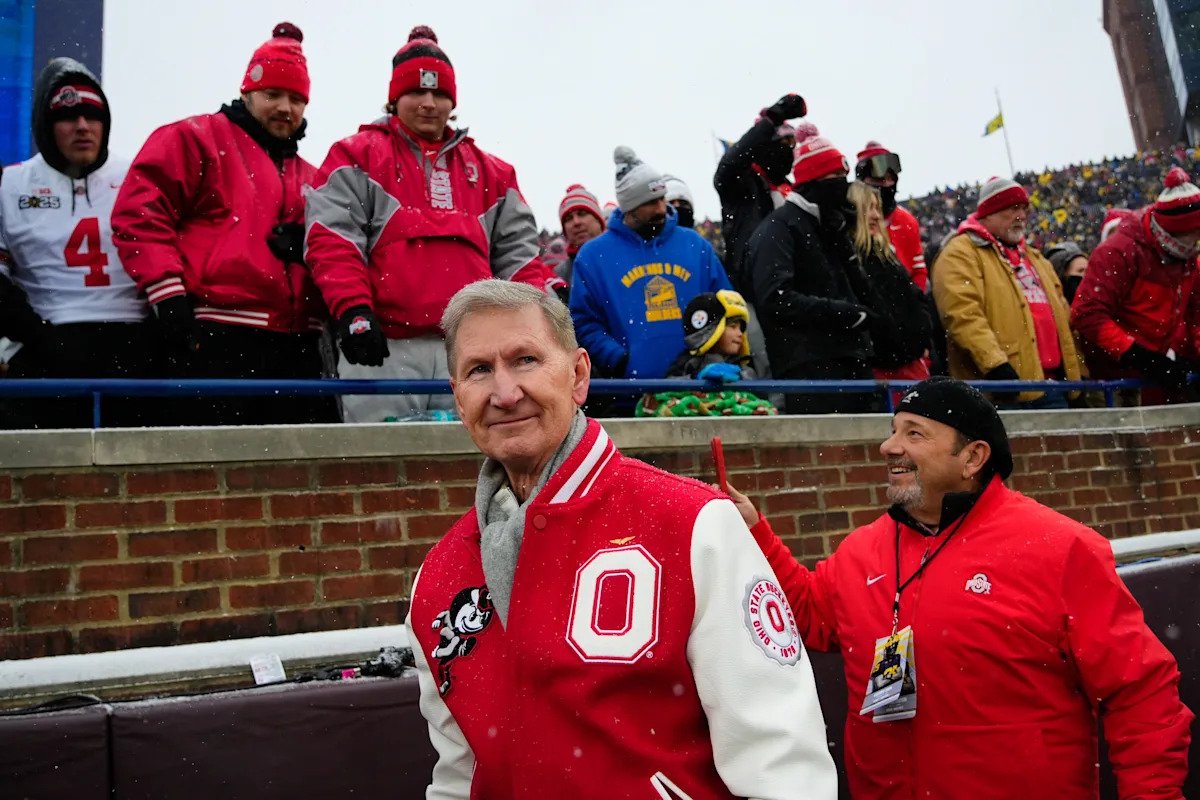
Ohio State president Ted Carter walks near the field during a football game at Michigan on Nov. 29.
The decade has been defined by rabid changes in the industry, predominantly over the ways athletes are allowed to be compensated, a teardown of the NCAA’s longstanding amateurism rules that began with players signing endorsement deals with businesses and continued with their recent participation in direct revenue sharing with schools.
Advertisement
Carter ultimately landed on Ross Bjork, who was then the athletic director at Texas A&M, an early decision that remained one of the most high-profiles moves of his tenure, which ended with his abrupt resignation over an inappropriate relationship on March 9.
In his selection of Bjork as athletic director, Carter passed on candidates from Smith’s extensive administrative tree.
Though Carter never identified other finalists in the search, The Dispatch learned at the time that Pat Chun was among the small handful. Chun, then athletic director at Washington State before leaving for Washington, held numerous jobs in the Ohio State athletic department from 1997 until 2012, rising to executive associate athletics director for external relations.
Bjork arrived with a reputation as a prolific fundraiser, having just led one of the largest capital campaigns in the history of Texas A&M’s athletic department, resulting in the construction of several facilities, including an indoor football complex.
Advertisement
With Ohio State’s plans for a renovation to the Woody Hayes Athletic Center as well as the construction of an ice hockey arena, the background in development was a significant plus.
It also helped as he saw the department overcome a budget shortfall from the 2024 fiscal year and prepare for rising expenses that included sharing $18 million with athletes in four sports over this academic year, the result of a settlement of three antitrust lawsuits against the NCAA . Ohio State plans to again share the maximum allowable revenue with football, men’s basketball, women’s basketball and women’s volleyball players during 2026-27.
The hiring of Bjork would not be the only time Carter got involved in athletics over his 26 months leading the university.
Carter served on both the NCAA’s board of governors and Big Ten’s Council of Presidents and Chancellors executive committee. His voice carried weight in the conference, including during the league’s assessment of a multibillion-dollar investment proposal late last year that was ultimately put on hold.
Advertisement
He also raised the prospect of a new revenue sharing model among members that would see bigger brands such as Ohio State receive larger distributions from the Big Ten during the league’s next multimedia rights agreements. The current deal with FOX, CBS and NBC runs through the 2029-30 academic year.


“There’s only a couple of schools that really represent the biggest brands in the Big Ten, and you can see that by the TV viewership,” Carter told USA TODAY last year, pointing to the 16.3 million viewers who were attracted to the Buckeyes’ season-opening win over Texas.
Carter added that it was “going to be a conversation that will be had over time.”
A former captain of the Naval Academy’s ice hockey team in the late 1970’s, Carter expressed a commitment to maintaining one of the largest athletic departments in the NCAA’s Division I, including sponsoring 36 varsity sports, one of the reasons the school has sought new streams of revenue in recent years.
Advertisement
Carter was often a visible presence at football games, wearing a varsity jacket, and has long been supportive of coach Ryan Day.
During his first news conference as president in early 2024, he praised Day for running a “fantastic program” despite the Buckeyes then being mired in a losing streak to archrival Michigan.
“I’m proud that he’s our coach,” Carter said. “And he will continue to be our coach.”
A year later, Carter spoke even more glowingly as he addressed tens of thousands of fans at Ohio Stadium. The crowd of 30,000 had gathered for a celebration of the Buckeyes’ national championship, a particularly impressive feat for Day, who saw them overcome another loss to the Wolverines to win the first expanded College Football Playoff, reeling off four straight victories to navigate the 12-team bracket.
Advertisement
“We are so fortunate we are witnessing one of the greatest coaching performances to ever be delivered, not only for Ohio State, but in the history of college football,” Carter said.
Day had a new contract a month later that made him one of the nation’s highest-paid coaches.
Joey Kaufman covers Ohio State football for The Columbus Dispatch. Email him at jkaufman@dispatch.com and follow him on @joeyrkaufman on X.
This article originally appeared on The Columbus Dispatch: Ted Carter shaped direction of Ohio State athletics before resignation

