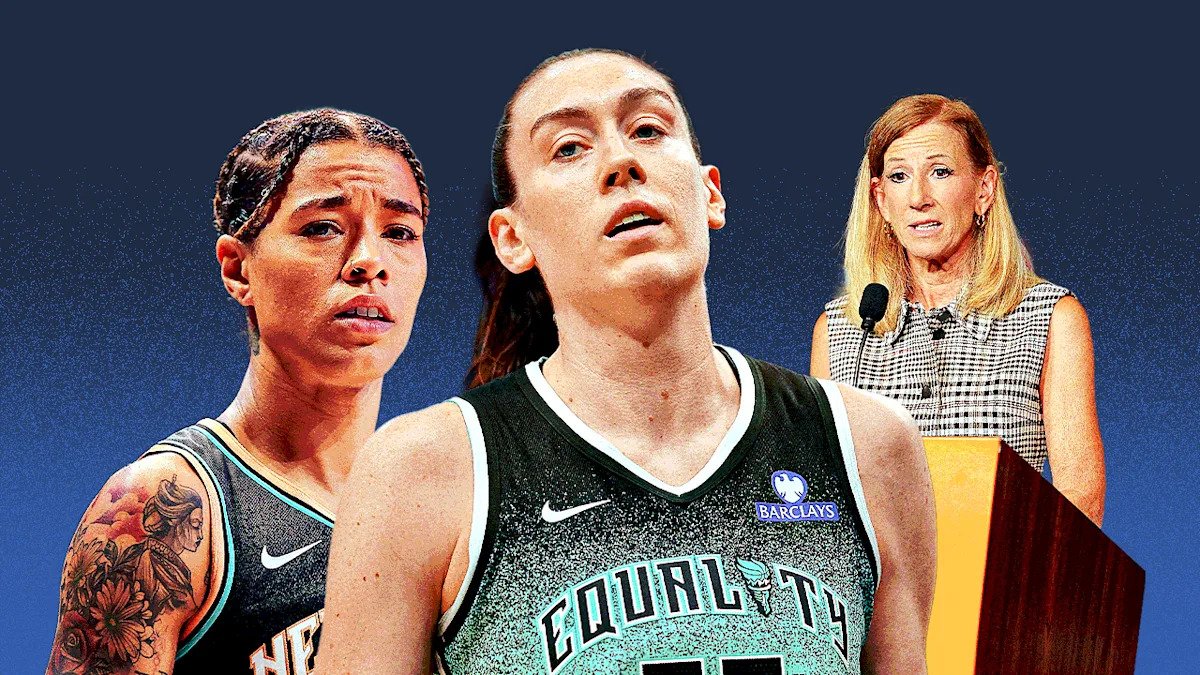
WNBA players and owners are, as of Tuesday, still negotiating terms of what both sides expect to be a landmark collective bargaining agreement. And with less than two months until the scheduled tipoff of the WNBA season, the pace of proposals is picking up from both sides: The players submitted their most recent proposal on Friday, and the owners responded late Saturday.
These are the biggest unresolved questions heading into a crucial period of negotiations.
Advertisement
More from Sportico.com
What’s the deadline for a new CBA to avoid delaying the 2026 season?
It depends on whom you ask. WNBA owners have proposed a deadline of Tuesday to reach a new CBA without affecting the regular season. The players dispute this, maintaining their only deadline is “when a great deal is on the table,” according to a person familiar with the matter.
Without a CBA in place, what could happen?
Several events must take place to enable play in 2026, including expansion drafts for the new franchises of the Portland Fire and Toronto Tempo, free agency for existing WNBA players, and of course the annual rookie draft on April 13. Beyond those developments, teams would have to host training camps with their new rosters.
Advertisement
What are the major sticking points?
One major debate concerns proposed revenue sharing between owners and players, in what would be a first for the WNBA. Both sides so far agree that revenue sharing—common in many men’s pro leagues—should happen, but they haven’t agreed on the split. WNBA owners have proposed a system that would see players receive roughly 70% of “net revenues,” or income after operational costs. A recent survey among WNBA players found that 84% of the union was unwilling to accept that offer from the owners, which the PA calculated is “less than 15% of gross” team and league revenues.
The dispute is as much numerical as it is philosophical. According to people familiar with the negotiations, owners are concerned about the WNBA’s continued financial growth, while players are wary of proposals that are closer to profit-sharing than revenue-sharing.
Are there other issues?
Alongside pay, existing benefits for players, such as league-subsidized housing, have been fodder for disagreements. New York Liberty guard Natasha Cloud highlighted this issue earlier this month as essential for the middle class of W players. Even with a proposed salary jump of $200,000, “We’re not making enough for housing to be taken off of the table,” Cloud said.
Advertisement
Initially, WNBA owners proposed removing the housing coverage, given higher salaries. In recent proposals, the league has proposed keeping player housing in Year 1 of the new CBA, and phasing it out over time depending on a player’s contractual status, the people familiar said. For example, development players and rookies would continue to have some housing benefits beyond Year 1 while those on super max contracts would phase out by 2028, one of the people said.
The league’s calendar is also up for debate, with the potential to expand the W’s schedule footprint to include additional games.
What have players been saying?
A lot. In December, the players voted to authorize the union to call a strike, if necessary. Lately, a number of high-profile stars have expressed varying opinions on the negotiation process. Kelsey Plum and Breanna Stewart, both members of WNBPA Executive Committee, told reporters at a shootaround for Unrivaled last week that they considered the WNBA owners’ revenue-share proposal “a win.” Shortly thereafter, they sent a letter to union leadership outlining “serious concerns” about how the administration was handling negotiations, according to ESPN. The union’s executive committee put out a statement on Wednesday signed by Plum, Stewart and other player-leadership that said, “Despite our differences and tough moments, we must make crystal clear that we are focused, we are resolute, and we are together.”
Advertisement
Does that mean I won’t be able to watch elite women’s basketball?
On the contrary. On Wednesday, Caitlin Clark is expected to make her senior debut for Team USA women’s basketball in the FIBA World Cup qualifying tournament in Puerto Rico. It will be Clark’s first game in eight months after she was sidelined for much of the 2025 season with a groin injury. She’ll be joined by Plum, Paige Bueckers and Angel Reese, among others.
TNT Sports reached a broadcast agreement with FIBA last week for the rights to air international basketball in the U.S., underscoring the continued interest in both women’s and men’s World Cup hoops—and the pressure for W owners and players to reach a deal.
Best of Sportico.com
Advertisement
Sign up for Sportico’s Newsletter. For the latest news, follow us on Facebook, Twitter, and Instagram.

