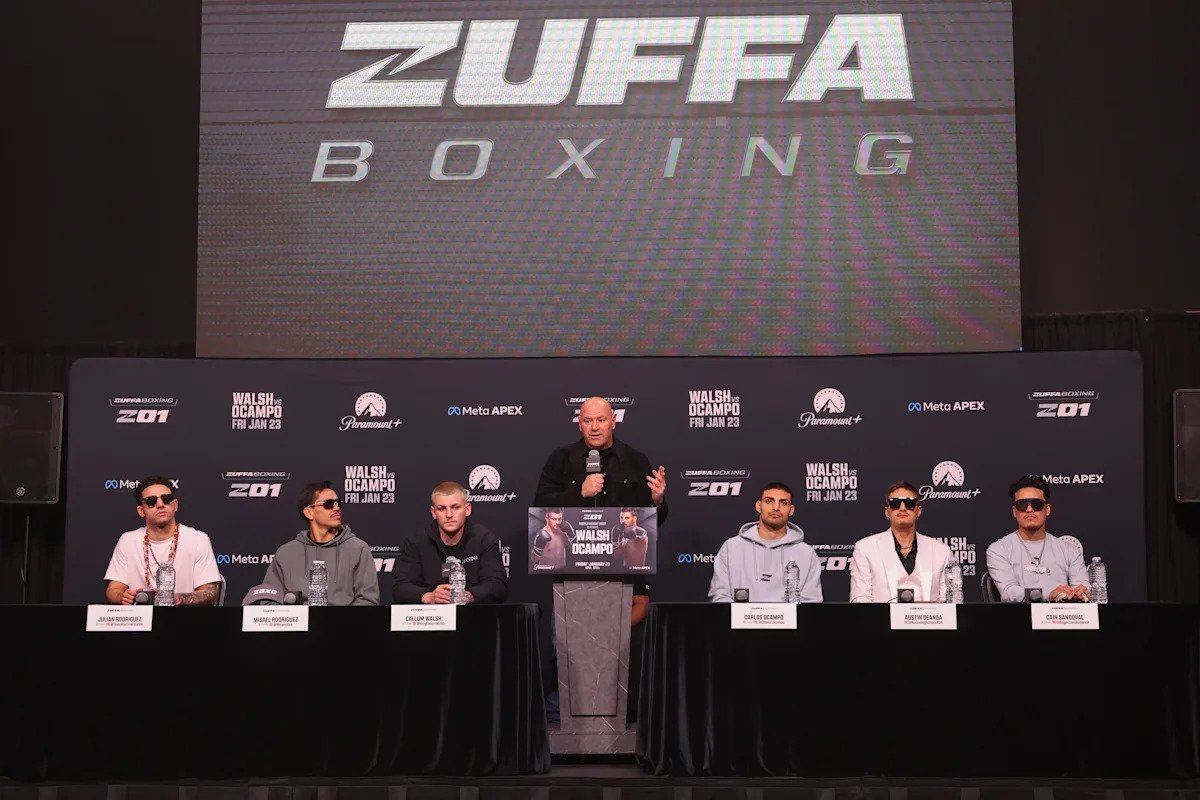
The United States House of Representatives has passed the TKO-backed Muhammad Ali American Boxing Revival Act (MAABRA), bringing the controversial boxing bill another step closer to law.
Republican representative Brian Jack of Georgia authored H.R. 4624, which was first introduced last July. It received support from Lonnie Ali, Muhammad Ali’s wife. Tuesday, the bill passed a voice vote in the House, and it will now move on to the Senate for consideration. If passed in the Senate, it will then be presented to president Donald Trump to be signed into law, which is key to how Zuffa Boxing intends to operate, as it seeks to implement its own titles and rankings.
Multiple supporters of MAABRA spoke during the debate, including Tim Walberg (R) of Michigan, Robert C. Scott (D) of Virginia, Ilhan Omar (D) of Minnesota, Jim Jordan (R) of Ohio, Mark Harris (R) of North Carolina, Morgan McGarvey (D) of Kentucky, Ryan Mackenzie (R) of Pennsylvania.
Supporters stated that boxing needed improvements to fix a “fragmented” structure, including providing more opportunities for fighters, increasing pay, and adding more protections inside and outside the ring. The bill “helps restore integrity” to boxing, according to Walberg.
“I come to this issue both as a legislator and a longtime fan of the sport,” Omar said. “At its best, boxing is a sport of courage, discipline, and dignity – but for too long, the people risking the most have not always been treated with fairness and the respect they deserve. Congress passed the original Ali Act for a reason: to stop powerful interests from exploiting boxers and denying them control over their careers. So, when this bill first came before us, I had significant concerns. That is why I worked hard to make it better. We negotiated in good faith with the majority, and we did make it better.”
Omar said she was voting in favor of the bill, but added there is more to be done to protect boxers in the sport.
“Let me be clear, this work is not done,” Omar said. “We still need stronger financial transparency, stronger anti-monopoly provisions, and stronger safeguards against coercive contracts, including forced arbitration clauses. I support this bill not because it is perfect, but because we fought hard to make sure it wasn’t just a gift to industry.”
Democrat Joe Courtney of Connecticut spoke in opposition to the bill, highlighting concerns echoed in the boxing world.
“I rise today in opposition of H.R. 4624, which I also opposed in committee along with three other members, to the Muhammad Ali Boxing Revival Act, a bill which radically amends the existing Muhammad Ali Act that was passed in 2000,” Courtney said. “That law established statutory protections for boxers from exploitative and unethical business practices. The committee received expert testimony from witnesses with deep experience in the legal landscape in the boxing world and warned us this bill will strip away many of those hard-fought reforms. H.R. 4624 creates a new parallel legal structure, the new so-called Unified Boxing Organizations (UBOs), which can engage in promotion, rule-setting, match organization, and creation of their own titles and rankings.
“Under the existing law, negotiated and spearheaded by the late John McCain, these functions have been required to remain separate to protect against conflicts of interest and coercive contract terms for boxers. UBO organizations proposed under H.R. 4624 will replicate a model that has been extremely lucrative in other non-boxing, mixed martial arts sports worlds, that operate with few legal and economic protections for fighters, leading to a long history of litigation and allegations of coercive and anti-competitive practices.”
After a 40-minute debate, the bill passed with a 2/3 voice vote, and will now move to the Senate.
This article originally appeared on MMA Junkie: Muhammad Ali American Boxing Revival Act one step closer to law

