Michael Chiesa can tell you when he knew. It’s a little bit of a secret, something he never dared to speak out loud until now. But with the fighting portion of his professional life now behind him following Saturday’s submission win over Niko Price, he can finally say it.
“It was in the Court McGee fight,” Chiesa told Uncrowned. “It was the first time in my life that I held myself back from pulling the trigger and going hard. And it was out of fear. I was scared of getting hurt and losing. That was the first time I’d ever felt like that in a fight, and it held me back from taking chances that I would have taken when I was younger.”
Advertisement
This was last summer. Chiesa kept it to himself. He didn’t tell his teammates or his coaches or even his wife. He didn’t know yet exactly what this feeling meant, but he knew it meant something.
Then later that same summer he was working the commentary desk at a UFC event when Dustin Poirier described his own thoughts during his last fight with Max Holloway. Poirier recalled how, when Holloway invited him to brawl in the center of the cage toward the end of the final round, something inside him just wouldn’t agree. For the first time, he found himself thinking about all the terrible what-ifs native to the fight game.
What if I get hurt? What if this is the punching exchange that does some awful lasting damage to me? What if I’m never the same afterward?
“I was working with Dustin when he said that and I immediately thought, ‘Oh my God, that’s exactly how I felt,’” Chiesa said. “It was that feeling like, instead of pushing for it and going for the finish and trying to put a stamp on the fight, I held myself back for the first time in my life. And that seemed like a sign that, OK, the end is here.”
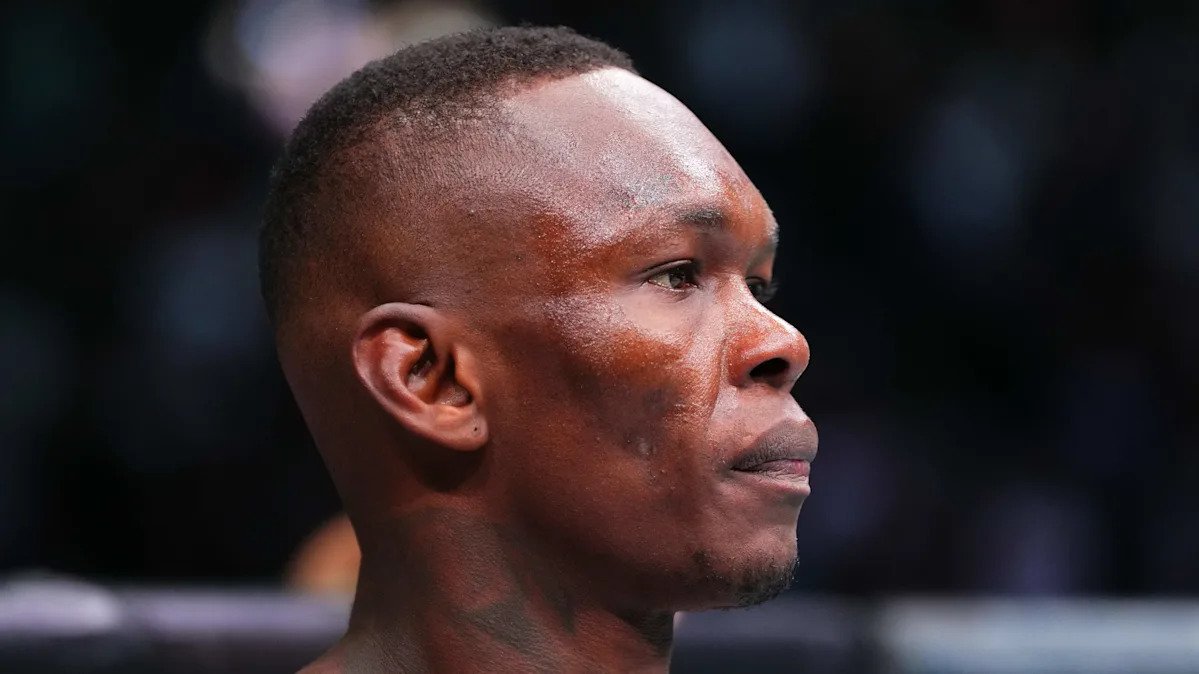
Israel Adesanya lost his fourth consecutive fight on Saturday, prompting calls for the former UFC champ to retire. But knowing when to say when has never been an easy thing for pro fighters.
(Mat Hayward via Getty Images)
Ask around and you might discover that the signs don’t always present themselves so clearly. Or maybe they do and those on the receiving end are simply blind to them, either by temperament or by choice.
Advertisement
Fans do their best to help out. When they see a fighter who they think ought to be done with this sport, they don’t hesitate to let that person know.
Just look at Israel Adesanya. The former two-time UFC middleweight champ lost his fourth straight fight at UFC Seattle on Saturday night. Every day since then has seen a public debate in fight sports circles about the future of his career. Nevermind the fact that Adesanya himself doesn’t seem inclined to hang up the gloves for good just yet. The internet is awash with everyone from strangers to friends offering unsolicited advice about his next move.
“I would like to see him retire,” former UFC flyweight champion Demetrious Johnson said on “The Ariel Helwani Show” just yesterday. “There’s nothing else for him to do in mixed martial arts. I think he’s done everything — and you’re not even considering the kickboxing matches he’s had as well. The man’s been on a tear, on a grind. I think he deserves to relax and enjoy himself and find something else.”
But what if he doesn’t want to? Or what if he doesn’t think he needs to just yet? I remember many years ago, back when fans were telling Ken Shamrock to give it up already and stay his middle-aged butt on the spectator side of the chain-link fence, he told me how frustrating it was for a fighter to hear that. To make it at all in a sport this brutal, he pointed out, you have to be the kind of person who can walk through fire. If a few losses or even a few bad bumps and bruises were enough to make you stop, you’d have stopped long before now.
Advertisement
Fans celebrate this tenacious quality in the fighters they love, Shamrock pointed out. They despise a fighter who quits when the going gets tough. So why, he wondered, did they seem so intent on hating him now for refusing to quit?
Javier Mendez has tried having this conversation with his fighters before. As the longtime coach at the American Kickboxing Academy in San Jose, California, he’s seen UFC champs like Daniel Cormier, Khabib Nurmagomedov, and Cain Velasquez come and go. But every time Mendez has tried to tell a fighter when his time is up, the conversation hasn’t ended well.
“I tried for many years to convince fighters to give it up, and it’s never worked one time, believe it or not,” Mendez said. “Not one time.”
Advertisement
Mendez tried several different strategies, he said. The gentle approach. Tough love. Telling a fighter straight to his face, ‘Look, you just don’t have it anymore.’ The results were always the same.
“It got so bad at one point that I would tell the person, ‘Hey, if you don’t retire, I’m not going to be in your corner anymore. I don’t want to see this happening with you, so I won’t be there.’ And it didn’t matter,” Mendez said. “That individual kept fighting and fighting and didn’t do so great. He even got me to work his damn corner one time when I didn’t want to.”
For many fighters, the results alone don’t make a compelling enough case. Anybody can lose a few fights. We know this. Fighting is a cruel and fickle sport and there are so many ways to slip on a banana peel and end up in the losing column. The judges might screw you on the scorecards. A ref might stop it too soon. A fighter can look great for two rounds and get caught with one good punch in the third. Does he really have to end his whole career over it?
I tried for many years to convince fighters to give it up, and it’s never worked one time, believe it or not. Not one time.
Adesanya is a good example. His string of losses includes two former champions and one top contender. All of these guys could, on any given night, conceivably beat any other middleweight in the world. If losing to them is a sign that you should never fight again, the 185-pound rankings are about to get a lot thinner.
Advertisement
For former UFC light heavyweight champion Rashad Evans, it wasn’t the results in his fights that convinced him to stop. Instead it was how he felt during the preparation phase. Toward the end of his career, Evans said, training became a chore. It had never been easy, but it also hadn’t been all joyless drudgery. Passion had carried him through those hard days in the gym — until it didn’t anymore.
“I enjoyed being outside the gym more than I enjoyed being inside the gym,” Evans said. “I lost my connection with it. I was training just as a means to an end.
“I lost that belief. And that belief is what takes you through those tough moments in the fight, because you know that you’ve been through those moments before in your career where things could have gone either way, but you rose above it because you had that belief. After you’ve been knocked out or been hurt a few times, now every time you take a shot you’re thinking, ‘Oh s***, is it going to happen again?’”
Rashad Evans went undefeated en route to winning a UFC title in 2008, knocking out the likes of Chuck Liddell and Forrest Griffin, but ended his career on a 1-5 slide.
(Dylan Buell via Getty Images)
It’s even trickier for fighters who have been to the mountaintop once or twice before, Evans pointed out. A fighter like Adesanya will always be judged not just by how he performs in each individual fight, but by how he looked at the peak of his career, when he was a nearly untouchable champion.
Advertisement
“Izzy has had those magical nights,” Evans said. “And at that point, you’re not just competing against the person right in front of you. You’re competing against who you were on all those great nights. Izzy is judged by that guy he was when he came out and danced and then slept Robert Whittaker. That’s what he’s up against every time he steps out there.”
For some fighters, the decision to retire is based on a coldly analytical appraisal of the facts. That’s how it worked for Brian Stann, who hung up his gloves following a knockout loss against Wanderlei Silva in the main event of a UFC show in Japan in 2013.
“For me, it was always a value-based decision,” Stann said. “Are you making enough money that compensates you for the additional loss of quality of life that you may suffer by continuing to push through these training camps and the fights? Because it’s not just the damage you take in the fights, it’s in practice too. And for me, it was clear for me that I was going to be more valuable outside of the Octagon. There were certain things that I wasn’t willing to compromise on that told me, ‘Hey, it’s time.’ It wasn’t how I wanted to go out. It was three years sooner than I planned to go out. But I knew I was more valuable doing something else, and I’ve got people that depend on me and I have to make that hard decision.”
Following his retirement, Stann moved into a full-time commentary role with the UFC. He later moved on to the business world, getting his MBA from Northwestern before becoming the CEO for Hunt Military Communities. But that transition period as a UFC color commentator helped ease him into post-MMA life, Stann said, in part because it kept him close enough to this world that he didn’t have to face the realities of retirement all at once.
Brian Stann finished his career with a memorable brawl against MMA great Wanderlei Silva at a UFC event in Japan.
(Josh Hedges via Getty Images)
“Every fight I called, [UFC play-by-play commentator] Jon Anik and [UFC matchmaker] Sean Shelby and I planned my comeback,” Stann said. “I mean, we did it every time. It sort of helped me get through this constant thought that, ‘Hey, I’ve got a couple more in me. I can still do this.’
Advertisement
“What held me back was going, ‘Am I good enough to go win a belt, or would I just be doing it for a paycheck and because I love it?’ Because there’s been a lot of wear and tear on my body already. I played football from Pop Warner all through college, and then I had a military career and an MMA career. At a certain point, you’re going to do something to yourself that all the money in the world can’t undo.”
Chiesa also has a commentary gig with the UFC to help ease his transition. It’s helped in more ways than one, he said. Not only has it given him a plan for this next phase of life, allowing him to retire into something rather than stepping out into a post-MMA void, but it also forced him to think as an analyst on this sport rather than just a fighter.
“You start to look at things through a different lens when you’re stepping back and taking that view of the sport,” Chiesa said. “When you first get in this sport, you think, ‘I’m going to go until the wheels fall off, until I have nothing left.’ That’s how I was when I started. When you’re young, it almost seems like there’s some valor in it. Then you see what that actually looks like. We’ve seen some good retirements and we’ve seen some really bad ones.”
The one thing that seems certain is that, until a fighter reaches the decision on his own, no amount of external prodding is going to convince him he’s done. If he were that easy to sway, he’d probably have been talked out of this line of work a long time ago. An ability to push through pain and defeat and even a series of discouraging setbacks is a prerequisite in this world. Beyond a certain point, it’s also a liability. It’s just that many times fighters can’t see that point until they’ve already passed it.

