Momentum continued into the 2000s.
“In 2002, we were invited to the Czech Republic for a European para championships, where we did a demonstration event so that people could see how archery for the visually impaired was done,” he said. “We had also demonstrated it at Stoke Mandeville the year before that, speaking to people from Japan and Australia.”
“Then in 2005, our rules were presented internationally, and that’s when they were accepted by the International Paralympic Committee.”
That moment marked a turning point. Visually impaired archery was no longer a concept – it was a recognised discipline.
A key evolution made the format viable for elite competition: standardisation.
Rather than varying distances, the discipline adopted a fixed distance and target, allowing visually impaired archers to compete more seamlessly alongside others and making the format easier to follow.
Today, the visually impaired round is shot at 30 metres on an 80cm target face, with 72 arrows for qualification followed by head-to-head matches.
By then, Rees-Evans and British Blind Sport had already established national championships in Great Britain, running annually since 1991, before both outdoor and indoor championships moved permanently to Archery GB performance centre in Lilleshall.
The breakthrough came in 2015.
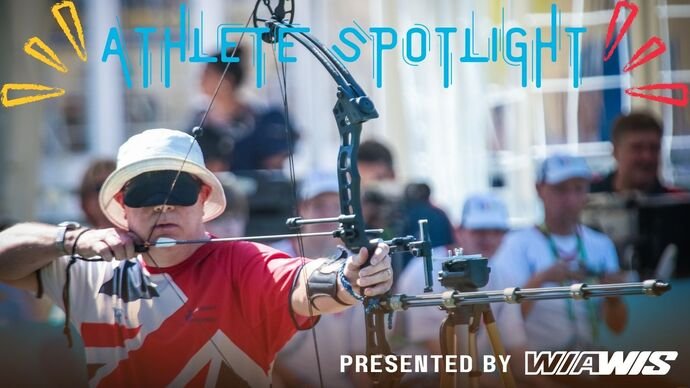
At the World Archery Para Championships in Donaueschingen, visually impaired archery debuted with two official categories: VI1 (blindfolded) and VI2/3 (partially sighted).

