ORLANDO, Fla. — I was reminded recently that we don’t just watch men’s and women’s sports differently; we judge them differently.
And not always in the way people think.
More than two decades ago, when I first got to Orlando, the city still had a WNBA team called the Orlando Miracle. I covered one of their losses during a disappointing season in 2001. There were a zillion turnovers, defensive breakdowns, blown opportunities; the kind of performance that, in most men’s sports cities, would have triggered boos raining down from the rafters.
Advertisement
But that didn’t happen.
Instead, as the Miracle left the court, the fans stood and applauded.
Not polite clapping. A full-on standing ovation.
No catcalls. No “fire the coach.” No angry sports talk radio fodder waiting to explode the next morning. Just appreciation.
“Boo our own team?” one fan asked incredulously. “Why would we want to do that?”
At the time, I wrote about how strange — and frankly refreshing — it was. These fans weren’t cynical. They weren’t entitled. They weren’t treating the team like a product that failed to meet expectations. They were loyal, supportive, almost … protective.
But over the years, I’ve started to wonder:
Advertisement
Is that really a compliment?
Or is it a different kind of double standard?
In men’s sports, fandom comes with much more of an edge. If you play poorly, you hear about it. Loudly. Fans boo because they care. They demand excellence because they expect it. It’s harsh, yes, and sometimes unfair, but it’s rooted in the idea that these athletes are competing at the highest level and should be held accountable.
In women’s sports, the tone is often different. More respectful. More supportive. Less critical.
Again, that sounds like a good thing.
Until you realize it can also come with lower expectations.
We don’t boo, because maybe — subconsciously — we’re not demanding the same level of performance.
Advertisement
We don’t criticize as harshly, because maybe we’re still treating women’s sports as something to be nurtured rather than fully scrutinized.
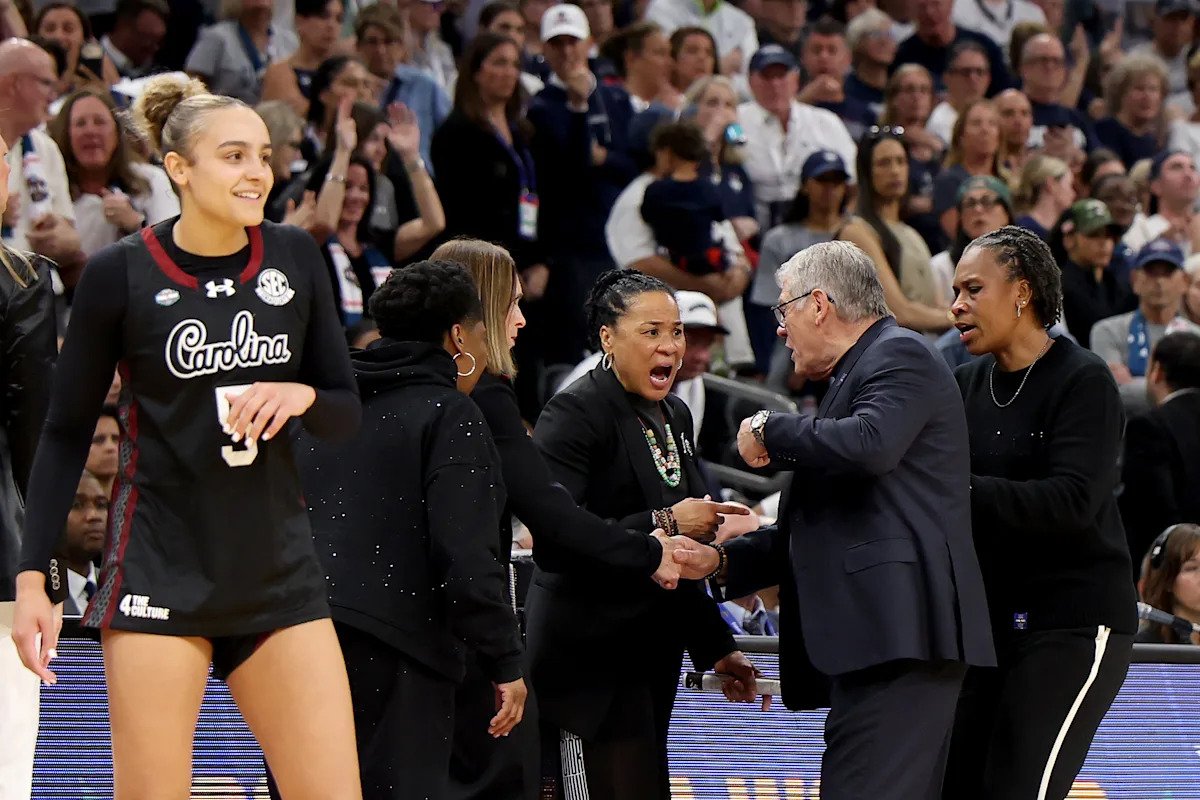
And that brings me to the legendary UConn women’s basketball coach Geno Auriemma.
When UConn was upset by South Carolina in the Final Four, Auriemma had a heated postgame exchange with Dawn Staley. It wasn’t a great look. He admitted that himself — twice. Two apologies in four days, saying he “lost himself” and that “women’s basketball deserved better.”
Fair enough.
But here’s the question: If that exact same moment happened in a men’s Final Four game, how would we react?
Advertisement
Would we demand multiple apologies? Would we frame it as a stain on the sport? Would we call the coach a bully or a tyrant?
Or would we just shrug and say: “Those guys are COMPETITORS!”
Because we’ve seen it before. Men’s coaches yelling, jawing, getting in each other’s faces. And the reaction is usually some version of admiration: passion, fire, will to win.
In the women’s game, the same behavior is deemed unacceptable.
Why?
Do we expect women’s sports to be more civil? More respectful? More composed?
And if so, isn’t that its own form of inequality?
We say we want women’s sports to be taken as seriously as men’s sports. But seriousness comes with scrutiny, criticism, uncomfortable moments and emotional outbursts.
And, yes — Miracle of miracles — it even comes with boos.

