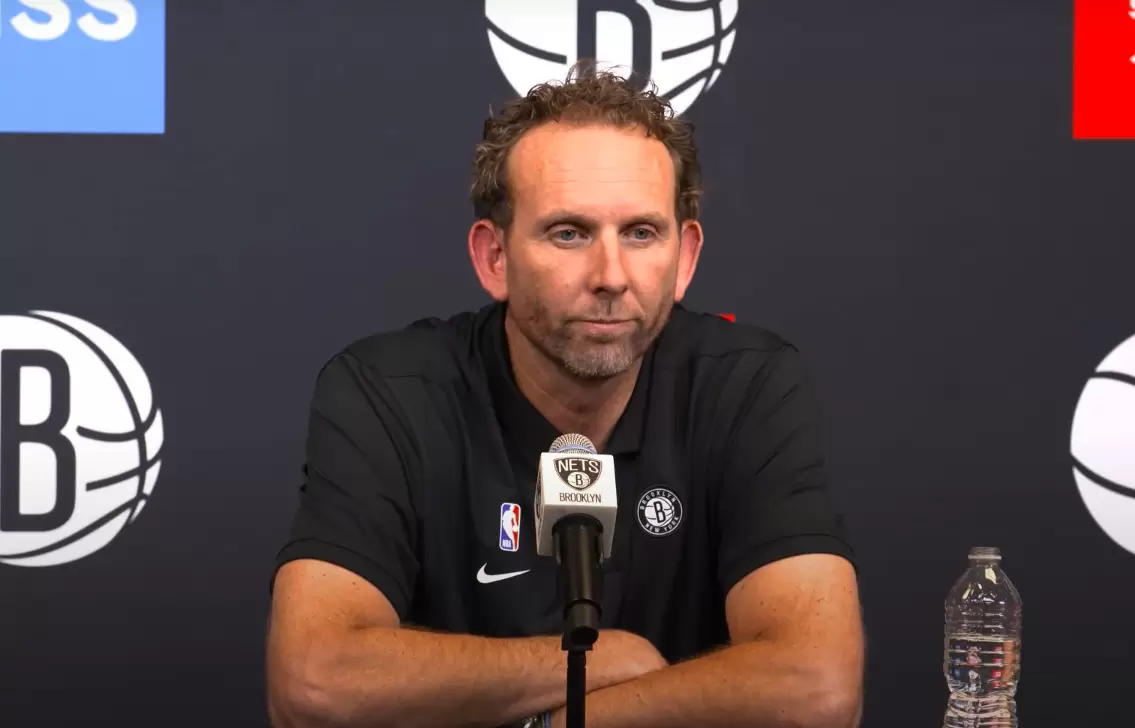
Brooklyn Nets general manager Sean Marks offered a wide-ranging look at the NBA’s international growth, his own path from New Zealand to the league, and the changing business of basketball during an appearance on the Fullcourt Passport podcast.
Marks said his love for the sport began with watching the NBA from afar. “It was looking at the athleticism, looking at the showmanship,” he said. “What those guys do on the court was just mind-blowing.”
He described a career that took him from New Zealand to Cal and across multiple NBA roles. “I was very privileged to be able to wear a lot of different hats during my NBA career,” Marks said, pointing to the value of experience in coaching, front offices and playing.
On the league’s international reach, Marks said the NBA’s global footprint has expanded far beyond what it was during his playing days. “You and I were playing, there were 40, 50 maybe foreign players. And now you look around and I think a quarter of the league is foreign,” he said.
He added that the league’s influence now stretches into scouting, coaching and development systems across the world. “The NBA has completely embraced that,” Marks said, noting that teams are increasingly finding talent and ideas from Europe, Australia and beyond.
Marks also reflected on a short stint playing in Poland, saying it taught him a different approach to the game. “There is a grit and there is a grind,” he said. “That teaches some humility.”
He used his time with the Spurs as a blueprint for how international players can reshape a team. “Pop’s worldliness and how he looked at the game was very unique,” Marks said. “He embraced that not only by having those guys in your culture, but he would empower all of us.”
The Nets executive then explained how that global evolution connects to today’s league environment. “The game has become so global and worldly,” Marks said. “It is a copycat league, right? We are all trying to copy off who is doing something different and who has got the next greatest thing.”
Marks tied that shift directly to modern roster construction and scouting behavior across the NBA. “The game has completely changed,” he said, pointing to the rise of international coaches, scouting networks and shared tactical trends.
He also spoke about the impact of modern player development and NIL. “It is a little bit of the wild wild west,” he said. “These guys are coming in ready,” but noted that increased money and movement can alter early career decisions for younger players.
He said that environment is reshaping how teams evaluate prospects. “We want players that want to win,” Marks said. “So you sit there and go, why did you move? Did you just move purely for the money or was it a role or was it the coach?”
Marks closed by addressing NBA Europe and expansion, calling it “a heck of an opportunity” if done carefully. “The talent will rise,” he said, while stressing that the league must continue to respect the history and structure of basketball in Europe.


