As road captain of the Lancaster University Cycling Club, Will Scholey was responsible for organising last autumn’s crit series. The spring edition had been a riot – more than 30 riders entered each round, and the club made money. How hard could it be to repeat that success? The answer, it turned out, was very. “We had, at most, three riders enter,” the 20-year-old says. Round one was cancelled, and with no greater uptake for rounds two and three, the whole series fell apart. “It was my first time doing it, and to get nothing, little to no entries,” he pauses. “It was all for nothing.”
Scholey still isn’t sure why so few people entered. He wonders if concerns about poor weather played a part, or if he didn’t advertise the series on social media early enough. Simply registering each race on the British Cycling website cost his club £30 a go. “So that’s £90 down the drain,” he says. Sadly, Scholey’s ill-fated series is not an isolated case.
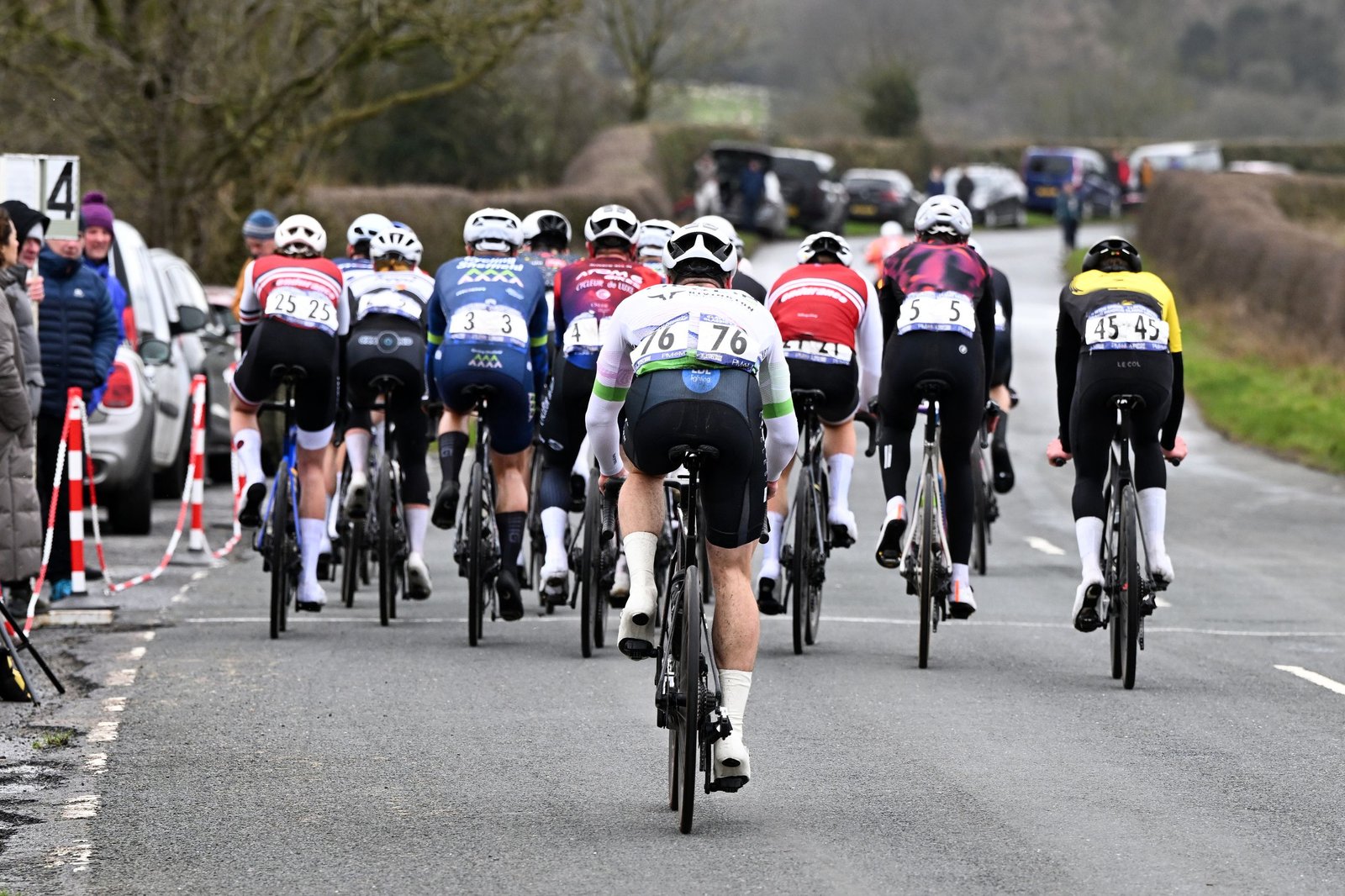
The number of closed circuit races held in the UK has fallen 14% in the last four years, from around 700 in 2022, to 600 last year. Road races have followed a similarly downward trajectory: from 190 in 2022 to 160 last year – a 16% decline. These figures, provided to Cycling Weekly by British Cycling, are just a recent snapshot. In the years following the London 2012 Olympics-inspired boom, interest waned. The rot really set in around 2016, amid a decade of government austerity. The Covid pandemic of 2020-21 then plunged the scene to new depths; many races were put on hiatus at first, and some never returned.
Article continues below
Now, as Britain prepares to stage the start of the men’s and women’s Tours de France in 2027, the pinnacle of global racing, what state is the grassroots scene in? Scholey’s autumn races may have collapsed, but remember: the spring series had been a roaring success. The swift reversal in fortunes raises questions: is British road racing really on its knees? Is it the same outlook across the country? And what can be done to help?
Far and wide
The outdoor Maindy Velodrome, pitched under floodlights on the outskirts of Cardiff, is a legendary facility. It is here that 2018 Tour winner Geraint Thomas began his career, as did Olympic gold medal-winning track cyclist Elinor Barker and nine-time world champion Zoe Bäckstedt. All three came through the Maindy Flyers Cycling Club, the largest youth club in Wales, which today counts around 180 members. In fact, despite a nationwide waning of interest in cycling, the appetite to join the club remains so large that there’s a waiting list. “Even getting my own son in was difficult,” says club chair Mike Richards.
(Image credit: Getty Images)
Maindy Flyers are a prime example of a grassroots club that is thriving. Their remit involves teaching children cycling skills, but also encouraging them to pursue racing. For Richards, the biggest obstacle to the latter is not declining interest, but a lack of local events. “There is nothing here in Wales,” he says. “Some parents drive two-and-a-half hours, maybe longer, for a 15-minute race.” Richards has to take his 10-year-old son Tom all the way to the West Midlands for youth events, and sometimes even makes the six-hour round trip to Cornwall. “We’ll do that again this year,” he adds.
These commitments can be astronomically expensive for parents. Michael Tarling, the father of Ineos Grenadiers rider Josh, has told of remortgaging the family home to pay for childhood racing trips. The costs of long-distance travel are threefold: money, time and energy. As a result, only the most devoted and privileged child racers continue competing into adulthood.
Do you race? CW reader survey
We asked you on social media about your riding and racing habits. Here’s what you said…
- 54% ride a bike 4-6 times a week
- 89% do so “to stay healthy”
- 64% have never competed in a race
- 83% wouldn’t consider starting racing
- Reasons cited for not racing: “No good and too old”; “I don’t have the necessary speed”; “risk of serious injuries”; “I can’t afford superbikes”
- 55% have taken part in sportives or gran fondos. Others cite time trials and virtual racing, such as on Zwift.
These issues are being compounded by an ongoing cost of living crisis. According to William Fotheringham, who runs the Halesowen Cycling Club Academy and is part of the West Midlands regional racing board, a shortage of cash is a key obstacle holding back participation. “The country’s economy has been stagnant now since 2008, and that has an effect,” he says. “People’s wages aren’t increasing. When I’m organising races, I get riders saying, ‘I want to enter a race, and I’ll enter after pay day’.”
Inflation in the UK is currently around 3%, above the Bank of England’s 2% target. Property rental prices are at an all-time high. Faced with adversity, hobbies are regarded as non-essential, and down comes the axe on bike racing. “It’s a hugely expensive sport,” says Fotheringham, “and obviously, as the calendar gets diminished, riders have to travel further, entry fees cost more.”

(Image credit: Andy Jones)
The average price to enter an amateur road race in the UK today is around £30. Second-year student Scholey says he has paid between £15 and £90 for a single event. To fund his racing, he works outside of term time in his dad’s bike shop in North Yorkshire, and usually has to travel south for events. “Most of the drives take us four hours, and we need to find somewhere to stay the night before,” he says. “It becomes really expensive.”
Cool cats: The tiers of senior racing

(Image credit: Andy Jones)
The British racing system ranks riders into five categories, starting with Fourth Cat (entry-level), up through Third, Second, First and finally Elite, depending on the number of race points accrued. The tiers exist to ensure fairer racing, although different categories are often lumped together to help increase fields. If a race is open to ‘E/1/2/3’, as most are, it means it will accept any entrant, except Fourth Cat. These are the different race levels:
National A – E/1/2 for ‘open’ category, E/1/2/3 for women. (e.g. Lincoln Grand Prix and the rest of the National Road Series). Race entry: £50
National B – E/1/2/3. (e.g. Capernwray Road Races). Race entry: £35-40
Regional A – 2/3/4. (e.g. West Midlands Road Race League). Race entry: circa £30
Regional B – 3/4 only. (e.g. Lewes Wanderers Crits). Race entry: circa £25-30
Regional C and C+ – Generally open to all categories but run in a different format to cater to abilities, such as a handicap race or a time trial. Race entry: £20-30
No prior experience or training is needed to start racing as a Fourth Cat; however, a person must first buy a race licence from British Cycling (£40 a year for adults; £20 for 16-18s; free for U16s) on top of the obligatory £52 annual BC membership. Non-members can buy a day licence for £10, but cannot accrue points.
British Cycling is currently working to overhaul this system, which has been criticised as confusing and off-putting for beginners. A new five-level ‘competition framework‘ is expected to be in place by 2029: Discover (fun, entry-level events), Engage (grassroots and club events), Challenge (regular competition for developing riders), Advance (akin to National B level for experienced riders), Elite (‘the pinnacle of domestic cycling’, such as the National Series and the National Championships).
Among Scholey and his club-mates, there is frustration that “the south gets it better”, both in terms of the number of races and entrants. “In some of my youth races, there was me and four others,” the Yorkshireman says. “In one local crit, it was just me and two others.”
Location, then, might be the main reason why Herne Hill Velodrome is bucking the trend. Like its Welsh counterpart in Maindy, the South London track, nestled among houses near Brixton, is experiencing surging demand. “There is a huge amount of people around,” says Thea Smith, the velodrome’s development manager. “Even though we still feel that we struggle to reach many people, there are thousands of people coming through the door.”
Smith joined Herne Hill in 2020, brought in specifically to help break down barriers to entry. Each year, up to 3,000 children learn to ride bikes on the outdoor track. “The natural progression is that some then trickle through to racing,” Smith says. When they do, costs are kept as low as possible, with race entry priced at £12.50. It’s cheap, fun, and attracts competitors from all over the country. An outdoor velodrome doesn’t face the same obstacles as road race organisers, Smith acknowledges. “You hear all these horror stories of drivers ignoring rolling road closures,” she says. “I find that absolutely terrifying. I probably wouldn’t want to go and organise a road race at this point, because the culture war against cyclists is just so strong.”
Still kicking
As part of my research for this feature, I surveyed Cycling Weekly’s social media followers, asking about racing habits. Of those who responded, two thirds said they had never competed in a race, and 83% said they would not consider starting. Their reasons were varied: some cited financial barriers (“I can’t afford super-bikes”), others said they were too old or too slow, while fears for safety, like those Smith outlines, of crashing and getting injured, were a recurring theme. It’s a bleak outlook, but surely something can be done to tempt more people onto start lines?

(Image credit: Alamy)
Fotheringham points to the success of his local handicap league – a racing format he believes should be copied in every region across the country. In these events, riders are seeded by ability, and start in waves, with the first to cross the finish line the winner. Since a new organiser took over the West Midlands league last year, participation has risen 25%, from around 40 to 50 people a night. “That’s a big increase,” Fotheringham says. “We have guys up to 70 years old riding. They start in the front group, and sometimes the handicap gives them enough of a margin that they stay away to the finish and contest the win. Everyone’s happy.”
Over in South Wales, the lack of racing opportunity has spurred Maindy Flyers into action. Instead of grumbling, club chair Richards has put “blood, sweat and tears” into reviving a monthly crit series at the Llandow motorsport circuit, laying on events for all age groups, from under-eights to adults. He worried at first that the club may end up losing “a couple of thousand” pounds on the series, but he’s since secured sponsorship from Uprise Bikes. “I hope it’s the start of something new for South Wales,” Richards says, adding that he hopes the arrival of a Tour stage in Cardiff next July will provide a further boost.
These examples might seem small-scale, but they’re proof that success stories exist, and efforts are being made to keep Britain’s racing scene kicking. “If you don’t nurture it, it will just die,” says Fotheringham, a phrase that’s as much a call to arms as it is a sign of the scene’s parlous health. It’s why the hard work of passionate individuals has never been so vital.
Scholey, Lancaster University’s 20-year-old road captain, is one such fighter. Months after being forced to cancel his autumn crit series, he’s already looking ahead to the next one. “Hopefully I’ll be in the job again next year,” he says. “I’ll get it planned over summer and start pushing early.” As the voice tells Kevin Costner in the 1989 film Field of Dreams: “if you build it, they will come.” British cyclists can only hope the same proves true for grassroots racing.

(Image credit: Getty Images)
According to figures from British Cycling, participation in road racing is falling, but not drastically: the number of people competing has dropped around 4% in the last four years, to just below 4,000 in 2025 (3,269 men, 704 women). With fewer events – 23 road races were cancelled last year across all levels – these racers are now competing less often, and have to travel further to do so.
“I can’t sit here and say everything’s rosy and competition is the highest it’s ever been. It’s not,” says Amy Gardner, British Cycling’s sport and participation director, who oversees everything from grassroots racing up to the Olympic pathway. “Since Covid, we’re on average 25% down across participation – that’s not specific to road, that’s in general.”
While British Cycling is responsible for the system in which races are held, a lot of the issues faced by entrants exist on a wider, societal level, such as the cost of living crisis. Gardner also points to other “external challenges”, such as: “legislation about cycle racing on the highways, the introduction of 20mph zones, and higher costs to [implement] road closures”.
What, then, is British Cycling doing to ease the pressures? “We’re implementing club initiatives, we’re looking at increasing grants, and we’ve brought in a sustainability fund [for] grassroots events,” Gardner says. Pressed for the amount the governing body is investing in grassroots racing, she says she doesn’t have the figures, but highlights the more than £180,000 a year spent on the National Road and Circuit Series, the elite tier of racing. What is her message to those worried about the scene? “Just believe that we’re trying our very best to get more people into competition.”
This feature first appeared in Cycling Weekly magazine on 26 March 2026. Subscribe now and never miss an issue.
Explore More

