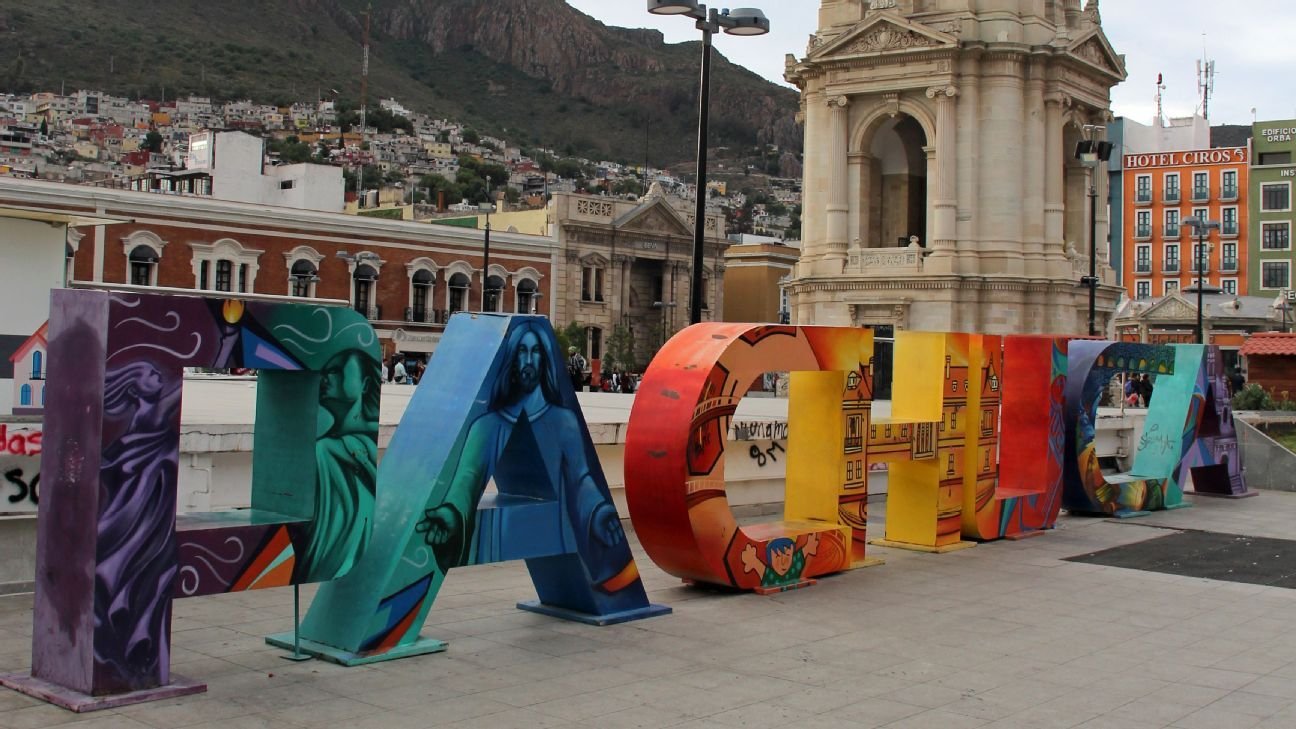
Pachuca is the capital of the state of Hidalgo, located in central Mexico, about 90 kilometers north of Mexico City, and will be the base for South Africa‘s team at the FIFA World Cup in June.
Here is everything you need to know about the city, travel plans, Bafana Bafana’s match day details, what to do when there as a tourist slash fan, and how much it will cost! (The exchange rate as of late April is around R16.50 to the US Dollar.)
How to get to Pachuca
In relation to South Africa, Pachuca is located approximately 12,500 kilometers from Cape Town. A direct flight between Cape Town and Mexico City usually takes between 15 and 16 hours. Considering the subsequent ground transfer to Pachuca, the total travel time is around 18 hours, depending on layovers and connections.
Ground transportation from the capital takes between 1 hour 15 minutes and 1 hour 45 minutes via highway, depending on traffic and the time of day. It is part of the Mexico City metropolitan corridor, but maintains a much smaller scale and less congestion than the capital.
The city sits at 2,400 meters above sea level, an altitude similar to several areas in South Africa, which can represent an advantage in physical adaptation for the Bafana Bafana. Its strategic location allows a combination of operational tranquillity with proximity to one of the continent’s main logistics and media hubs.
In addition to the Mexico City International Airport (AICM), the South African delegation can also operate from Felipe Ángeles International Airport (AIFA), located about 60-70 kilometers from Pachuca. The ground transfer to this terminal takes around one hour via highway, allowing teams to avoid entering Mexico City and simplifying logistics.
Match day logistics
June 11 – vs. Mexico
Venue: Mexico City (Estadio Azteca)
Pachuca is 90-100 km from Mexico City. The car ride takes 1:30-2 hours, depending on traffic. This is the closest venue, allowing a same-day trip.
June 18 – vs. Czechia
Venue: Atlanta (Mercedes-Benz Stadium)
Pachuca is 60-70 km from AIFA, about 1 hour by car. From there, a direct flight to Atlanta lasts approximately 3:30-4 hours. Including ground transfers and airport times, the total journey is about 6-7 hours. Although this is the farthest venue, AIFA facilitates departure without entering Mexico City.
June 24 – vs. South Korea
Venue: Monterrey (Estadio BBVA)
Pachuca is 60-70 km from AIFA (about 1 hour). The AIFA-Monterrey flight lasts around 1:30 hours. Considering transfers and pre-flight times, the full door-to-door journey is around 4-5 hours.
During summer (June to September), Pachuca has a defined temperate climate with summer rains. Daytime average temperatures range from ~18 °C to ~22 °C, with highs rarely exceeding 25-30 °C even in the warmest afternoons.
Nights are quite cool for summer — usually between 9 °C and 12 °C — meaning most of the day feels comfortable, ideal for intense training without the heat stress typical of lower-altitude cities.
The rainy season begins in June and continues throughout summer. Rainfall usually occurs in the afternoon and evening, peaking in July and August. Although mornings can be dry and pleasant, some afternoons may have showers several days a week.
What are the facilities like?
Pachuca has world-class sports facilities, which explains why it was chosen as the official base camp for the 2026 World Cup by FIFA. The city offers elite training spaces, a professional stadium, and internationally recognized training complexes.
The Estadio Hidalgo is the main stadium and home of the local club, Club de Fútbol Pachuca. Opened in 1993, it holds about 26,000 spectators and features locker rooms, technical areas, press facilities, and modern infrastructure for high-level events.
The University of Football and Sports Science is another pillar: its facilities include natural and synthetic grass training fields, gyms, technical zones, recovery areas, and nutrition and sports medicine services. It is a training complex for youth teams and high-performance programs linked to the Pachuca Group.
The distance between this center and Estadio Hidalgo is about 5-7 km, taking 10-15 minutes by local roads. Pachuca offers professional infrastructure without the pressure and logistical congestion of a large metropolis.
What’s Pachuca like as a city?
Pachuca is known as the ‘Bella Airosa’, a nickname due to the strong winds that characterize the city most of the year.
Its identity is deeply linked to mining, which drove its development since the 16th century and shaped its architecture, urban layout, and local culture. South Africans can relate to this, certainly.
One of its most iconic symbols is the Monumental Clock in the historic centre, reflecting European influence. In the 19th century, British workers transformed the region’s economy and society. That heritage remains alive in traditions, gastronomy, and especially in local football history.
Football arrived in the region thanks to British miners, mainly from Cornwall, at the end of the 19th century. They introduced the sport as part of community and work life in Hidalgo’s mining areas, organizing formal matches. Pachuca is also known as the ‘Cradle of Mexican Football’, hosting the first organized club in the country in the early 20th century.
The British influence also left a mark on gastronomy with traditional ‘pastes’, a Mexican adaptation of the Cornish pasty. Over time, the filling incorporated local ingredients, making it an emblem of Hidalgo’s culinary heritage.
Top things to see in Pachuca
Pachuca allows short, compact visits without long transfers. The historic downtown can be explored in 2-3 hours on foot, stopping at the Monumental Clock, Plaza Independencia, and nearby streets. This urban walk combines historic architecture with local cafes and restaurants.
The Football Museum and Hall of Fame, next to Estadio Hidalgo, offers a visit aligned with the city’s football identity. The tour takes 1-2 hours, highlighting Mexican and international football history in a modern and interactive environment.
For a more relaxed outing, David Ben Gurion Park and Tuzoforum offer open spaces for walking or light outdoor activity. These areas are spacious, safe, and easily accessible from anywhere in the city.
Pachuca – Downtown
Free morning or afternoon
Time estimated: 2-3 h
What to do: Walk through Plaza de la Independencia and surrounding streets, admire colonial architecture and historic buildings. Visit the Monumental Clock and take photos. Include cafes and small artisan shops to experience local culture.
Estimated budget:
Food or drinks: 150-300 MXN (~8-17 USD)
Optional museum entry: 50-100 MXN (~3-6 USD)
Local transport/taxi: 100-200 MXN (~6-11 USD)
Pachuca – Gastronomy & Pastes
Free afternoon
Time estimated: 1-2 h
What to do: Try traditional pastes in various historic downtown locations, paired with coffee or a local beverage. Some offer regional fillings like mole (a rich sauce made from chili, chocolate, and spices) or tinga (shredded meat, usually chicken or beef, cooked with tomato, chipotle, and onion). The experience stays within a comfortable time and budget range.
Estimated budget: Pastes and beverage: 100-200 MXN (~6-11 USD)
Pachuca – Museums & Culture
Free morning or afternoon
Time estimated: 1-3 h
What to do: Visit the Mining Museum to learn about the region’s mining history and British influence. Other local museums feature art and temporary exhibits on Hidalguense culture. A calm and educational tour.
Estimated budget: Entry: 50-120 MXN (~3-7 USD), Local transport/taxi: 50-100 MXN (~3-6 USD)
Pachuca – Parks & Green Areas
Free morning or afternoon
Time estimated: 1-2 h
What to do: Walk in Parque Hidalgo or nearby green areas for relaxation and light exercise. Ideal for downtime after training or long transfers. Some parks include viewpoints and historic sculptures.
Estimated budget: Entry free or voluntary: 0-50 MXN (~0-3 USD)
Day Trips from Pachuca
Having Pachuca as a training camp offers something appealing: being able to watch the Bafana Bafana train in a compact environment while, at the same time, having some of the country’s most important cultural sites less than three hours away.
Teotihuacán
Free morning
Estimated time: 1-1:20 h transfer; 3-4 h visit
What to do: Explore the Pyramid of the Sun, Pyramid of the Moon, and Avenue of the Dead. Walking allows appreciation of the urban scale. Arrive early to avoid heat and crowds.
Estimated budget:
Entry: ~95 MXN (~5 USD)
Private car round trip: 1,500-2,500 MXN (~83-140 USD)
Organized tour: 1,000-1,800 MXN (~55-100 USD)
Estadio Azteca & Mexico City
Full day
Estimated time: 1 h 30-2 h transfer; 3-4 h visit
What to do: Exterior visit of the stadium, then explore Mexico City Center: Zócalo, Cathedral, streets, museums, architecture, and gastronomy.
Estimated budget:
Private car round trip: 1,500-3,000 MXN (~83-165 USD)
Round-trip bus: 300-600 MXN (~17-33 USD)
Food in downtown: 250-600 MXN (~14-33 USD)
Mexico City – Xochimilco
Half day
Estimated time: 1 h 30-2 h transfer; 2-3 h visit
What to do: Ride a trajinera along the canals with mariachi music and food onboard. Colourful cultural experience; watch for higher tourist prices.
Estimated budget:
Trajinera (6-8 people, 1-2 h): 500-1,200 MXN (~28-66 USD)
Food and drinks onboard: 150-400 MXN (~8-22 USD)
Private car from Pachuca: 1,500-3,000 MXN (~83-165 USD)
Real del Monte
Free afternoon
Estimated time: 15-20 min transfer; 2-3 h visit
What to do: Walk cobblestone streets, visit the English cemetery, try traditional pastes.
Estimated budget:
Private transport round trip: 300-600 MXN (~17-33 USD)
Pastes and light food: 150-300 MXN (~8-17 USD)
English cemetery entry: ~40 MXN (~2 USD)
Huasca de Ocampo
Half day
Estimated time: 45-60 min transfer; 2-3 h visit
What to do: Visit the Basalt Prisms and walk nearby trails, then explore the town center and try regional dishes.
Estimated budget:
Entry to Prisms: ~100 MXN (~6 USD)
Private transport round trip: 800-1,500 MXN (~44-83 USD)
Food: 200-400 MXN (~11-22 USD)
Puebla (including Cholula)
Full day
Estimated time: 2 h 30-3 h transfer; 6-7 h visit
What to do: Morning in Puebla’s historic center; afternoon in Cholula: archaeological site and church atop the pyramid.
Estimated budget:
Private car round trip: 2,500-4,000 MXN (~140-220 USD)
Round-trip bus: 800-1,400 MXN (~44-78 USD)
Cholula site: ~95 MXN (~5 USD)
Food: 300-600 MXN (~17-33 USD)
Tula de Allende
Half day
Estimated time: 1 h 30 transfer; 2-3 h visit
What to do: Explore the archaeological site, including the Toltec Atlantes and ceremonial complex.
Estimated budget:
Entry: ~95 MXN (~5 USD)
Private transport round trip: 1,200-2,000 MXN (~67-110 USD)
Round-trip bus: 400-700 MXN (~22-39 USD)
Grutas de Tolantongo
Full day (early departure)
Estimated time: 3-3 h 30 transfer; full-day visit
What to do: Enjoy turquoise thermal pools, steam tunnel, and riverside walking.
Estimated budget:
Entry: ~180 MXN (~10 USD)
Private car round trip: 2,500-4,000 MXN (~140-220 USD)
Food in park: 200-400 MXN (~11-22 USD)
Santiago de Querétaro
Full day
Estimated time: 2 h 30 transfer; 4-5 h visit
What to do: Walk historic center, admire the aqueduct, visit temples, squares, and museums.
Estimated budget:
Private car round trip: 2,500-4,000 MXN (~140-220 USD)
Round-trip bus: 700-1,200 MXN (~39-67 USD)
Food in restaurant: 300-700 MXN (~17-39 USD)
Museums: 50-100 MXN (~3-6 USD)
Tequisquiapan
Full day, relaxed
Estimated time: 2 h 30 transfer; 4-5 h visit
What to do: Visit one or two wineries with guided tasting and cellar tour; stroll town center; optionally combine with Peña de Bernal or nearby producers.
Estimated budget:
Tastings and tours: 400-1,000 MXN (~22-55 USD)
Food: 250-600 MXN (~14-33 USD)
Private car round trip from Pachuca: 2,500-4,000 MXN (~140-220 USD)
Round-trip bus to Querétaro: 700-1,200 MXN (~39-67 USD) + local transfer 200-400 MXN (~11-22 USD)
Mineral del Chico
Free morning or afternoon
Estimated time: 30-40 min transfer; 1-3 h visit
What to do: Light hiking in El Chico National Park and viewpoints like Peña del Cuervo. Short routes of 1-3 hours, ideal for a city break.
Estimated budget:
Optional guide: 300-800 MXN (~17-44 USD)
Private transport round trip: 600-1,200 MXN (~33-67 USD)
Food in town: 200-400 MXN (~11-22 USD)

