A few months ago, Royals Review asked “who is the most underrated player in Royals history?”. There were many good choices. I made the case for David DeJesus, who was a terrific outfielder for many years on some putrid Royals teams. DeJesus was good for about 18 WAR in his eight-year Royals career and was about a 3-WAR-per-season player during his five-year peak from 2005 to 2009. I remember him as a solid, consistent player. He didn’t have a lot of power, but he was good for around 30 doubles and seven triples per season while consistently hitting close to or above .300. The Royals would have loved to have had a couple of David DeJesus-type players last season. Or even in 2026.
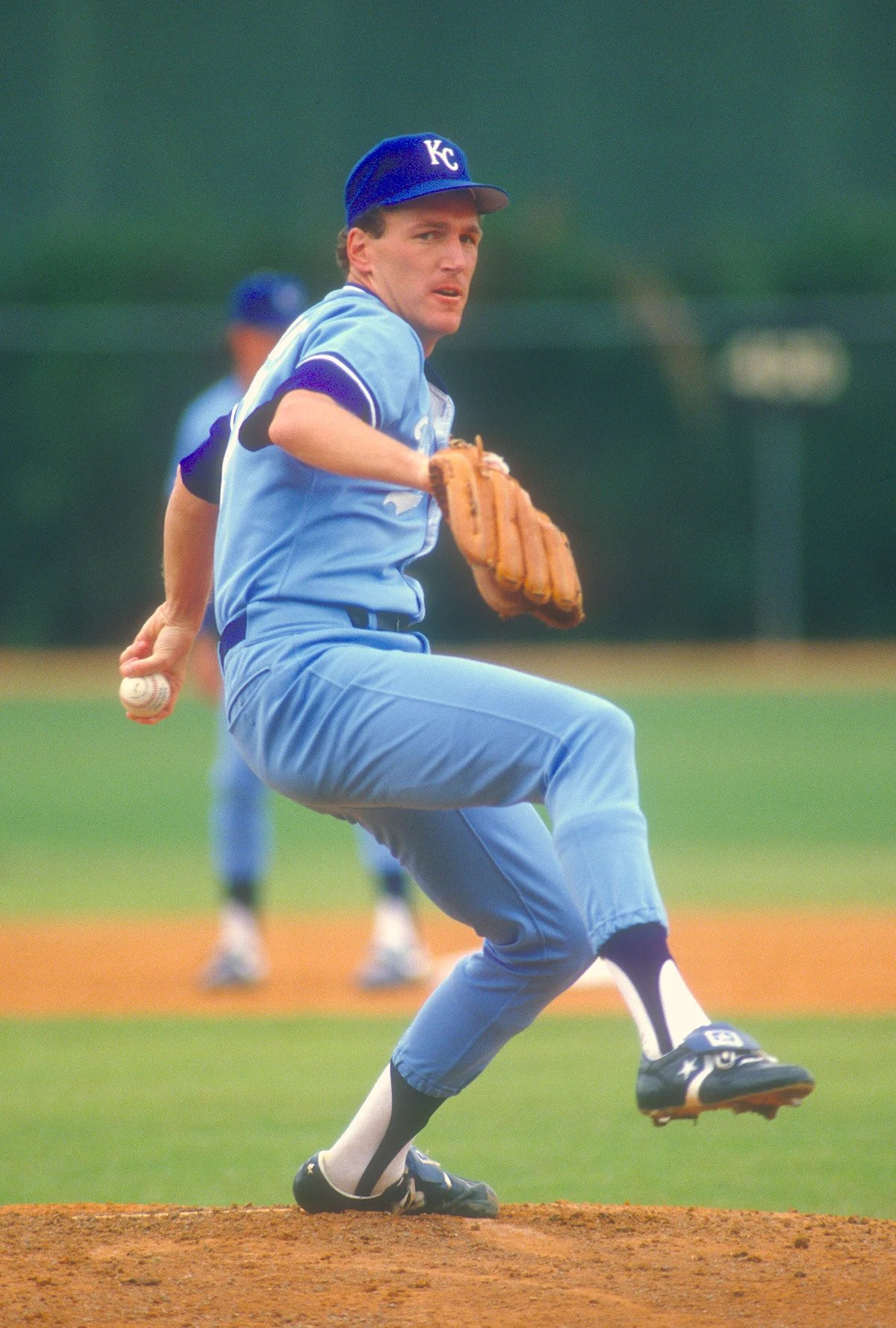
Another name that popped up later was that of pitcher Charlie Leibrandt. Leibrandt was a star pitcher for Miami University (Ohio) and was later drafted by the Reds in the ninth round of the 1978 draft. For a guy who was viewed as a soft-tossing lefty, he shot through the Reds’ minor league system faster than a Nolan Ryan heater, spending only nine games in Class A ball before being promoted to Double-A Indianapolis. He was a late-season call-up by the Reds in 1979 and got into three games. He appeared in 79 games for Cincinnati over the next three seasons but never quite found his footing. Cincy unwisely gave up on him and, in June 1983, flipped him to Kansas City for another pitcher, Bob Tufts, in a classic exchange-of-guys-who-needed-a-change-of-scenery trade. The deal would end up being one of the best in Royals history.
Advertisement
Leibrandt started the 1984 season in Omaha and was dominant, going 7-1 with a 1.24 ERA. That prompted his call-up to Kansas City and, for the next six seasons, he was a fixture in the Royals’ rotation.
During his five-year run from 1984 to 1988, Leibrandt went 71-50 with a 3.38 ERA while averaging 220 innings per season. Leibrandt wasn’t known as a fireballer, but he could get a strikeout now and then, averaging about five per nine innings. He was known for keeping the ball in the park and limiting his walks, two classic hallmarks of a good pitcher.
Unfortunately for Leibrandt, he was more often remembered as a tough-luck loser in some big playoff and World Series games, which overshadowed his regular-season excellence.
Looking back on those playoff efforts, it becomes obvious that in several of those games, his manager should have pulled him earlier. If your starter gets you into the eighth or ninth inning with a lead, he’s done his job.
Advertisement
In 1984, the Royals called on Leibrandt in Game 3 of the ALCS against the Tigers. If you were alive in 1984, you remember what a powerhouse those ’84 Tigers were.
Detroit won 35 of its first 40 games, and the Tigers weren’t just winning — they were the playground bully, beating teams into submission. I’ve rarely seen a team that powerful.
They blew out the Royals in Game 1 before prevailing in extra innings in Game 2. Leibrandt pitched masterfully in Game 3, twirling a three-hitter but losing 1-0. The Tigers pushed across a run in the second inning on a fielder’s choice, and that was that. The problem was that the Royals also collected only three hits. Detroit then dispatched San Diego in the World Series.
In Game 4 of the 1985 ALCS, Leibrandt went into the ninth inning having allowed only four hits while the Royals clung to a 1-0 lead. This was the first time that Dick Howser should have pulled Leibrandt, who was already at 110 pitches. Dan Quisenberry was the closer in those days, and while not as automatic as he had been in previous years, he was still the Quiz.
Advertisement
Leibrandt walked the leadoff batter, then gave up a game-tying double. Howser finally brought in Quiz, but the Jays knocked him around with a single and a double and stole the game, 3-1.
Leibrandt got some revenge in Game 7 against the Jays, coming on in relief of Bret Saberhagen, giving up just two runs in 5 1/3 innings and picking up the series-clinching win.
He had another tough-luck outing in Game 2 of the 1985 World Series, taking a 2-0 lead into the ninth inning while allowing the Cardinals only two hits. Leibrandt was at 108 pitches entering the ninth, and Howser stuck with him. The Birds knocked the tired Leibrandt around with three doubles and a single before Howser came to his senses and brought in Quiz. Too little, too late, as the Royals gave away Game 2.
Leibrandt got the start in the pivotal Game 6 with the Royals down three games to two. He was masterful, going 7 2/3 innings, giving up just four hits and one run while throwing 103 pitches. This time, Howser got it right, turning the game over to Quisenberry, who got the win when the Royals – aided by an epic Cardinals meltdown (and a bad call) – walked it off.
Advertisement
Leibrandt was outstanding from 1986 to 1988, going 43-34, averaging 238 innings per season with a 3.55 ERA. He averaged almost 5 WAR during those three seasons.
For whatever reason – fatigue, bad luck, or injuries – he was largely ineffective in 1989, so during the offseason the Royals packaged him in a deal with the Braves for Gerald Perry. Leibrandt became expendable when the Royals signed Storm Davis and Mark Davis, both of whom spectacularly imploded.
Leibrandt, however, had a career rebirth in Atlanta, going 39-31 over three seasons with a 3.35 ERA.
Leibrandt got the start for the Braves in Game 1 of the 1991 World Series against Jack Morris and the Twins, which was a thankless job. Morris had one of those World Series performances where he simply wasn’t going to be denied. We’ve seen that before. Bob Gibson in 1967 comes to mind. And, painfully, Madison Bumgarner in 2014.
Advertisement
Leibrandt was called on in relief in Game 6 and gave up arguably the most iconic home run in Minnesota history: the Kirby Puckett “We’ll see you tomorrow night!” game-winner.
The Braves made the World Series again the following year but lost to Toronto in six games. Leibrandt made just one appearance in the 1992 Series and took the Game 6 loss when the Jays nicked him for two runs in the 11th inning.
Atlanta traded Charlie to Texas in December 1992. At age 36, he was throwing on borrowed time. At one point during the season, he won six straight road games but finished the year with a 4.55 ERA and retired at season’s end.
Leibrandt’s best years were in Kansas City, and the Royals were lucky to have him as part of the rotation. I’ve always felt that guys like DeJesus and Leibrandt were borderline Royals Hall of Fame candidates. Whether they ever get in or not, there’s no disputing the valuable role they played for the Royals.
Advertisement
Leibrandt’s name still dots the Royals’ top-10 career lists, and a few single-season lists as well, in many categories. He still ranks seventh in shutouts and pitcher WAR, eighth in innings pitched and career wins, ninth in complete games and games started, and 10th in ERA. You can easily make the case that Charlie Leibrandt should be in the Royals Hall of Fame.
Despite his postseason travails, if Charlie Leibrandt was your fourth or fifth starter, you had a helluva rotation.

