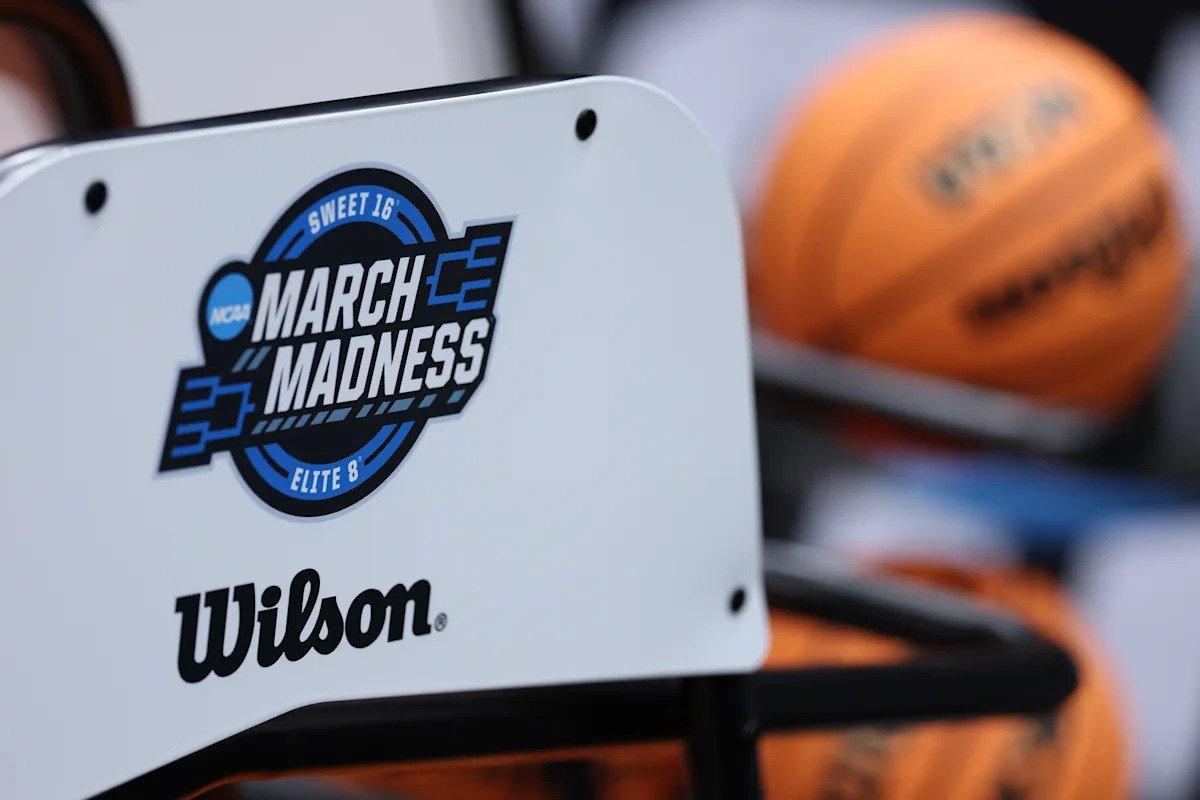
Every single person who signed off on the decision Thursday to expand the NCAA basketball tournament to 76 teams understands they are doing something fans didn’t ask for and that nobody in a position of power can justify.
It is the Seinfeld of expansions — a decision about nothing, that gains nothing for college basketball, that exists mostly because the current leadership class led by SEC commissioner Greg Sankey and Big Ten commissioner Tony Petitti are bound and determined to wreck everything in college sports that used to make sense.
Advertisement
Faced with a choice between adding eight more teams to the tournament or starting a game of chicken between the velociraptors at the top of the food chain and the 200-plus schools that would be cut out completely if the Big Ten and SEC someday walk away, the NCAA has once again jumped into the cage and made itself the meal.
As we’ve come to expect in a college sports world led by Sankey and Petitti, there are endless solutions for problems that don’t exist. The stuff that really matters always seems to be someone else’s job.
Thank goodness college sports has such self-serving leadership. Without it, we’d be forced to endure another horror like 17-16 Auburn missing March Madness this year. We can all rest easy knowing that will never happen again.
In all seriousness, while the decision itself is a bad one because it will give us a watered-down bubble and lesser tournament than the one we previously enjoyed, my guess is that most casual fans — the ones who make the NCAA tournament one of America’s most popular events — won’t really notice. In the real world, it is already asking a lot of regular people with jobs to devote all day Thursday and Friday of the tournament’s first week to watching basketball.
Advertisement
They’re not going to do it on Tuesday and Wednesday to watch a bunch of power conference teams with sub. 500 conference records play each other. The previous First Four format, with two games on Tuesday and Wednesday night, was strictly a niche product. Making it an all-day affair seems unlikely to change that equation.
The bigger issue here is what it says about the decision-making process in college sports against the backdrop of significant, existential issues.
If you want to take something like the NCAA tournament that did not need an intervention and turn it into an unwieldy mess that mostly caters to their agenda, Sankey and Petitti seem to be highly effective. With an unmatched combination of leverage and shamelessness, they can snap their fingers and turn NCAA president Charlie Baker into their errand boy.
Advertisement
But when it comes to fixing a real problem — like the rise of $20 million college basketball rosters while only a handful of programs even bring in $20 million in revenue — they are suddenly helpless and out of answers, reduced to groveling at the feet of politicians to rescue their industry from its own lack of courage and discipline.
If college presidents had any wits about them when it comes to athletics, here’s what they would do: Sit Petitti, Sankey and the other power conference commissioners in a room and deliver an ultimatum to get college sports fixed over the next year or they will all be replaced. End of story.
Until then, leave the NCAA tournament alone. Stop fighting over the right number for the College Football Playoff. Put every ancillary issue on the backburner. If rising player costs and an unregulated transfer portal are truly as urgent and out of control as you claim, the focus needs to be entirely on tearing the current system down and coming up with a better one.
The sad truth, however, is that the current leadership group is probably not up to the task. The power conferences’ big innovation over the last two years was settling the House v. NCAA antitrust case and creating the College Sports Commission to set an enforceable revenue-sharing cap while separating real NIL deals from the booster collective nonsense.
Advertisement
Instead, it took about 30 minutes before schools within their own ranks started poking holes in the settlement to try and gain a competitive advantage. Fast-forward nearly a year later and not only has nothing changed, the environment has arguably gotten more out of control. Collectives are still going strong, the CSC operates under constant threat of being sued, tampering is a fact of life and administrators and coaches laugh about the ineffectiveness of the revenue-sharing cap. College sports now exists as a vassal to the mood of attorney Jeffrey Kessler.
It is hard to imagine any other industry would let such a disaster unfold without repercussions to the leadership that signed off on that deal. And yet here we are, with the entire NCAA operating under the thumb of conference commissioners who have gotten practically nothing right for the last five years and actively made so many things worse from conference realignment to this misguided NCAA tournament expansion.
Advertisement
Even what they’ve done right — namely, the injection of parity into college football — has happened entirely by accident and become so unacceptable that the SEC and Big Ten are at a stalemate over how to assure themselves the most number of playoff bids possible in their next mindless expansion.
For better or worse — mostly worse — this is what college sports has become: An endless doom loop of the SEC and Big Ten cutting the legs out from underneath everyone else, crying about the unfairness of it all, and forcing changes at the point of a bayonet to provide themselves a maximal benefit while making the product worse for fans and everyone in their wake.
Meanwhile, the foundation of the entire enterprise continues to crumble and there is no plan to fix it. But at least Auburn isn’t going to get left out again.

