It’s another week here at BCB After Dark: the hippest hangout for night owls, early risers, new parents and Cubs fans abroad. Come on in and sit with us for a while. We’re always open for a friendly face. There’s no cover charge. The dress code is casual. We still have a few tables available. There’s a two-drink minimum, but it’s bring your own beverage.
BCB After Dark is the place for you to talk baseball, music, movies, or anything else you need to get off your chest, as long as it is within the rules of the site. The late-nighters are encouraged to get the party started, but everyone else is invited to join in as you wake up the next morning and into the afternoon.
Advertisement
Last week I asked you if you would like the Cubs to trade for an injured Tarik Skubal on the hope that he would be healthy and his old dominant self by the playoffs. That idea seemed too risky for you, as 88 percent of you would rather the Cubs look elsewhere for starting pitching help. Presumably someone who was healthy at the time the deal was made.
Here’s the part where we listen to jazz and talk movies. You’re free to skip ahead if you want.
Tonight we’re featuring one of those fun Postmodern Jukebox videos. Postmodern Jukebox is the creation of pianist Scott Bradlee and here he’s joined by Gunhild Carling on vocals and trumpet and Aaron McLendon on drums.
This is ABBA’s “Dancing Queen” performed as a 1920s hot jazz number.
Dillinger was the surprise hit film of 1945 from Poverty Row studio Monogram Pictures. Directed by German exile Max Nosseck and starring a then-unknown Lawrence Tierney, Dillinger is a throwback to the gangster films of a decade earlier. The film received a Oscar-nomination for Best Screenplay for screenwriter Philip Yordan, but the script is nowhere near the best part of the film. Instead, Tierney’s cold and psychopathic portrayal of John Dillinger is what makes the film.
Advertisement
Monogram Pictures was one of the many, and arguably the most-successful, of the many small independent movie studios outside of the major or “Big Five” studios during the Golden Age of Hollywood. These studios specialized in churning out cheap films, often with lurid subject matter, that could turn a small profit even if they weren’t big hits. Dillinger broke out of that B-movie ghetto and became a huge hit in 1945, which led to more films from Monogram and producers the King Brothers that dealt with sensationalist themes. Its success also led to the Hays Code banning films made about real-life criminals for fear that they glamourized them.
The King Brothers never had any money to pay actors, but in this case, they wanted an unknown face, believing that the public wouldn’t accept a well-known actor as the infamous John Dillinger. They landed on Lawrence Tierney, who had only a few small credits to his name when he got the part. Tierney had spent more time in the Los Angeles County jail for fighting and being drunk and disorderly than he’d spent on-screen. But it was an inspired choice. I’m not sure what Tierney does on screen is acting so much as it is inhabiting the screen with a glowering presence. His Dillinger is a cold-blooded killer who shows no emotion when he decides to shoot one of his fellow outlaws or carve up a waiter who disrespected him years earlier with a broken beer mug. Ironically, it’s the lack of on-screen emotion that makes Tierney’s Dillinger so scary.
Tierney would go on to have a long career playing violent tough guys in crime pictures. Most of you probably remember him from his later work, which includes Reservoir Dogs (Quentin Tarantino was unsurprisingly a fan) and guest appearances on Star Trek: The Next Generation and Deep Space Nine.
The plot of Dillinger very loosely follows the career of the title gangster. He does crimes, gets arrested, breaks out, does more crimes again. He has a girlfriend Helen Rogers (Anne Jeffreys) who will become the infamous “woman in red” who betrays him. There’s a gang, and Dillinger’s relationship with the older Specs (Edmund Lowe) is a major theme of the film. Specs goes from a cellmate to a mentor to someone whom Dillinger battles for control of the gang once they get out. The always great Elisha Cook Jr. also plays one of the members of Dillinger’s gang.
Advertisement
Because Dillinger is about crime and came out in the heart of the noir period, some people claim that the film qualifies as a noir. But while there are some noir elements, it’s really a throwback to the gangster films of the 1930s. A man goes down a wicked path of crime and ends up paying the ultimate price is the story of The Public Enemy, Scarface, and Little Caesar. It’s a stretch to call Jeffrey’s Helen a femme fatale, even if she ends up betraying him. He pulls her into a life of crime rather than the other way around, for example. Most of the noir elements are just the way the film was shot with some of the trademark shadows and Dutch angles, but those were popular in a lot of films of the forties.
Another way that Dillinger reflects the gangster film tradition is that, in a cost-cutting move, they just re-use action scenes earlier crime pictures of the era, in particular director Fritz Lang’s 1937 film You Only Live Once. So there’s literally a different gangster film inside of this one.
Dillinger is a great example of how a low-budget film can turn a lack of money into an asset. The 70-minute runtime means that the plot has to be simple, tight and fast-moving. (That also meant that theaters could get in more showings of the film every night, bringing in even more money.) The lack of money for a big-name actor made them turn to Tierney, who is biggest reason to watch the film. Even the crime scenes that were reused from Lang were undoubtedly better than anything Nosseck could have shot.
Dillinger isn’t a great film. It’s Oscar-nomination aside, the script is more good rather than great. (Although looking at the other nominees, it’s a surprise it didn’t win.) But it’s certainly worth 70 minutes of your time just to see Tierney’s terrifying performance as John Dillinger.
Advertisement
Here’s the trailer for Dillinger.
Dillinger is on HBO Max, Watch TCM and there are free copies floating all over the internet as well. I believe it’s in the public domain.
Welcome back to everyone who skips the music and movies.
Last year, the Cubs built a pretty good bullpen out of castoffs. Two big pieces were Brad Keller, whom the Cubs signed on a minor league deal, and Drew Pomeranz, whom the Cubs acquired from the Mariners after he opted out of his minor league deal with the Mariners.
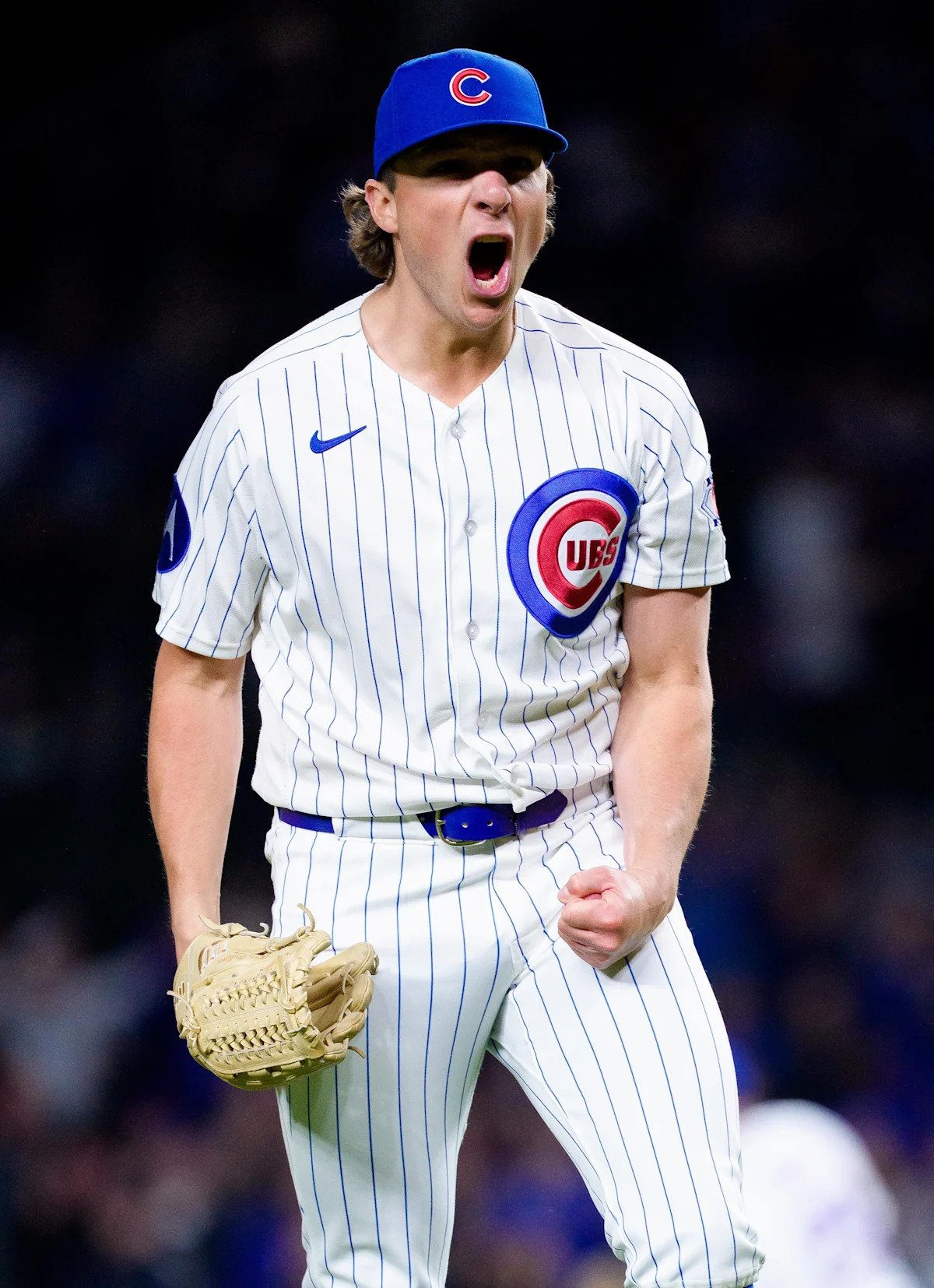
Both of those players went and signed free agent contracts elsewhere. This year, the potential “scrap heap to scrap iron” reliever just might be southpaw Ryan Rolison. Rolison was a first-round pick of the Rockies out of Ole Miss in 2018, which has got to be a good news/bad news thing for a college pitcher. The good news is that you’re a first-round pick. The bad news is that they’re expecting you to pitch for the Rockies.
Advertisement
Rolison was a top-five prospect for Colorado, as you might expect from a first-round pick. Scouts weren’t enamored with his pure stuff which graded out as more average, but he got good grades for plus command and “pitchability,” or the ability to mix up his stuff to keep hitters off balance.
But Rolison battled injuries during his time with the Rockies, which included two shoulder surgeries and a broken finger. He finally made it to the majors last year, but by that time he’d been moved to the bullpen full-time. He also didn’t pitch well in Colorado, putting up a 7.02 ERA in 42.1 innings. Even for the Rockies, that’s bad.
This winter, Rolison got stuck in waiver wire purgatory. The Rockies designated him for assignment in November and they ended up trading him to the Braves for cash. The Braves tried to sneak him through waivers in December, but the White Sox claimed him. Then, just two days before Christmas, the White Sox designated him for assignment with the Cubs claiming him in early January.
Rolison made his Cubs debut on April 14 as the Cubs bullpen was decimated with injuries. But he only pitched one inning until April 24 when he pitched three scoreless innings in that dramatic comeback win over the Dodgers.
Since then, Rolison has gotten his name called more often from manager Craig Counsell. Not only did he get the win in that Dodgers game, he improved his record to 3-0 with wins in back-to-back games against the Reds. Rolison has an ERA of 4.00 even, most of which was earned in a game against the Diamondbacks where he gave up a three-run home run to Geraldo Perdomo. Not good, but he’s not the first one to mess up against Perdomo and he won’t be the last.
Advertisement
But can Rolison keep it up? This article by Matthew Trueblood argues that he (probably) can. For one, Rolison has added about 1.3 miles per hour on to his fastball this year and it features a bit more vertical rise. But the more interesting point that Trueblood makes is that Rolison is uniquely qualified to take advantage of the new strike zone this year. As others have noted, the strike zone as called by ABS is slightly smaller than what had been called in previous years. In particular, there is less room at the top of the zone. Trueblood argues Rolison’s command and movement allows him to work the top of the zone better than a lot of pitchers out there.
Now maybe that’s true and maybe it isn’t. You can read the article and make up your mind for yourself. But tonight I’m asking you if you think that Rolison is going to be a critical member of the Cubs bullpen this year. I’m essentially asking a “circle of trust” question and whether or not you think he will be in or close enough to the circle of trust to stay in the Cubs bullpen all year.
I’m giving you three options to pick from. The first is that you think Rolison will pitch well enough to stay in the majors all season—or at least only make one short trip back to Iowa. The second option is that he doesn’t earn a permanent spot in the ‘pen, but that he rides the “Des Moines shuttle” between the majors and Triple-A most of the year. Rolison has an option left, so as long as the Cubs leave him on the 40-man, he can go back and forth betwen the majors and the minors.
The final option is that you don’t think Rolison will continue to pitch well and that eventually he’ll be designated for assignment. I put “injured” in with this choice as well. I don’t know how you could possibly predict that Rolison will suffer an injury that will cost him much or all of the season, but I have to admit that’s a real possibility with every pitcher. So I put it in with the DFA option because I didn’t want to put any of you on the record thinking that a Cub is going to get hurt.
Advertisement
Thank you for stopping in tonight. It’s always good to see you. We hope you’ve enjoyed being here as much as we’ve enjoyed hosting you. Travel home safely. Don’t forget any personal items. Recycle any cans and bottles. Tip your waitstaff. And join us again tomorrow evening for more BCB After Dark.

