Clemson didn’t have to completely rebuild their roster as they did a year ago, but it was clear they needed to improve their outside shooting and replace key post players that were major contributors a year ago. Before we dive into the Tigers’ portal class, let’s set the context with who is leaving and which freshmen are joining.
Outgoing
(Height / Points per game / Ken Pom Offensive Efficiency Rating, Evan Miya Baysian Defensive Performance Rating [2.00 or better is top 40 in the ACC])
Advertisement
RJ Godfrey (6-foot-7 / 12.0 ppg / 120.6 Ortg / 3.16 DBPR)
Godfrey was Clemson’s best player both offensively and defensively. He managed to do this despite being short for his PF position and having essentially no mid-range or 3-point game. His strength and post-moves were truly otherworldly. His leadership will also be missed.
Nick Davidson (6-foot-10 / 9.1 ppg / 115.9 Ortg / 1.76 DBPR)
Nick Davidson was a solid player on both sides of the ball for Clemson, but he wasn’t quite the star some expected. His 3PT%, FT%, and REB% all declined from the year before at Nevada. He went from 33.1 minutes per game, averaging 15.8 minutes and 6.5 rebounds, to 21.9 minutes with 9.1 and 4.0.
Advertisement
Butta Johnson (6-foot-4 / 6.3 ppg / 115.5 Ortg / 0.64 DBPR)
Butta Johnson came off the bench for most the year, but as the year went on, he overtook Jake Wahlin for a starting spot. In addition to the second most 3-pointers on the team (44), he also proved to be a reliable ballhandler when Dillon Hunter needed a rest.
Dillon Hunter (6-foot-3 / 7.5 ppg / 112.4 Ortg / 2.42 DBPR)
Dillon Hunter was a consistent defensive stalwart, but his offense didn’t progress significantly. He started the year red hot from 3 and was excellent throughout non-conference play. Once ACC play began, he grew passive and disappeared at times. He was efficient and made a lot of clutch free throws to close out wins though — memorably against Cincinnati and North Carolina.
Advertisement
Jestin Porter (6-foot-1 / 9.6 ppg / 107.4 / 1.92 DBPR)
Jestin Porter was Clemson’s leader in 3-point shots made (65). While his defense was a bit shaky at the start of the year, Brownell’s Grit got into him, and he became a defensive pest, leading the team with 43 steals (1.2 per game). His lack of height was a limiting factor, but he gave all he had for his lone season at Clemson.
Jake Wahlin (6-foot-10 / 5.3 ppg / 105.6 Ortg / 1.92 DBPR)
Wahlin was the only transfer out of the program, and it was likely one that the staff encouraged. He was a very solid defensive player, but struggled with the ball.
Advertisement
Incoming Freshman Class
Harris Reynolds (6-foot-4)
The top player in this class is a scoring guard from Atlanta. He is the 132nd overall recruit (247) and could make an impact similar to what we’d hope to see had Zac Foster remained healthy this season.
Will Stevens (6-foot-10)
Will Stevens is ranked as the 145th overall recruit (247) and could be called upon depending on how the Carter Welling knee injury progresses and how well Trent Steinhour, who is a rising sophomore, develops.
Amare James (6-foot-6)
James plays at Wheeler High School in Marietta, GA. I was able to watch him play in person, and he was not especially assertive offensively, but his team is stacked full of talent, and his defense looked solid. I expect him to redshirt and be a developmental player who could become a classic Brownell defender and a threat offensively.
Portal Class
Cole Certa (6-foot-5 / 12.8 ppg / 119.5 Ortg / -0.76 DBPR)
Advertisement
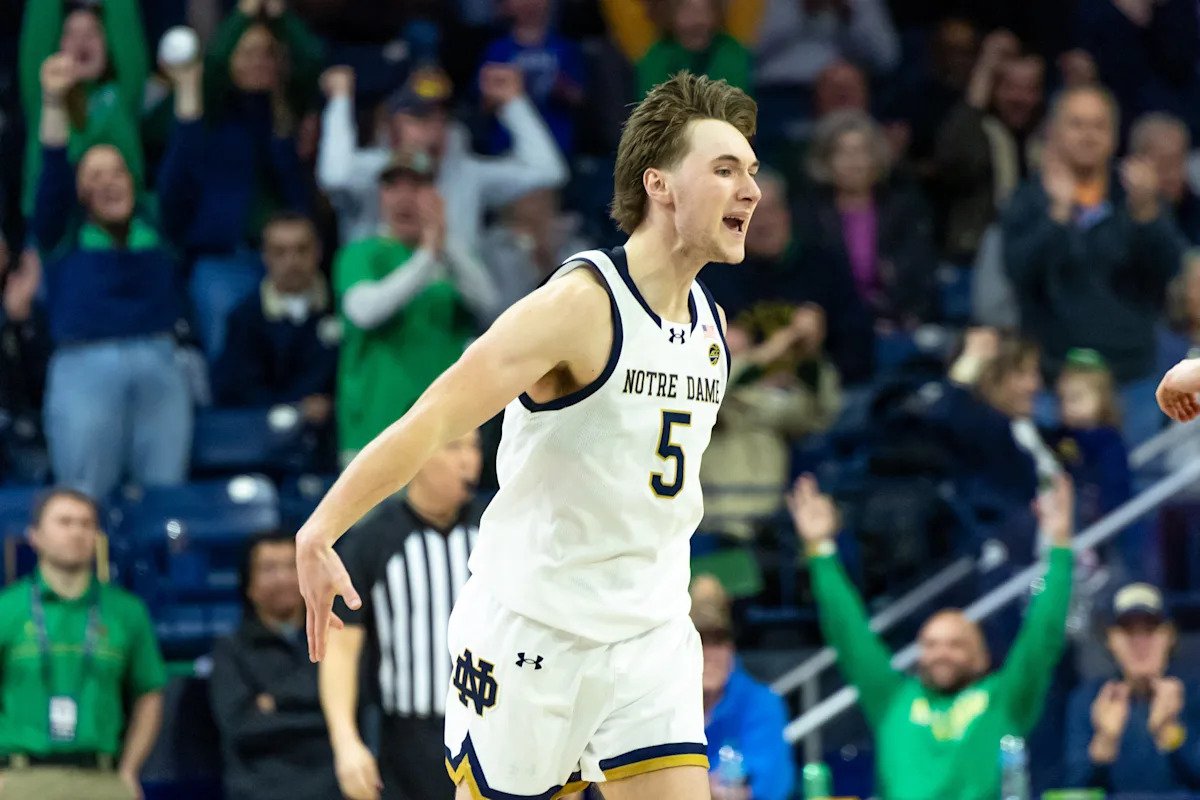
Cole Certa represents the elite 3-point shooter last year’s Clemson team missed. His range will remind fans of Terrance Ogelsby and Joe Girard. His contributions came primarily in the form of 3-pointers as he made 81 of 221 attempts (.368) from deep. For context, Jestin Porter led Clemson in made and attempted 3-points, going 65-187 (.348).
Certa averaged 12.8 ppg per game, but that figure ticks up to 15.7 in ACC play. He was a top 100 high school recruit who seems to be coming into form after two seasons at Notre Dame. Unfortunately for Notre Dame, they lost him and their other top players this offseason as Notre Dame heads into what could be a bottoming-out season (Markus Burton —> Indiana; Jalen Haralson —> Tennessee).
Based on Evan Miya’s offensive value metrics, Certa would have been the second most valuable offensive contributor on Clemson last season, behind only RJ Godfrey. Conversely, he would have been their lowest-rated defender. Brownell has always been a great defensive tutor, so it is feasible that Clemson’s coaching staff can elevate him there. They wouldn’t have made the offer if they didn’t believe he could be adequate in this area. At 6-foot-5, he offers more height than the departing Jestin Porter, but don’t expect the loads of steals.
Dylan Faulkner (6-foot-9 / 17.2 ppg / 118.7 Ortg / 1.17 DBPR)
Advertisement
Faulkner was Evan Miya’s top player in the SoCon last season. His 17.2 points, 8.6 rebounds, and 1.5 blocks per game all would have been tops on Clemson last year. As impressive as that may be, I was initially concerned it wouldn’t translate in the transition to bigger, more physical competition in the ACC. We saw Nick Davidson struggle with the physicality of the ACC at times after transferring from the Mountain West, and the transition from the SoCon is even bigger.
Fortunately, Faulkner’s game log can dispel this concern. Against Arkansas — who was 34th in average height and finished 27th in block% — Faulkner shot 6-10 for 13 points and 6 rebounds. Against VCU, another non-conference tournament team with good size, Faulkner posted 22 points and 9 rebounds.
Faulkner doesn’t shoot the 3 and in that sense slots into the RJ Godfrey role as a true post player. While having bigs who can pass and shoot is a staple of the Brownell offense, I’m not sure if there was anything more frustrating than watching Tiger bigs miss 3s as defenses went to drop coverage on pick-and-rolls and dared them to shoot from outside rather than leverage their strengths.
As teams overpaid huge amounts for top-end post players like Flory Bidunga (6-10, 235lbs), who transferred from Kansas to Louisville, Clemson found a great value in Faulkner while pivoting into a more cost-efficient perimeter-centric team with better athleticism. Faulkner is even more critical, in a sense, because the Tigers have less depth at the post. Faulkner is a tremendous find for Brownell. He will be one of the most important players on the team next season.
Advertisement
Liutauras Lelevicius (6-foot-7 / 8.0 ppg / 126.7 Ortg / 1.04 DBPR)
The Tigers’ third addition to the portal class is an intriguing one. Lelevicius is from Lithuania and played in the EuroCup three years ago (think salaries in the $70,000 range, not millions) before coming to America to play for Oregon State. Then he transferred to TCU and now to Clemson.
Lelevicius is a lower-usage player with excellent efficiency. At this point in his career, you shouldn’t expect a breakout, but the Tigers appear to have bought themselves a solid high-floor contributor. His 126.7 offensive efficiency rating from KenPom would have led all Clemson Tigers a season ago. He doesn’t turn the ball over, makes 89% of his FTs, and 38% of his 3-pointers. That’s fantastic efficiency, and it partly comes because he wasn’t a major cog of the Horned Frog offense. He allows shots to come to him, as he took just 16% of the team’s shots while he was on the floor. This would put him in the same range as Butta Johnson and Jake Wahlin from last year, but with better efficiency. Of course, he doesn’t offer the defense of Wahlin or the ball handling of Butta Johnson.
He started 22 of 34 games for a TCU squad that made the round of 32 before falling to Duke last season. I don’t expect him to start this year, though. The aforementioned Certa and Faulkner are two likely starters, while Ace Buckner and Zac Foster are your starting guards. That leaves only power forward, where Chase Thompson would seem to have the inside track to start. Still, Lelevicius will be relied upon for major bench minutes, especially early on while Carter Welling is out (assuming he isn’t redshirting and will return later in the season). With him and Certa joining the Tigers, Clemson should be a much better shooting team in 2026-27.
Advertisement
David Fuchs (6-foot-9 / 12.7 ppg / 110.3 Ortg / 0.89 DBPR)
Much like Lelevicius is another former European pro making who will play for his third different college team. David Fuchs previously played in the German professional system with Ratiopharm Ulm, at Rhode Island, and most recently at San Francisco. He will be 23 years old when the season begins.
Coach Brownell said a year ago that he hates the rules that allow former professionals to play in college, but he wouldn’t put Clemson at a disadvantage by ignoring the option. In what feels like a very opposite strategy from the football program, Brownell has done everything within the rules to maximize the team’s talent and opportunity to win big next season.
David Fuchs (“Fooks”) is an elite rebounder. He led the Dons last year with 7.8 rebounds per game. His 25.8 DREB% ranks 23rd nationally. 7.8 rebounds and a 25.8 DREB% each would have led Clemson last year. For a team that is losing a lot of size, bringing in a rebounding machine that clocks in at 245lbs is welcome. Faulkner and Fuchs will immediately elevate Clemson’s rebounding from a season ago.
Advertisement
Fuchs tallied 12.7 points per game, with most of them coming around the basket. Like RJ Godfrey, strength and post-moves are his calling card, but he can stretch defenses a bit more than Godfrey did. In a sense, he is a blend of Godfrey and Welling.
In addition to being an elite rebounder, he is top 10 nationally in drawing fouls (7th). He draws a whopping 7.5 fouls on opponents per 40 mins. Carter Welling led Clemson with 6.1 last season.
He is far from perfect, though. Despite his size and strength, he doesn’t rate as a standout defender. He averages just 0.3 blocks per game and has just a 0.89 defensive player rating by Evan Miya. He also averaged 1.9 turnovers per game, which would have been 0.5 more than RJ Godfrey, who led Clemson last year. Overall, he isn’t a star, but he further elevates this transfer class, which, when combined with incoming freshmen and retention, positions Clemson for a fourth straight bid to the Round of 64.
Depth Chart
Here’s a first look at the potential depth chart. It is a 10-team, giving the Tigers an incredibly deep bench once again.
|
Starter |
Bench |
Bench |
|
|---|---|---|---|
|
Center |
Dylan Faulkner |
Carter Welling (INJ) |
|
|
Power Forward |
David Fuchs |
Chase Thompson |
Liutauras Lelevicius |
|
Small Forward |
Chase Thompson |
||
|
Shooting Guard |
Ace Buckner |
Cole Certa |
Harris Reynolds |
|
Point Guard |
Zac Foster |
Ace Buckner |
Harris Reynolds |
Note that there is a lot of flexibility in the above depth chart. Buckner will play some point guard, Certa will play some shooting guard, and Fuchs will play some center while Welling is injured. Welling could reclaim a starting role and shift Faulkner to the PF spot and Fuchs to the bench. There is some good versatility here. This roster has far more offensive upside and likely better rebounding than a year ago, but defense will need to be coached up – a Brownell specialty. This has been a stellar offseason for Brownell to acquire some higher upside pieces, but there’s no doubt his defensive coaching will be needed to get this squad to be more than a tournament participant.

