Ever since the San Diego Padres launched themselves out of irrelevance at the beginning of the decade to become one of the main characters in the National League, their rivalry with the Los Angeles Dodgers has been one of the most intriguing storylines in MLB. This week at Petco Park, the two Southern California foes clashed for the first time in 2026, renewing the rivalry with a compelling three-game set that offered reasons for optimism on both sides. It was the first of four scheduled regular-season series between the two clubs, but given how well both teams have been playing, perhaps we’re headed for another eventual matchup in October as well, which would sustain an even-year trend after they met in the NLDS in 2020, 2022 and 2024.
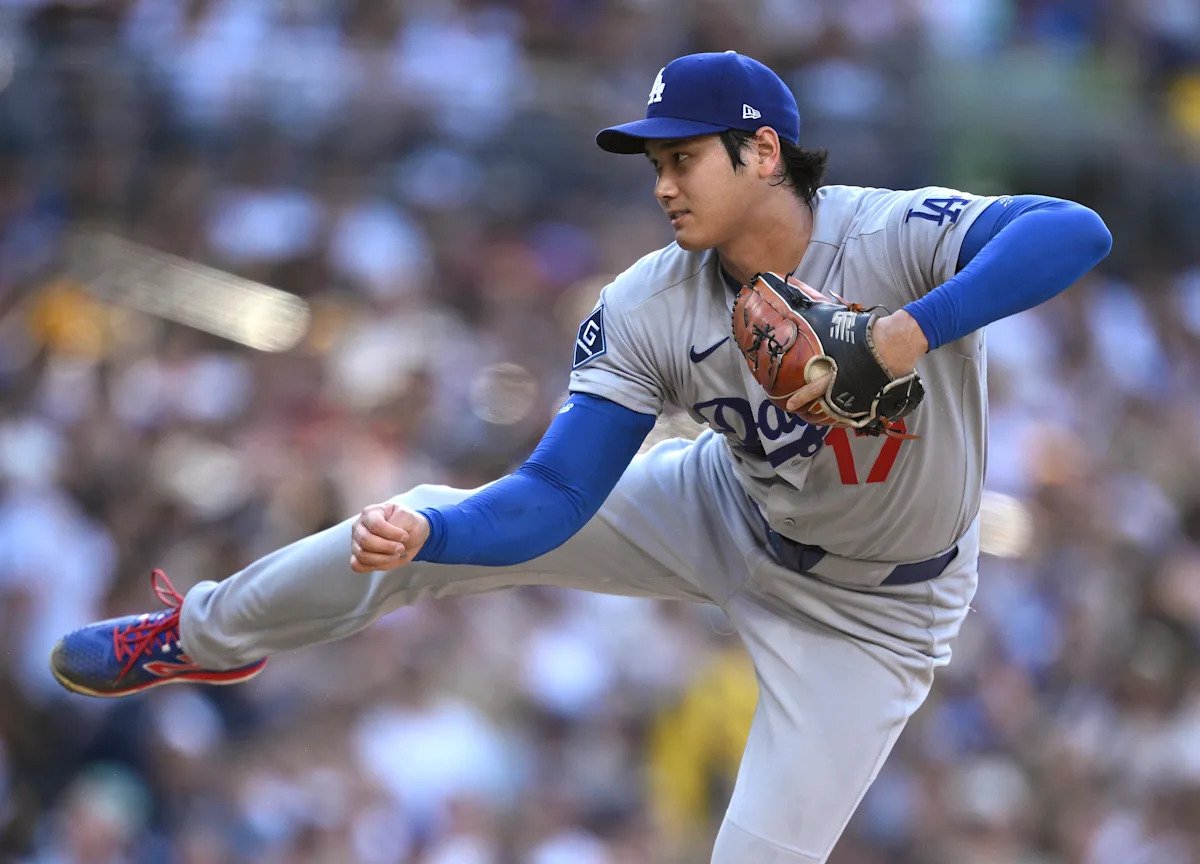
This week’s games tilted slightly in Los Angeles’ favor. The Padres snagged the series opener with a narrow 1-0 win, with Michael King outdueling Yoshinobu Yamamoto while Miguel Andujar drove in the game’s only run with a solo homer in the first inning. The Dodgers responded Tuesday with a one-run victory of their own, a 5-4 triumph featuring a two-homer game from Freddie Freeman. In the series finale Wednesday, Shohei Ohtani smashed a leadoff home run to give himself instant run support before twirling five scoreless innings, delivering the headlining act in a comfortable 4-0 Dodgers victory that clinched the series and reestablished L.A.’s 1.5-game lead atop the NL West.
The Padres and Dodgers next meet for three games June 26-28 at Dodger Stadium, followed shortly thereafter by a four-game series July 2-5 back in San Diego. Should these teams remain neck-and-neck in the standings all season, their final series down the stretch — Sept. 22-24 in L.A. — would be excellent theater.
Advertisement
This week was a nice appetizer, but there’s plenty of baseball ahead. For now, here are five takeaways from the first round of Dodgers vs. Padres in 2026:
Shohei Ohtani resumes his 2-way duties in full
Before Wednesday, Ohtani had spent four of his previous five starts on the mound as a pitcher only, handing off his usual DH duties to his teammates. This was a notable diversion from the vast majority of his career during which he has continued his role as a hitter even on his days to pitch. The Dodgers wanted to give Ohtani a brief respite from his usual two-way workload, in part to let him focus on maintaining his exquisite pitching form but also to ease off some pressure amid a relatively cold stretch at the plate.
But in the series finale in San Diego, Ohtani the starting pitcher was slotted back in his usual leadoff spot, an earned return to his familiar post after his bat had started to heat back up, hitting .522/.621/.913 over his previous seven games. That hot-hitting continued Wednesday before he even had to throw a pitch of his own, as Ohtani blasted Randy Vasquez’s first toss of the game out to center field for a leadoff homer to give himself a 1-0 lead to work with right out of the gate.
Advertisement
Ohtani reached base one more time Wednesday, via walk, in the fifth inning to raise his season OPS to .885. That’s still below his spectacular standard but much more palatable compared to the sub-.800 mark he held just a week ago. And yet, his exploits at the plate were still secondary to his ongoing brilliance on the mound. After retiring the first nine Padres in order, Ohtani dodged trouble in the fourth and fifth innings to keep his ledger spotless, completing another scoreless outing – his fourth of the season – to lower his ERA to 0.73 across 49 innings. While it was Ohtani’s shortest outing of the season, it was still another demonstration of his determination to deliver his best pitching season yet. We’ll have to wait another week to see him continue his efforts on the hill, but in the meantime, we can enjoy the fact that Ohtani the hitter seems to be rounding back into form. He’ll be back in the leadoff spot Friday in Milwaukee.
SAN DIEGO, CALIFORNIA – MAY 18: Yoshinobu Yamamoto #18 of the Los Angeles Dodgers pitches during the game between the Los Angeles Dodgers and the San Diego Padres at Petco Park on May 18, 2026 in San Diego, California. (Photo by Yuichi Masuda/Getty Images)
(Yuichi Masuda via Getty Images)
Yoshinobu Yamamoto has been good, not great
Few pitchers have ever entered a regular season with as much anticipation as Yamamoto coming off his legendary heroics last postseason en route to his second World Series title in two years as a Dodger. Those epic showings in tandem with his third-place finish in NL Cy Young voting raised the expectations for Yamamoto going into his third major-league season, with the popular sentiment being that the 27-year-old right-hander was on the cusp of joining Tarik Skubal and Paul Skenes in the inner-circle of the game’s very best starting pitchers. But nine starts into his season, and Yamamoto has yet to exhibit a prolonged stretch of dominance quite yet. That’s not to say he’s been bad by any stretch – Yamamoto’s seven innings of one-run ball against San Diego on Monday lowered his ERA to 3.32, and his 0.96 WHIP ranks sixth among qualified NL starters. But it’s also fair to label Yamamoto’s effectiveness as underwhelming relative to the preseason hype and his prior track record.
Advertisement
The stuff, for the most part, is unchanged. His velocity is right in line with where it was last season and he continues to lead predominantly with his four-seamer and splitter, with a healthy diet of cutters and curveballs mixed in beyond those two go-to offerings.
Strike-throwing has also not been a problem; Yamamoto’s 5.4% walk rate is a career-low mark and bested only by Skenes and Cristopher Sanchez among NL starters.
What Yamamoto has struggled with, however, is limiting slugging and starting outings on the right foot. Both of these themes were on display Monday, when Andujar smacked a solo homer in the opening frame before Yamamoto settled in nicely for the remainder of the outing. Yamamoto now has a 7.00 ERA in the first inning this year compared to a 2.63 mark for the remainder of his frames. This may be just a small-sample fluke. The more concerning trend is that Andujar’s blast was already the ninth long ball surrendered by Yamamoto this season across 57 innings after allowing just 14 homers in 173 2/3 innings a year ago. This reflects a shift in the distribution of his batted balls allowed, as Yamamoto’s ground ball rate has dropped to 42.8%, a sharp decline from the 51% rate he held over his first two major-league seasons.
Advertisement
Play 2026 Soccer Pick ‘Em with FOX One and make your picks for the world’s biggest soccer tournament
Overall, the ingredients are still intact for Yamamoto to return to his ace form. But the uptick in his susceptibility to slugging is something to monitor, and will likely need to be addressed with improved command or an adjusted attack plan if Yamamoto wants to re-enter the Cy Young race that many expected him to be squarely involved in. His next start is slated for Sunday in Milwaukee.
For the first few weeks of the season, the Padres closer had climbed to truly comical levels of dominance, with nearly every outing featuring so little resistance from hitters that it was becoming difficult to envision how anyone would summon any semblance of a rally against him. Miller stretched his franchise record scoreless innings streak (that dated back to Aug. 5 of last season) to 34 2/3 innings before surrendering two runs against the Cubs on April 28, but Miller still emerged victorious in that outing, even as his ERA ballooned from 0.00 to 1.26 in a blink. While Miller has not allowed an earned run since that rare messy showing against Chicago, he has looked at least somewhat shakier since the calendar flipped to May, and had his first real slip-up Tuesday, when Miller endured his first loss since May 17 of last season. Miller’s errant pick-off throw in the top of the ninth allowed pinch-runner Alex Call to advance from first to third base, putting him in position to eventually score the go-ahead run on Andy Pages’ sac fly after a nine-pitch battle, which Freeman described as “one of the greatest at-bats” he’s ever seen.
While Pages’ triumph helped secure the victory for Los Angeles and saddled Miller with a rare loss, Freeman’s glowing sentiment speaks to what facing Miller feels like for opponents. His fastball velocity combined with his hellacious slider makes Miller all but impossible to overcome when he’s in the strike zone. That’s where Miller has started to show some cracks more recently, as he’s allowed seven free passes over his last eight outings after walking just two over his first 14 appearances. These lapses in strike-throwing have pushed his pitch counts beyond where they were in early April when Miller was cruising through flawless ninth innings on 10-15 pitches – he’s thrown at least 20 pitches in each of his last five outings.
Advertisement
To be clear, Miller is still the first reliever on the planet you would pick if you need someone to slam the door in the ninth – his strikeout rate is 51.7%, opponents have mustered a .348 OPS against him, and he leads all bullpen arms in fWAR. But how the recent increase in workload impacts Miller’s effectiveness and availability will be worth monitoring, especially if San Diego’s recipe for success continues to involve a boatload of narrow victories.
No Edwin Diaz, no problem for Dodgers’ bullpen
It’s now been over a month since Diaz made his last appearance before landing on the injured list with an elbow injury necessitating surgery that is expected to keep him on the shelf for several months. Though Diaz hadn’t exactly shined across his first handful of outings to start the season, his sudden departure from the closer role invited concern regarding how the Dodgers’ bullpen would perform without him, particularly considering the shaky nature of the unit we saw for much of last season sans Diaz. So far, though, so good. The Dodgers’ relief corp hasn’t just treaded water since Diaz went out, it has flat-out excelled: Since April 20, the day after Diaz’s most recent outing, the Dodgers have the lowest bullpen ERA in MLB at 2.38 across 90 2/3 innings of work.
So how are they doing it? Diaz, this past winter’s high-profile free-agent addition, might be out, but the Dodgers have another reliever they gave a ton of money to in free agency in Tanner Scott, and he’s looked way more comfortable in high leverage than he did in his first season with Los Angeles, posting a 1.37 ERA. Scott leads the Dodgers in saves since Diaz went down with four, and he has garnered a 46.1% chase rate from hitters, the highest mark of any qualified reliever in MLB. The lone other save over the past month for the Dodgers was recorded by Will Klein on Tuesday in San Diego, and the right-hander has continued to be a reliable option since his unexpected breakout last October. Lefty Alex Vesia is tied with Scott for the team lead in appearances with 21, joining fellow southpaw Jack Dreyer to give manager Dave Roberts a wealth of quality lefty options late in games. Among the more recent regular relievers to emerge, right-handers Edgardo Henriquez and Kyle Hurt have each exhibited some terrific stuff of their own.
Advertisement
It might not be realistic to expect this group of arms to sustain this exceptional level of run prevention, but this sizable sample of a wide variety of relievers pitching well lends optimism that holding late leads shouldn’t be as stressful for the Dodgers as originally thought – with or without Diaz.
The Padres’ offense is having a tough time
San Diego came into this rivalry series fresh off sweeping the Mariners at pitcher-friendly T-Mobile Park, scoring 17 runs on 28 hits across three games against a high quality pitching staff, perhaps a sign that its offense was ready to spring to life. But facing another tough batch of arms in Dodger blue, the Padres’ offense wilted, returning to its lackluster form that has largely held firm for much of the season. On one of the biggest stages yet this regular season, this was an uninspiring collective effort from the San Diego bats, including failing to score in the final 15 innings of the series. Getting shut out Wednesday while collecting just five hits (zero for extra-bases) lowered San Diego’s season slash line to .221/.292/.366, amounting to a .658 OPS that is tied with the New York Mets for the lowest mark in MLB.
Advertisement
Their record remains stellar at 29-20, and credit to the Padres for squeaking out a 1-0 victory in the opener. But this woeful output on offense is wholly unsustainable if San Diego has any intentions of making real noise down the stretch and into October. Gavin Sheets’ late-career resurgence has been a blast to watch and Miguel Andujar was stellar low-cut free-agent addition, but those two should not be leading the charge in the lineup the way they have been – it’s time for Fernando Tatis Jr., Manny Machado, and Jackson Merrill (among others) to rediscover their star power and start producing. If they don’t, the Padres’ deficit in the division could grow in a hurry.

