Coming out of a 31-win season, the Zags watched 11 players leave the roster this offseason, Five seniors aged out. A program-record six more hit the portal. All of it landed right as Gonzaga prepares to officially join the new-look Pac-12 on July 1, a league where San Diego State, Utah State, and Boise State will not care about anyone’s banner collection.
The pieces they do have are extremely encouraging. Braden Huff returns as the senior anchor up front, joined by 7-foot-1 rim protector Massamba Diop in what should be among the most formidable frontcourt pairings in college basketball. Mario Saint-Supery and Davis Fogle are back as rising sophomores. Luca Foster could be a surprisingly skilled piece of the rotation even as a true freshman. But the numbers are hard to ignore. Gonzaga shot 33.3 percent from three last year, the worst mark of Mark Few’s entire coaching career (a mark also reached the season prior), and then lost Adam Miller (eligibility) and Steele Venters (transfer). The backcourt consists of exactly two true guards: Saint-Supery, the lone point guard, and Houston transfer Isiah Harwell, a 6-foot-6 swing who averaged 3.6 points in a quiet freshman year under Kelvin Sampson. Outside the projected starting five, nobody on this roster has played a single college minute at the Division I level.
Advertisement
The Zags are not done working, obviously. Coach Mark Few and co. have pulled off this trick before, and the roster as built still projects as a top-15 program nationally. But significant rule changes are potentially coming down the pike, and there is real uncertainty about whether international prospects like incoming Spanish G-League Ignite alumnus, Izan Almansa, will even be granted NCAA eligibility in time for the 2026-27 season. Given all of that, the silence from Spokane this late in the calendar is anxiety-inducing. The guys who could have fixed pathed up a lot of these holes were out there this spring. Here are the ones that got away.
Ethan Copeland, G, Stetson | Signed with: Virginia Tech
Copeland is a native of Sunnyside, Washington, about 200 miles from Spokane, which makes this one sting a little extra. In his first Division I season after two years of junior college ball, he was one of the best shooters in the country: 15.0 points, 3.7 rebounds, 2.1 assists, 1.5 steals, shooting 44 percent from the field and a blistering 42.9 percent from three, good for 16th in the nation. A plug-and-play off-ball shooter who would have walked in as a bench piece and immediately fixed the worst three-point shooting season of Mark Few’s career.
Gonzaga held a Zoom call with Copeland and was among the last schools involved in his recruitment. He ultimately chose Virginia Tech, and there are plenty of legitimate reasons a guy in his position might look elsewhere: a bigger NIL number, or simply not wanting to play two hours from home. Whatever the reason, watching him at V-Tech this year will sting just a little bit.
Jeremiah Johnson, G, Campbell | Signed with: Tulsa
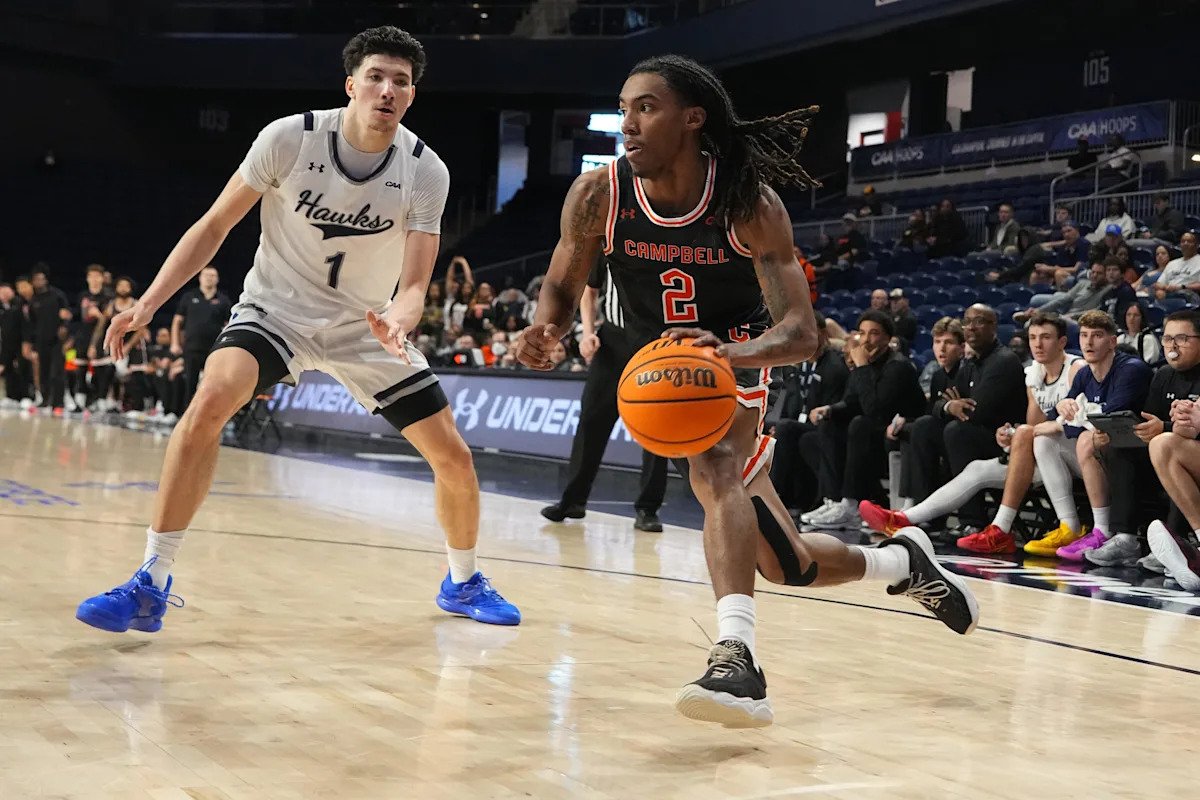
Johnson was a four-star recruit coming out of high school, originally committed to Oklahoma State before landing at Green Bay. He spent one year there, then transferred to Campbell, where he broke out as the Camels’ leading scorer: 15.2 points, 3.5 rebounds, and 1.9 assists on 45/37/87 shooting splits, earning Third-Team All-CAA honors and two years of eligibility remaining. He is a 6’4″ point guard who can run a team, score from anywhere on the floor, and put together a 32-point, seven-rebound, seven-assist performance as a reminder that his ceiling is nowhere near Buies Creek. In a Gonzaga backcourt that is down to one true PG with zero behind him, Johnson was a potential answer to multiple questions at once, and he had two years left to give.
Gonzaga was in contact with Johnson throughout the portal window, and despite the interest ultimately signed with Tulsa. Maybe it was proximity to home, maybe a clearer starting role, maybe something else entirely. The Zags’ need for exactly this player did not change when he picked the Golden Hurricane, however.
Zoom Diallo, G, Washington | Signed with: Kentucky
Diallo has been on Gonzaga’s radar since well before this portal window. As a five-star prospect in the 2024 class he took an official visit to Spokane, and Gonzaga was considered a frontrunner before he chose Washington. Two years later he entered the portal as one of its most coveted guards: in his sophomore season with the Huskies, the 6’4″ Tacoma native averaged 15.7 points, 4.5 assists, and 3.9 rebounds in just under 30 minutes per game. Gonzaga was linked to him again immediately.
This one is hard to hold against Few’s staff. During his original recruitment, Diallo had said publicly that he wished more blue bloods had been in the mix, namedropping Kentucky, Duke, and Kansas by name. He committed to Kentucky eight days into the portal window. A high scoring 6’4″ guard was always going to draw that level of competition, and Diallo made clear from the start that prestige mattered to him.
Legend Smiley, G, San Francisco | Signed with: Oregon State
Smiley’s freshman numbers at San Francisco (8.1 points per game) don’t necessarily jump off the page at first, but anyone who watched the Zags face down the Dons in late January know exactly what he’s capable of when the right stars align. The dude poured in 18 points on 5-of-6 shooting from outside, leading the team in scoring and completely altering Gonzaga’s defensive gameplan. The 6’5″ Seattle native shot 42 percent from three on four attempts per game this season, which is exactly the kind of high-volume, high-efficiency floor spacing Gonzaga has spent the entire offseason searching for. He is a specialist, not a star, but he does the one thing this roster needs badly and he does it as well as almost anyone who cycled through the portal this spring.
He signed with Oregon State, another new Pac-12 member. The floor-spacer the Zags could not land will now be looking to connect from outside against them twice a year in conference.
Vyctorius Miller, G, Oklahoma State | Signed with: Georgetown
Speaking of Oregon State… Miller listed Gonzaga as one of his five finalists coming out of high school in 2023, alongside Oregon, USC, LSU, and the G League Ignite path, so the relationship with Few’s staff was already there when he re-entered the portal this spring. The 6’5″ combo guard averaged 10.8 points, 2.7 rebounds, and 1.8 assists at Oklahoma State in 2025-26, shooting 37.5 percent from three and 85.7 percent from the free-throw line across 32 games and 26 starts in the Big 12. He has two full years of Division I experience, can score at all three levels, and brings exactly the kind of experience the rest of Gonzaga’s backcourt lacks.
Gonzaga was connected to him as a primary target after Jack Kayil unceremoniously (and weirdly acrimoniously) withdrew from the roster. He signed with Georgetown. The reasons may be entirely his own, but a proven Big 12 guard with two years left and an existing relationship with the program is now headed to the Big East instead.
Advertisement
Although the portal is officially closed, Gonzaga’s roster remains woefully shorthanded. There are, however, two names that should still be on Gonzaga radar, with the understanding that getting either one requires the right piece of policy to land.
Javontae Campbell, G, Bowling Green | Status: Available (contingent)
The caveat comes first, and it is doubled. Campbell’s path to another season of college basketball runs through one of two eligibility arguments: five-in-five with grandfathering, or the growing legal precedent that JUCO seasons should not count against D1 competition totals. Neither is settled. He is also currently in the NBA draft process, doing pre-draft workouts as of this writing, and the NCAA’s May 27 withdrawal deadline has passed. If he signs or gets drafted, the college door closes regardless of what the legislation does. If he goes undrafted and either eligibility track comes through, it stays open.
The production is why any of this is worth tracking. Campbell averaged 18.7 points, 5.1 assists, 4.5 rebounds and 3.0 steals at Bowling Green this year, led the nation in steals for the second consecutive year, won MAC Defensive Player of the Year, and shot 50 percent from the field. He is the veteran two-way guard this roster is loudly missing. This situation is genuinely unresolved as of right now, which is either a reason to look elsewhere or a reason to keep the phone number very handy.
Advertisement
The production is the reason to care. Campbell averaged 18.7 points, 5.1 assists, 4.5 rebounds and 3.0 steals per game at Bowling Green this past season, led the nation in steals for the second consecutive year, won MAC Defensive Player of the Year, and put up a staggering 47 points at UMass in January while shooting 50 percent from the field. He is a two-way guard who can run a team, score from everywhere, and defend at an elite level. He is the veteran presence this roster is sorely lacking, and if either eligibility door opens, Few’s staff needs to be the first one through it.
Adam Atamna, G, ASVEL Lyon-Villeurbanne (France) | Status: Available (contingent / speculative)
Atamna is the longer shot of the two, and the contingency here is different from Campbell’s situation. The 18-year-old Lyon native is currently playing professional basketball for ASVEL in France’s Pro A and Euroleague, averaging around nine points a game in domestic play with real Euroleague appearances as a teenager. The hitch is that new legislation may be coming down the pike which stipulates that any player who has previously accepted payment or played in a “professional capacity” domestically or overseas forfeits their NCAA eligibility.
The pathway for a young international player on a professional contract elsewhere exists but as of now remains unresolved. Gonzaga has navigated this before (and will be doing so again in securing the eligibility of G-League Ignite alum Izan Almansa), but institutional consistency is never guaranteed with a governing body as petty and shortsighted as the NCAA, and the current climate around international eligibility is cloudier than it was a year ago.
Advertisement
Although he’s showing up on 2027 draft boards already, the knock on Atamna is that he is young, even by international prospect standards, and that a development year stateside would serve him well. A season in Spokane, acclimating to the pace and physicality of American basketball before taking his NBA shot, is a reasonable step for a player of his caliber. He is a 6’4″ combo guard with a smooth jumper and the athleticism to play off the ball.. Gonzaga has the track record with international prospects and the institutional knowledge to make the eligibility case. Whether the NCAA lets that case be heard is out of everyone’s hands at this point.
Hamad Mousa, G/F, Cal Poly | Status: Available
Mousa left Doha, Qatar at 15 to chase college basketball, spent three years at the NBA Global Academy in Australia, survived a quiet freshman year at Dayton, then transferred to Cal Poly and led the Big West in scoring. The numbers from his sophomore season are not small-college illusions: 20.4 points per game, 6.3 rebounds, 37.2 percent from three on 7.1 attempts, 87.8 percent from the free-throw line, a seven-foot wingspan, and a First-Team All-Big West selection that came with a Riley Wallace Award finalist citation, given to the most impactful Division I transfer in the country. He is 20 years old with two years of eligibility remaining and a 6’8″ frame that brings legitimate scoring and length to a roster that has neither.
Gonzaga was specifically named as a program in the mix. Michigan was the frontrunner, with Kentucky and LSU also circling. He has not committed anywhere as of this writing. He is not a guard. He is something more useful right now: a legitimate bucket-getter from the two-three who can shoot at volume, get to the line repeatedly, and plug right into Few’s system. He is available and the Zags are almost certainly in hot pursuit.

