Human cockfighting.
In 1996, John McCain used those words to assail mixed martial arts after he watched videotape of early UFC fights
Said Art Davie, co-founder of the UFC, “He wasn’t the first one. Early on we were persona non-grata.’’
Advertisement
But those were more than words from McCain, the late senator from Arizona who also called MMA “barbaric.’’ He set out to ban the UFC and, in letters sent to the governors of all 50 states, urged them to act.
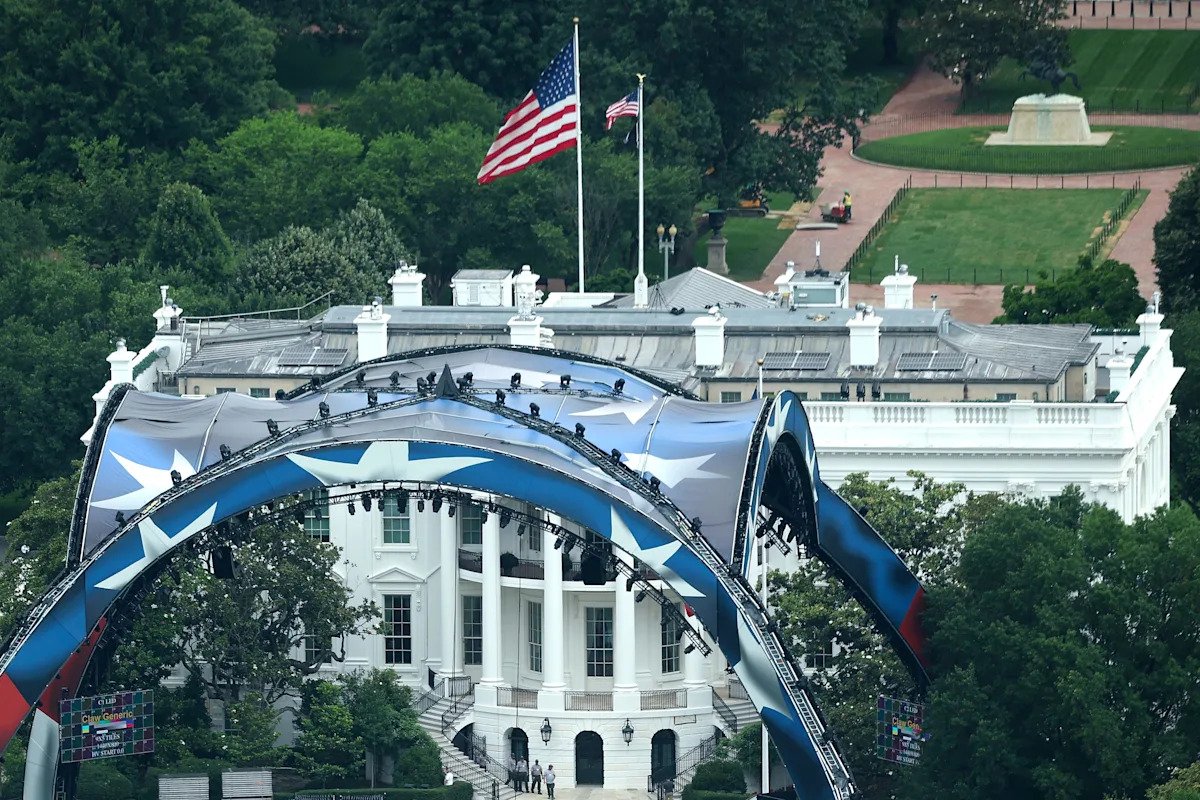
Three decades later, the UFC is scheduled to hold an event at the White House Sunday, June 14.
During an interview with USA TODAY Sports, Davie reflected on how the UFC became the leading promoter of MMA and went from sitting in the crosshairs of McCain to the official residence of the U.S. President. Documented history also offered insight.


Dana White, the Fertitta brothers and rule changes
Not only after McCain’s remarks, Davie said, but he and another key investor also lost confidence in the UFC’s ability to withstand political opposition. It led to the company’s sale in 2000 to the Fertitta brothers, Frank III and Lorenzo, for $2 million.
Advertisement
The young man who pushed the Fertittas to buy the company was Dana White, who soon became president of the UFC’s parent company and later became the face of the UFC.
The new owners eliminated the open-ended fights and introduced five-minute rounds.
Rather than fighting regulation, the UFC embraced it. The company adopted the Unified Rules of MMA.
In 2007, McCain had more to say about the UFC:
“They have cleaned up the sport to the point, at least in my view, where it is not human cockfighting anymore.’’
Not long before that, UFC had hired Mark Ratner, then executive director of the Nevada Athletic Commission. His new job: vice president of regulatory affairs for UFC.
Advertisement
“One of the most influential people in the regulatory business in fighting, period,’’ Davie said.
One critical mission was completed in 2016, when New York lifted its 1997 ban on MMA, thus making it legal in all 50 states.
Davie, who was a car dealer and advertiser executive, said he was written off as a “con man’’ when trying to get state officials to approve MMA.
“But,’’ Davie said, “hearing it from Mark Ratner, that was different.’’
White McCain and others sought to shut down the UFC, Trump helped it survive.
He hosted UFC 30 and UFC 31 at his Trump Taj Mahal casino in Atlantic City, New Jersey, at a time when the operators and owners of other major venues turned their backs on the UFC.
Advertisement
He also has attended several UFC events since 2019 and asked Dana White, the company’s CEO, to introduce him at the 2024 Republican National Convention.
Trump’s association with White was viewed by some as his way to connect to young white men – many of them UFC fans — who helped propel Trump past Kamala Harris in 2024.
Hosting a UFC event at the White House wasn’t Trump’s way of rewarding White, according to the UFC’s CEO.
It was Trump’s idea, according to White.
White says the UFC will lose money on the event. It’s rare to find UFC and losing money in the same sentence.
In 2016, the Fertita brothers sold their share of the company for approximately $4 billion. This year Paramount+ became the UFC’s new streaming home — and for that right the UFC is getting $7.7 billion over seven years.
This article originally appeared on USA TODAY: UFC Freedom 250: From ‘human cockfighting’ to White House

