The expectation entering night one of the NBA Draft was that there would be a ton of trades. Well, the first trade didn’t happen until pick 16, and while there was some movement, only draft picks were dealt.
However, that doesn’t mean it wasn’t a fun draft. Morez Johnson Jr. to Dallas at pick No. 9 was the first surprise of the night, which reunited him with head coach Dusty May after the pair helped lead Michigan to a National Championship last season.
Advertisement
The Knicks made some cost-cutting moves that may help them retain more of their championship team. They moved out of the first round after multiple trade downs from 24 and acquired future second-round picks and cash considerations.
This is a loaded class with plenty of talent already gone, but there is still a lot left for teams to be excited about. Here are the 10 best available players after round one.
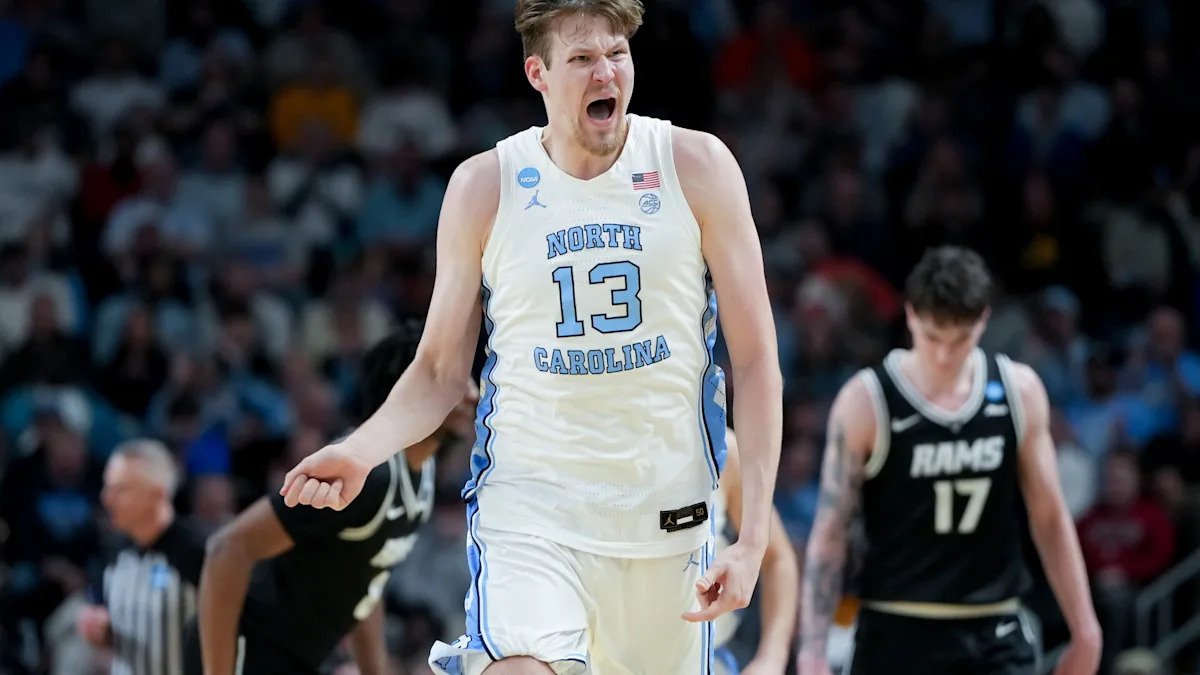
C Henri Veesaar, North Carolina
Veesaar was one of the stars for the Tar Heels last season after spending two years at Arizona. He’s a floor-spacing seven-footer that can pass and rebound, which led to him averaging 17.0 points, 8.7 rebounds, 2.1 assists, 1.2 blocks and 1.3 triples per game last year while shooting 60.8 percent from the floor and 42.6 percent from deep. There were definitely a few teams that could’ve used his services that opted for a different center at the end of the first round. Veesaar should immediately slot in as a strong backup option down low for whichever team drafts him.
Advertisement
G Meleek Thomas, Arkansas
After being a five-star prospect out of high school, Thomas was disappointing during his freshman year for the Razorbacks. That led to his slide to round two, but there is still plenty of talent to be intrigued by. He averaged 15.6 points, 3.8 rebounds, 2.5 assists, 1.5 steals and 2.2 triples per game last year while playing alongside Darius Acuff Jr. He didn’t test well at the combine, but he’s one of the few upside swings left in the draft entering the second round.
G Richie Saunders, BYU
Saunders will turn 25 in September, making him one of the older prospects in the class. He also tore his ACL in February, which means he won’t be available for the start of next season. However, Saunders is going to be really productive at the next level, and his game is built for the modern NBA. He can get to the rim and shoot from the perimeter, but he can also force turnovers on the other end of the floor. He averaged 18.0 points, 5.8 rebounds, 2.1 assists, 1.7 steals and 2.6 triples per game last year and should become a solid rotation player in the NBA.
Advertisement
G Isaiah Evans, Duke
The former five-star recruit didn’t see the floor much during his freshman season at Duke, but he was a big part of last year’s team. He averaged 15.0 points, 3.2 rebounds, 1.3 assists and 2.7 triples per game and projects to be a high-level shooter at the next level. He should go early in round two and be a rotation piece in year one as a floor spacer that also improved as a rim finisher last season.
G Bruce Thornton, Ohio State
It’s unfair to deem any player the “next Jalen Brunson”, but if there were to be one in this class, it’s Thornton. He’s a smaller, stocky guard that was incredibly productive during his four seasons at Ohio State. Last season, he averaged 19.9 points, 5.1 rebounds, 3.9 assists, 1.1 steals and 1.8 triples while being incredibly efficient as a scorer and playmaker. Again, expecting Thornton to turn into Brunson is setting him up for failure. However, he does project to outplay his draft position and should be one of the steals of the second round.
Advertisement
F Trevon Brazile, Arkansas
After spending a year at Missouri and four years at Arkansas, Brazile entered the NBA Draft at 23 years old. He provided well-rounded numbers last season, averaging 13.0 points, 7.3 rebounds, 1.6 assists, 1.5 steals, 1.6 blocks and 1.3 triples, but his combine numbers are what make him intriguing. At 6’10.75”, Brazile boasts a 7’3.75” wingspan and a 41.5” vertical. He doesn’t have superstar upside, but he should be a strong option in round two.
G Jack Kayil, Alba Berlin
Kayil was inefficient in Germany last season, which is to be expected for a young guard playing in a professional league. However, he averaged 12.2 points, 3.0 rebounds, 3.6 assists and 1.6 triples per game. He still has plenty of growing to do, but he’s a strong guard with upside, making him worth the swing for rebuilding teams.
Advertisement
G Tamin Lipsey, Iowa State
Lipsey is another smaller guard that projects to be an effective rotational ball handler in the NBA. He averaged 13.5 points, 3.9 rebounds, 5.1 assists, 2.3 steals and 1.2 triples per game last season. He doesn’t project to be a strong perimeter shooter, but he was still able to impact the game in other ways and should make an impact on both ends of the floor from day one.
F Baba Miller, Cincinnati
Miller is an older prospect at 22 years old, but there is a lot to like about him as a prospect. Last season, he averaged 13.0 points, 10.3 rebounds, 3.7 assists and 1.2 blocks per game, though he doesn’t have much upside as a shooter. He’s a strong defender, rebounder and playmaker and is nearly seven-feet tall, making him an intriguing addition in round two.
Advertisement
C Ugonna Onyenso, Virginia
Teams can typically find rotation minutes for players that can defend the paint. Onyenso only played 18.6 minutes per game last year, but he averaged 6.5 points, 4.9 rebounds and 2.9 blocks per game. He also added a three-point shot after shooting 0-of-1 from deep in his first three collegiate seasons. He may never become a starter, but he should be able to make a massive impact in limited action.

