Six SEC schools have new coaches after one of the wildest spins of the coaching carousel in college football history.
Kirby Smart will begin his 11th season coaching Georgia. The second-longest-tenured SEC coach? That’d be Missouri’s Eliah Drinkwitz. He’s entering Year 7. Elsewhere, Lane Kiffin is preparing to coach his third SEC team.
Advertisement
A youth movement is afoot, too. Brent Venables, 55, is the SEC’s oldest coach.
This batch of coaches will try to pull the SEC out of a mini-slump. No SEC team reached the national championship game in the past three seasons.
Here’s how I rank the SEC coaches, top to bottom:
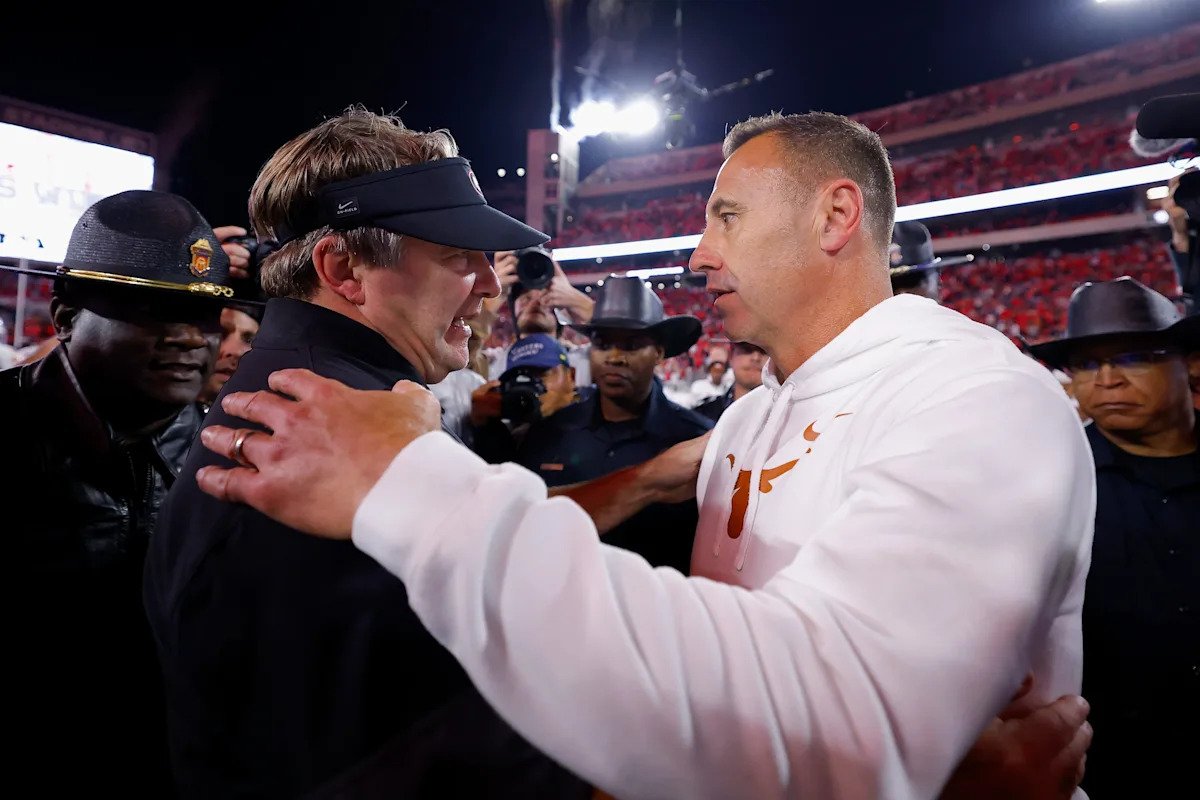
1. Kirby Smart, Georgia
Smart doesn’t rule college football with the same authority he did a few years ago, but he retains clear superiority over his SEC peers. See Georgia winning three of the past four SEC championships. Smart’s ability to recruit, retain and develop talent remains a weapon, even in this era of transfer free agency. Georgia is still a perennial contender and built to last amid the sport’s constant state of evolution. That’s a credit to Smart.
Advertisement
NEW SHERIFF: Big Ten coach rankings have replacement at top
2. Steve Sarkisian, Texas
Texas missing the playoff in the face of whopper expectations took some shine off Sarkisian, but let’s keep perspective. Texas beat top rivals Oklahoma and Texas A&M, a pair of playoff qualifiers. Sarkisian solidified the program so that going 10-3 counts as underwhelming. He’s one of just four SEC coaches with multiple playoff victories on the resume. This season will be a litmus test of whether Sarkisian has peaked. He built another roster fit for national title contention.
EXCLUSIVE: Steve Sarkisian goes scorched-earth on college football’s Wild West culture
Advertisement
3. Kalen DeBoer, Alabama
DeBoer won 19 games through two seasons as Nick Saban’s heir, he owns two wins against Smart, and he’s 5-1 against rivals Tennessee, LSU and Auburn. That’s the upside of his tenure. On the other hand, he’s served up a few mind-boggling losses. Alabama fans will expect more than 10-win seasons now that he’s settled. DeBoer didn’t run from the challenge, staying after Michigan‘s job opened. Alabama’s administration retains belief in DeBoer, as evidenced by his contract extension.
FACT OR FICTION: Why Alabama football will (or won’t) make the CFP
4. Lane Kiffin, LSU
Just as Kiffin delivered the finest achievement of his career, taking Mississippi to the playoff, he left town amid an ugly breakup. That’s Lane for you. Ole Miss got the full Kiffin Experience — the good, the bad, the drama. Now, LSU wants a dose. Optics of Kiffin’s exit aside, he’s never been a better coach than he is now. He remains a masterful quarterback developer. He not only acquires top transfer talent, he blends it. His assignment at LSU: Prove he can handle the program’s demanding expectations.
Advertisement
5. Josh Heupel, Tennessee
Heupel has delivered nothing but winning records across eight seasons at Central Florida and Tennessee. Even after losing Nico Iamaleava, his would-be starting quarterback, mere months before last season, Heupel delivered a potent offense. (The defense became a problem.) He’s a high-floor coach who rarely loses to opponents he shouldn’t, but it’s fair to wonder whether he’s peaked. This marks his sixth Tennessee season. His best showing came in Year 2, and 2025 was far from his finest hour.
VOLS NEWS: Why Josh Heupel adding former Michigan assistant is so unique
6. Mike Elko, Texas A&M
Elko needed just two seasons to take Texas A&M to the playoff. By early November, the Aggies had an argument for being the nation’s best team. That unraveled after a scare from South Carolina, followed by losses to Texas and to Miami in the CFP’s first round. Still, the Aggies’ momentum is palpable. Elko must continue elevating and prove last year was no fluke. His recruiting success suggests he’s building Texas A&M for staying power, and he’s proven more reliable than predecessor Jimbo Fisher at developing talent.
Advertisement
7. Eliah Drinkwitz, Missouri
Drinkwitz made the best decision of his career when he handed off play-calling duties before the 2023 season. He’s 29-10 since then. That’s a big-time mark at Missouri, and the Tigers are especially tough to beat at home under Drinkwitz. That’ll be put to the test this season, when the schedule stiffens. Drinkwitz is short on marquee victories, but he’s proven his chops as a program builder who’s lifted Missouri to a place of sustained relevance.
8. Jon Sumrall, Florida
This might be the last chance to buy low on Sumrall stock. He won more than 78% of his games in four seasons as a Group of Six coach. He took Tulane to the CFP. Sure, he must still prove himself in the SEC, but there’s no reason to think he can’t reinvigorate Florida. He played in this conference. He’s worked in it, too, as an assistant. Sumrall became a hot commodity on the coaching carousel. He’s a good consolation prize for Florida after it missed on Kiffin.
Advertisement
IN-DEPTH: Jon Sumrall lived through ‘a s***show.’ Now, he must fix one at Florida
No coach improved his standing on lists such as these more in the past two years than Lea. You could make a case he’s underrated here. In the past two seasons, Lea beat Alabama and Tennessee, beat Auburn twice, produced a Heisman runner-up, and delivered a program-record 10 wins in 2025. Vanderbilt smartly stayed the course with Lea after a slow start to his tenure. Now, Lea must show Vanderbilt can maintain respectability in a post-Diego Pavia world.
10. Brent Venables, Oklahoma
Venables survived the hot seat by making the playoff. He reasserted his defensive acumen by taking on play-calling to produce the SEC’s fiercest unit. His yo-yo tenure continued to hold pattern, with a good season coming on the heels of a bad one. Offensive consistency remains elusive, and he’s not come close to matching the performance of predecessors Bob Stoops and Lincoln Riley. With John Mateer healthy again, Venables needs to stack consecutive good seasons to further fortify his standing at OU.
Advertisement
11. Alex Golesh, Auburn
Tennessee’s offense never looked more potent than it did in 2022, when Golesh was its coordinator. As a coach, Golesh turned around South Florida. USF’s upset of Florida solidified him as a Power Four candidate. Golesh recognizes what quarterbacks do well and positions them to do it repeatedly and swiftly in his up-tempo offense. His USF teams failed to seize the moment in key conference games, but Auburn aches for offensive improvement, and Golesh has shown he’s got a mind (and a system) to address the issues.
EXCLUSIVE: Alex Golesh brings fire. Auburn’s future hinges on whether he finds a QB
12. Pete Golding, Ole Miss
Give Golding major credit for holding Ole Miss together after Kiffin’s exit and beating Smart’s Bulldogs in a playoff quarterfinal. He retained stars Trinidad Chambliss and Kewan Lacy after the season and added a good transfer class. So far, so good. Now, how well can he run the program long-term, without Charlie Weis Jr. calling the offense? That’s still to be answered. Golding can coach defense, and he’s a good recruiter and a relationship builder. Is he a CEO?
Advertisement
HAYES: Pete Golding is SEC’s favorite punching bag. That says more than you think
13. Shane Beamer, South Carolina
What are you getting out of Beamer? That depends on the season. He’s up, then down. Offense is usually a struggle with his squads. His teams tend to get up for big opponents, and they can engineer an upset you didn’t see coming. Or, they can blow a 27-point lead. Basically, Beamer ball is a wild ride. He’s outperformed many of his South Carolina predecessors, but the 2025 season proved his worst, putting him squarely on the hot seat.
Insufficient quarterback production put a ceiling on the Mark Stoops era. Insert Stein. He developed quarterbacks Bo Nix, Dillon Gabriel and Dante Moore in succession as Oregon’s offensive coordinator. Propelling Kentucky as a first-time coach will be no easy feat. But, as a native son returned to the Bluegrass State, he’s already energized Kentucky and signed a good transfer class. Kentucky needed a new direction, and the 36-year-old Stein marks a bold pivot.
Advertisement
EXCLUSIVE: Will Stein’s Kentucky football going big-game hunting against SEC powers
If Lebby doesn’t pan out for Mississippi State, schools would assemble to hire him as their offensive coordinator. He’s skilled at that. As for being the head man, he’s produced just one SEC win through two seasons at one of the conference’s toughest outposts. He came close to a few upsets last season. In Lebby’s third season, he’ll need to turn a couple of those competitive losses into wins. Lebby’s past two teams moved the ball but couldn’t stop anyone.
16. Ryan Silverfield, Arkansas
A few years ago, Silverfield entered a pivotal season at Memphis, lest he face the hot seat. Then, he won 29 games in a three-year span and parlayed Memphis into the SEC, a conference where he’d not previously worked. In an active carousel for American Conference coaches, he wasn’t the buzziest name. He did, however, lead Memphis to a win over Arkansas last fall, making him a logical fallback option for the Razorbacks’ search.
Advertisement
EXCLUSIVE: Why lights are brighter at Arkansas football — and it started with a high school disaster
Blake Toppmeyer is the USA TODAY Network’s national college football columnist. Email him at BToppmeyer@gannett.com. Follow him on X @btoppmeyer.
This article originally appeared on USA TODAY: SEC football coach rankings have Kirby Smart leading. Then it’s tricky

