B Finals Back: Why NCAA Swimming Dumped Consols for 2026, Reinstated Them for 2027
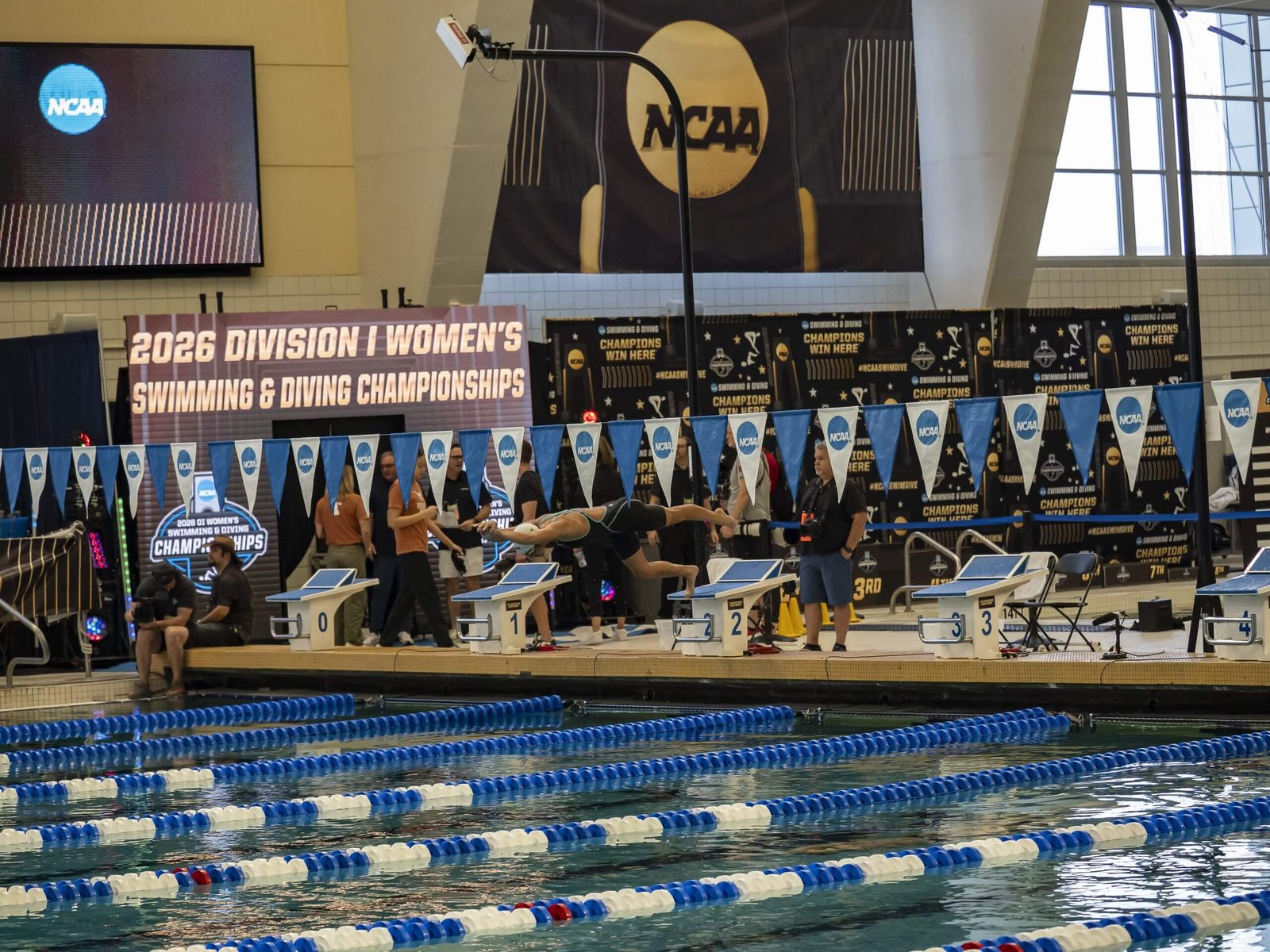
For the first time, last season’s NCAA Swimming and Diving Championships did not include consolation finals. Athletes earned points for their teams based on their ninth through 16th-place finishes in prelims. The result: a resounding condemnation from all parties, including resounding chants of “Bring Back B” echoing throughout the McAuley Aquatic Center in Atlanta.
B finals will return for the 2027 edition of the meet but with a modified format, held at 6 p.m. before a 7 p.m. start to the championship heats. The logic behind this new arrangement is the same as the logic behind their elimination in the first place; if college swimming can ever secure linear television coverage of its signature event, the show cannot include B finals. And for key decision-makers within college swimming, achieving that broadcast is essential in securing the sport’s future in an ever-changing world of intercollegiate athletics.
The House settlement took effect at the start of the 2025-26 season, allowing universities to share revenue directly with athletes for the first time while replacing scholarship caps with strict roster limits. In the post-House world, athletic directors and university officials have begun looking for ways to cut costs and redirect funding toward high-revenue sports, especially football and men’s basketball. That has left swimming and diving in a position of susceptibility and the College Swimming and Diving Coaches Association (CSCAA) looking for answers.
Photo Courtesy: Peter H. Bick
“The catalyst for change is strengthening college swimming and diving for a long-term sustainable future in an increasingly vulnerable sports landscape,” CSCAA executive director Samantha Barany told Swimming World. “We are at a spot where major lawsuits have required us to change the way the college sports business works. There’s not less revenue coming in, but where and how the money is spent is creating challenges.”
To ensure swimming’s future, Barany explained, the sport must find ways to create more value. “One way to survive is to make sure that we’re stronger, not versus another swimming and diving team, but next to field hockey and soccer and tennis and wrestling and all of these other sports,” she said. “We have to be better than those sports because the pie isn’t getting bigger.”
The CSCAA assembled a task force consisting of stakeholders from across the sport, including coaches and broadcast executives. The result was the brand new format unveiled this March, with a completely new event order, diving split into two sections taking place in between swimming races and no B finals.
“This task force was charged to put the pieces of the puzzle together based off what television said, and one of the very things that they said, and they continue to say is, ‘We do not want B finals. It might be something that’s important to very active fans or engaged fans, but it is not the story that television will tell,’” Barany said. “We knew that had that was that was a concession that was going to have to be made, and we made it.”
Following the meet, the CSCAA polled coaches and assembled a new working group designed to evaluate the changes and make further recommendations for 2027. Given the intense backlash to no B finals, the group knew right away they would have to find a way to fit them in. “The charge then became, ‘If broadcast doesn’t want B finals, then how do we actually make B finals exist without interrupting the progress we’re making to create a more broadcast-readyproduct?’” Barany said.
Hence, the compromise format set to debut next March. Each evening session will fall into two parts, one with B finals, all but the two quickest heats of relays and the first three rounds of diving finals. An hour later, the main event begins, with the A finals followed by the remaining three rounds of diving and the top heats of relays. There will be commercial breaks between the A finals in which award ceremonies will take place.
The CSCAA decided against putting the B finals into those breaks for timing reasons. “You cannot fit a 400 IM into a three-minute commercial break,” Barany said. “Even a 200 fly or 200 breast, you can’t fit that into a commercial break. By the time you get the athletes up on the blocks, get them started, account for a potential false start or technical glitch, have them race, get out, clear the deck and then start the walkout. Logistically, it would not work.”
Further, having a separate session for B finals allows that session to be streamed online separate from the intended TV product. “If we inserted the B finals into those commercial breaks, those B finals would not get aired on linear and they would not get streamed, so then they ultimately would become invisible to everybody except those people in the arena.”

