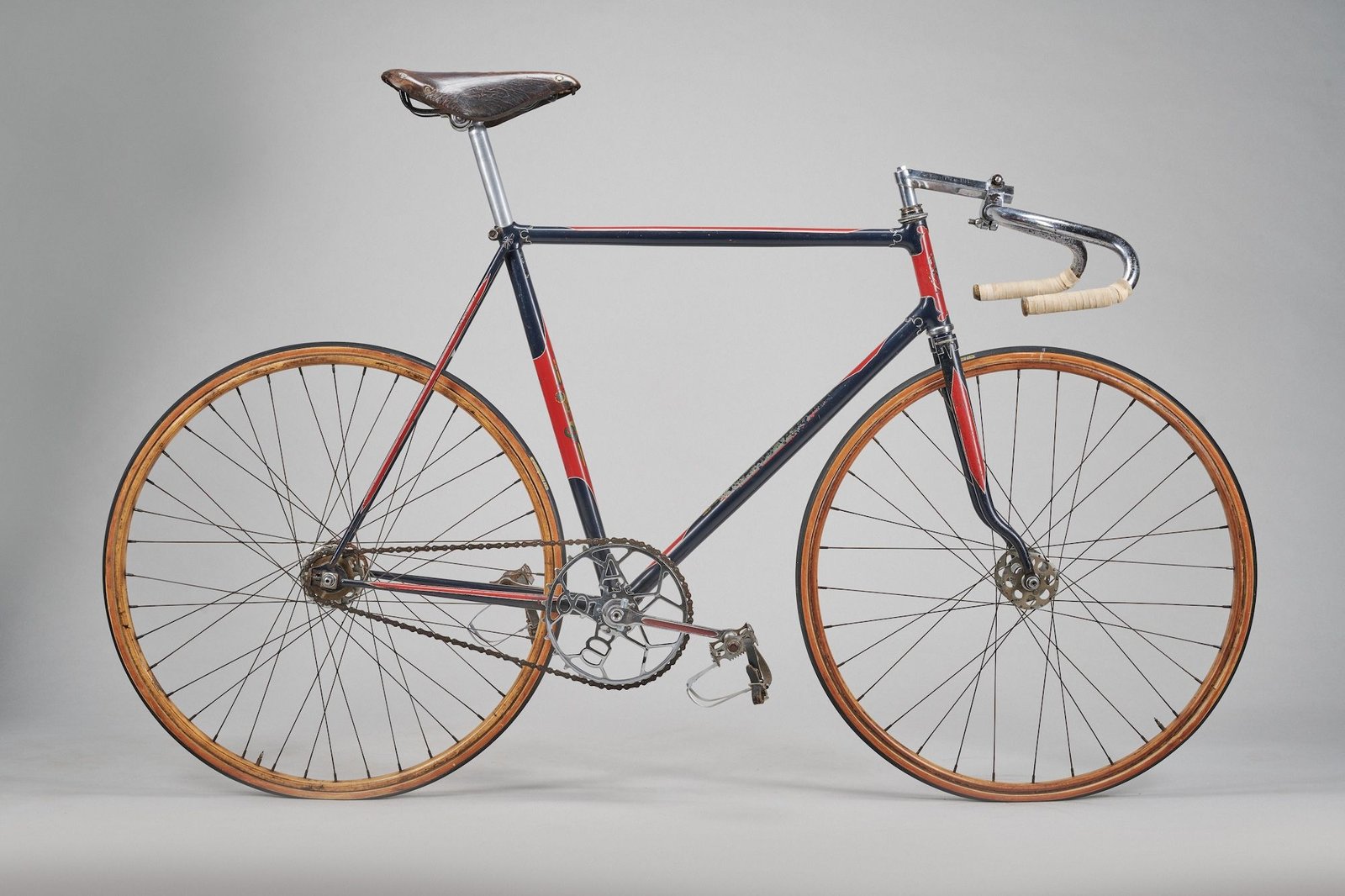
While the diamond-shaped frame steered bicycle design on a fairly straight course from the 1880s, its invention arguably sparked a period of intense creativity, compelling frame designers to find solutions that fitted within the rhomboid template, yet weren’t constrained by it.
(Image credit: Future)
The early to mid-1900s were a period ripe with intriguing design flourishes. Hetchins had its curly stays, Paris (of, erm, Stoke Newington) had its elevated downtube, Thanet introduced its floating bottom bracket, and Bates employed both Cantiflex frame tubing and Diadrant front forks.
It’s debatable whether any of these innovations enhanced performance or merely served as effective marketing USPs, particularly in the 1930s, when displaying brand logos on frames was prohibited for certain races.


Richard Hoddinott is one of the UK’s foremost collectors of British and European bikes from before and after WW2. His collection includes multiple French machines as well as bikes ridden by some of the biggest names in British cycling from the 1950s, 60s and 70s. Hoddinott keeps all these bikes in their original conditions, and still rides many of them.
This particular Bates, dating from 1938, is a range-topping Volante in track guise; a rare one at that. “It’s exceptional because it hasn’t been drilled for brakes,” confirms current owner Richard Hoddinott of vintage specialists Velo Pages.
“Despite being intended for the track, almost all of them were. The serial number is also unusual because it’s simply 257. Usually, the numbers are preceded by two letters, which makes me wonder whether this frame was specially made for a pro.”

(Image credit: Future)
The Cantiflex tubing was exclusively produced for Bates by Reynolds. Examine the image and you’ll notice that the primary tubes swell in the centre before tapering gently towards the lugs. Similar to Reynolds’ double-butted tubing, the walls are thicker at the ends as well. Bates claimed that this unique profile enhanced strength and rigidity, ‘entirely eliminating whip’.

(Image credit: Future)
The flamboyant Diadrant forks are a delight. According to Hoddinott, they’re better at absorbing the hit from rough surfaces and even potholes (unlikely on a track, I know), enabling composed riders to deliver more power.
The wheels aren’t original, but they are stunning, period-correct pieces. “They’re laminated maple rims from Constrictor, made by Fairbanks Boston of Paris,” says Hoddinott. “The large flange hubs are from BH Airlite, who, interestingly, would attach large steel flanges to small flange hubs.”

