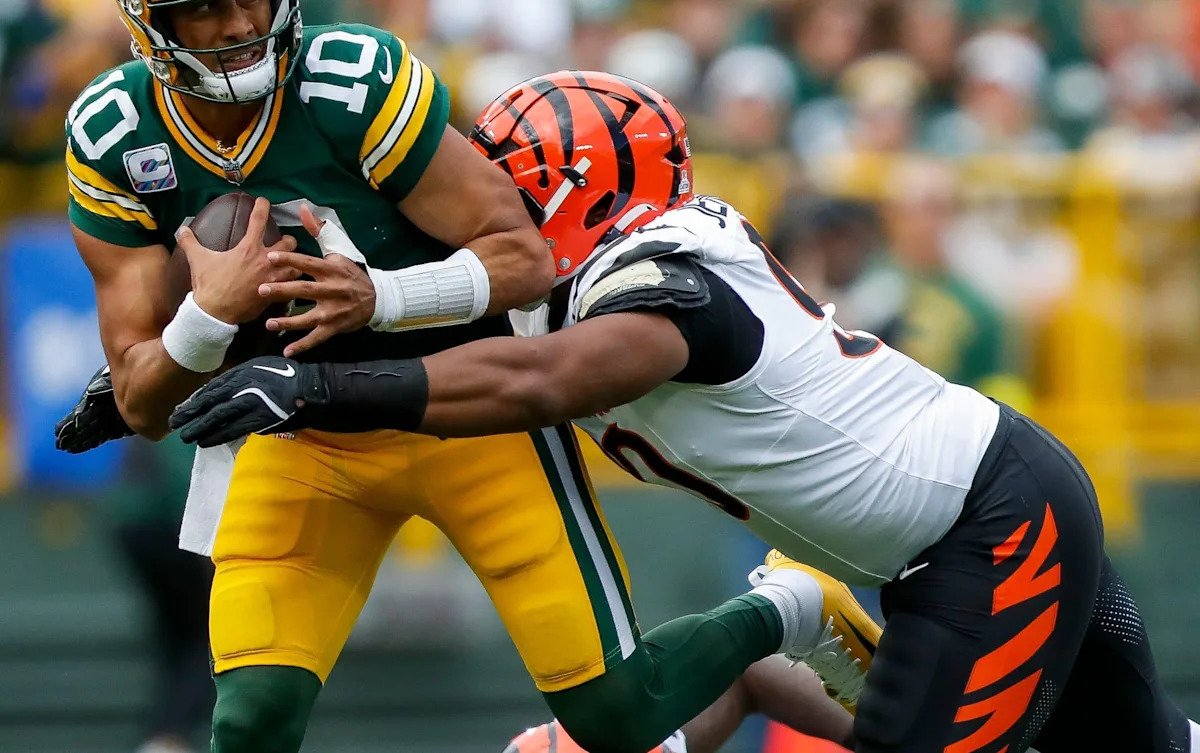
When the Cincinnati Bengals selected Kris Jenkins Jr. with the 49th overall pick in the 2024 NFL Draft, they weren’t simply looking for another rotational defensive tackle. They believed they were drafting the future anchor of their defensive front, a player capable of controlling the line of scrimmage, collapsing the pocket, and helping restore the physical identity that once defined Cincinnati’s defense.
Two years later, the flashes have been there, but not the consistency. With all the additions Cincinnati has made along the defensive line, it is now or never for the former Michigan captain.
Advertisement
If Jenkins takes the leap that many young defensive tackles make in Year Three, the Bengals’ defense could become dramatically more difficult to run against while finally developing the interior pass rush that has been missing for several seasons. If not, this could be his last season in the Queen City.
Kris Jenkins Jr.
-
Hometown: Olney, Maryland
Cap Status
Jenkins signed a 4-year, $7,860,464 contract, which included a $2,536,700 signing bonus, $5,480,322 guaranteed, and an average annual salary of $1,965,116. In 2026, Jenkins will earn a base salary of $1,509,588, while carrying a cap hit of $2,143,763 and a dead cap value of $2,264,678.
Advertisement
Background
Football has always been part of Kris Jenkins Jr.’s life.
His father, Kris Jenkins Sr., enjoyed a stellar 10-year NFL career that included four Pro Bowl selections and a reputation as one of the league’s most dominant defensive tackles. Following in those footsteps was never going to be easy.
Instead of trying to imitate his father, Jenkins carved out his own path at Michigan. He became one of the emotional leaders of one of college football’s best defenses, helping guide the Wolverines to a national championship while earning the respect of coaches and teammates through relentless preparation, intelligence, and an old-school willingness to do the dirty work that wins football games.
Advertisement
Those traits appealed immediately to the Bengals.
Defensive tackles rarely enter the NFL as finished products. Unlike edge rushers, they spend every snap battling guards and centers who often outweigh them while absorbing constant double teams. Technique matters as much as talent, and experience is often the difference between good and great.
Jenkins’ first two seasons reflected that reality.
His rookie campaign was defined by steady improvement rather than eye-catching statistics. He learned to play with better leverage, became more comfortable recognizing blocking schemes, and showed flashes of the explosiveness that made him one of the draft’s most intriguing interior defenders.
Advertisement
His second season offered even more encouragement.
While the sack totals remained modest, Jenkins became noticeably more disruptive. He held his ground against the run, forced quarterbacks to move off their spot more frequently, and began showing the violent hands and powerful first step that coaches believed would eventually translate into bigger production.
Unfortunately, an ankle injury cut his season short.
2026 Outlook
The Bengals don’t need Kris Jenkins Jr. to become Chris Jones. They simply need him to become Kris Jenkins Jr.
For the first time in his NFL career, Jenkins enters training camp with experience in the same defensive system. Instead of learning terminology or adjusting to new coaching philosophies, every practice rep has been devoted to refining his technique.
Advertisement
Young defensive tackles often make their biggest leap during their third season because the game finally slows down. Instead of reacting, they anticipate. Instead of surviving blocks, they attack them. And, instead of making occasional splash plays, they begin influencing series.
If that progression happens, Jenkins won’t simply become a better player. He’ll become one of the most important pieces of Cincinnati’s defense.
What to Expect
Fans often judge defensive tackles by sacks. Coaches judge them by disruption.
The Bengals would gladly accept four or five sacks from Jenkins if those sacks come alongside consistent pressure, improved run defense, and an ability to command double teams throughout the season.
Advertisement
Those are the traits that win playoff games.
Jenkins has already demonstrated the toughness, discipline, and work ethic necessary to become that kind of player. Now comes the final step – turning potential into production.
If he succeeds, the Bengals won’t simply have found a reliable starter; they’ll have found the defensive cornerstone they believed they were drafting all along.

