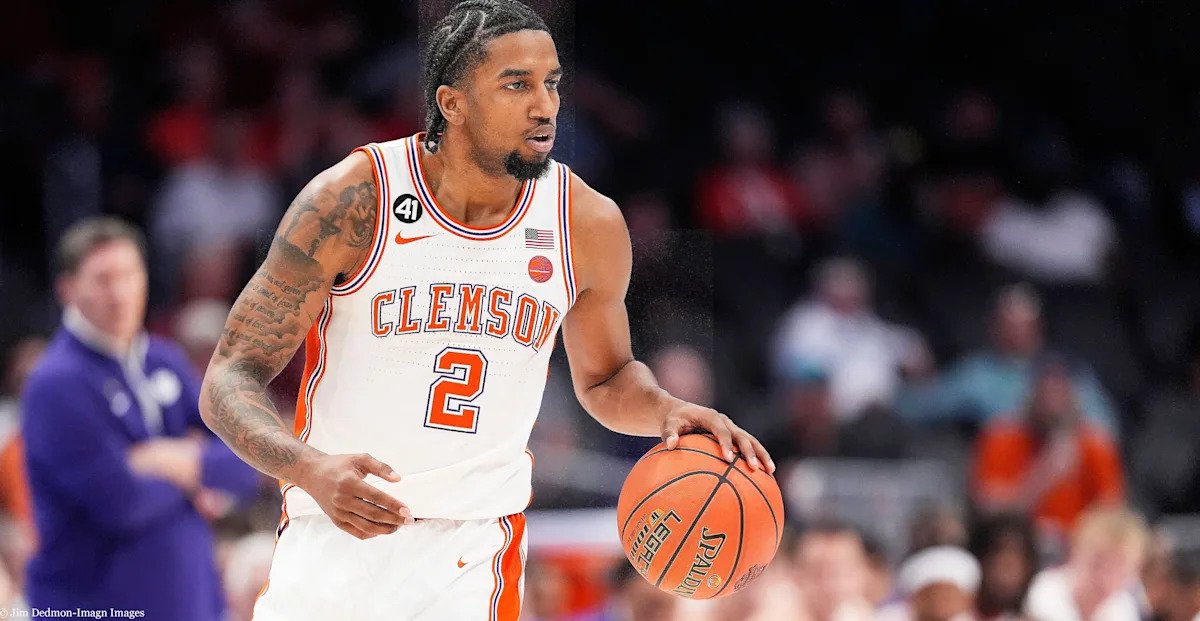
Clemson senior guard Dillon Hunter plans to enter the NCAA Transfer Portal when it opens next week, according to On3’s Joe Tipton. Hunter is just the latest Class of 2022 athlete to take advantage of Friday’s decision by a Colorado judge to grant a class-action preliminary injunction requiring the NCAA to award all 2022 recruits a fifth season of eligibility, according to documents obtained by On3’s Pete Nakos.
In a controversial ruling Friday, U.S. District Court of Colorado judge Charlotte Sweeney enjoined the NCAA to declare all athletes from the Class of 2022 recruiting cycle that previously “completed four years of eligibility as defined by the NCAA’s prior rules by the conclusion of the 2025-2026 season” now eligible for a fifth season following the organization’s adoption of a new five-year, age-based eligibility model earlier this Summer.
Advertisement
[ $19.99 gets you a FULL year of On3 | Rivals national coverage ]
NCAA chief legal officer Scott Bearby confirmed the organization’s plans to appeal the Colorado sweeping decision in a memo sent to membership schools on Saturday morning. Bearby declared Friday’s ruling in the Wisne v. NCAA case is “egregiously wrong” and said it “invites further chaos in college sports and irreparably harms thousands of student-athletes already on campus.”
Plaintiffs in the Wisne v. NCAA case requested the sweeping injunction also apply to NCAA transfer rules, roster limits, and the NCAA’s rule of restitution that allows the organization to enact punishment against its member schools for breaking established rules that might be in conflict with Friday’s ruling. Judge Sweeney’s ruling also ordered that the NCAA Transfer Portal open for a week between Aug. 3-10 to allow interested Class of 2022 student-athletes a chance to find new playing opportunities.
Bearby’s memo also argued the House settlement “remains in effect according to its plain terms” and that Friday’s court decision “plainly lacks the authority to undermine the House injunction, which all of the plaintiffs in the Colorado case are bound by, including the roster limits and revenue share cap.”
This report will be updated.

