In three of the last four NCAA Men’s Basketball Tournaments, we’ve seen a program that has never won a national title before come one win short of shedding that stigma forever. It was San Diego State in 2023, Purdue a year later, and then Houston in 2025.
The landscape of the sport has shifted dramatically in recent years (Have you guys seen this? Have you heard about this?) and for a handful of programs, that shift has resulted in a path to the sport’s top prize that seems clearer now than it ever has before.
Advertisement
For varying reasons, these are the 10 men’s college basketball programs with the best chance at winning their first national championship at some point over the 10 years ahead:
BYU
There is no program in men’s college basketball that has appeared in more NCAA Tournaments without a single trip to the Final Four than BYU. Cougar fans, especially those with especially deep pockets, are desperate to be ride of this stigma.
The season didn’t go the way the program would have liked, but the fact remains that for 2025-26, BYU signed the No. 1 high school player in America, had him play a full, highly productive season for the Cougars, and then watched him be selected as the No. 1 overall pick in the NBA Draft. The AJ Dybantsa experience might not have produced a natty, or even a single NCAA Tournament win, but it showed that anything is possible in Provo.
Advertisement
If that wasn’t enough evidence, a year after stealing Big 12 Freshman of the Year Robert Wright IV from Baylor, BYU was able to pry him out of Kentucky’s crosshairs and get him back for a second run.
When the top talent in the sport is accessible to your program, your program has a clear and obvious path to a national championship. You’ve just gotta figure out all the other stuff along the way.
Purdue
Some Purdue fans will be quick to respond to this with talk of a 1932 Helms title, but the fact remains that the Boilermakers, despite being an extremely relevant men’s basketball program for the last century, have never won an NCAA Tournament title.
Advertisement
Not that they haven’t been close.
Purdue has appeared in three Final Fours, most recently in 2024 when they played UConn for the national title. They’ve also made seven regional final appearances spanning six different decades.
The sting of not getting the job done in the Zach Edey, Braden Smith, etc. era is still fresh, but there are reasons to believe Purdue will field more top tier squads over the decade ahead … even if that might not be the case in 2026-27.
Matt Painter is just 55 years old and has firmly established himself as one of the elite coaches in the sport. Perhaps just as importantly, he’s one of only three or four elite coaches who seem to be forever rooted at their current place of employment.
Advertisement
With Indiana suddenly emerging as a national football powerhouse, Purdue is likely the Big Ten program with the largest deference to hoops over pigskin. That might not be the best of news for (Googles “Purdue football coach”) Barry Odom, but it’s even more reason to believe that Painter and company can get the ultimate job done at some point over the next 10 years.
Texas Tech
The justification here is pretty simple: The first few years of the NIL era have shown us that Texas Tech has more money than God and that the people controlling that money are willing to spend a huge chunk of it to chase national championships across multiple sports. Men’s basketball is certainly one of those sports.
While that’s the simplest rationale for why the Red Raiders can win a national title over the next decade, it should also be mentioned that Texas Tech came pretty much as close as you can possibly come to cutting down the nets without actually doing it back in 2019. That overtime loss to Virginia in the national title game came before NIL, pay for play or whatever the hell you want to call it became the driving force in college athletics.
Advertisement
Texas Tech men’s basketball was already on an upward trajectory before a revolutionary shift occurred that should benefit the Red Raiders more than 95 percent of the other programs in the sport. It shouldn’t shock anyone if these guys win it all for the first time at some point between now and the first April Monday of 2036.
Tennessee
The Volunteers are arguably the most successful program and biggest basketball brand to have never played in a Final Four. Not that they haven’t been close. Not that they haven’t been real close. Not that they haven’t been three Elite Eights in the last three years close.
UT has a squad for 2026-27 that I believe is the most talented offensive group that Rick Barnes has assembled in Knoxville, one that is capable — if it can maintain Barnes’ standard of defensive excellence — of winning a national championship.
Advertisement
If this year’s group falls short, there will be some questions about the future of the program. For starters, Barnes is 72 years old. He doesn’t have a ton of years left to chase the sport’s biggest prize, and there’s no clear-cut successor for him at UT.
The comforting news for Tennessee basketball diehards is that, unlike some of their SEC brethren, UT figures to remain financially committed to the hardwood, even in an era where drumming up funds to be allocated to the cash cow that is college football has never been more important. Basketball matters in Knoxville, maybe not as much as football, but it matters enough that Volunteer fans won’t just stand idly by and allow their program to fade into a poverty-fueled state of relative obscurity.
Gonzaga
A few years ago, Gonzaga would likely have been the first name to come out of every college basketball fan’s mouth during an exercise like this. The Bulldogs earned five No. 1 seeds between 2013 and 2022, and played in the national title game in 2017 and 2021.
Advertisement
After back-to-back second round losses in the NCAA Tournament — following a record run of nine straight trips to the Sweet 16 — there are now some legitimate questions about whether or not Gonzaga is poised to remain “elite” in this new era of college basketball.
The program made one of the most consequential decisions in its history when it decided to leave the West Coast Conference after 50 years in favor of joining the new Pac-12. The motivation for the move was pretty straightforward: More media revenue, more quality competition, and more national exposure at a time when all three of those things have never been more crucial to athletic success of the highest tier.
Mark Few is 63 and still, presumably, has several good years ahead of him. But what if he can’t effectively adapt to this new landscape? Or what if he continues to come as close as humanly possible without actually getting over the hump?
The powers that be in Spokane have to make sure that they’re well-positioned for success in a post-Few world. These first few seasons in the Pac-12 will go a long way towards determining whether or not that’s going to be the case.
Advertisement
Illinois
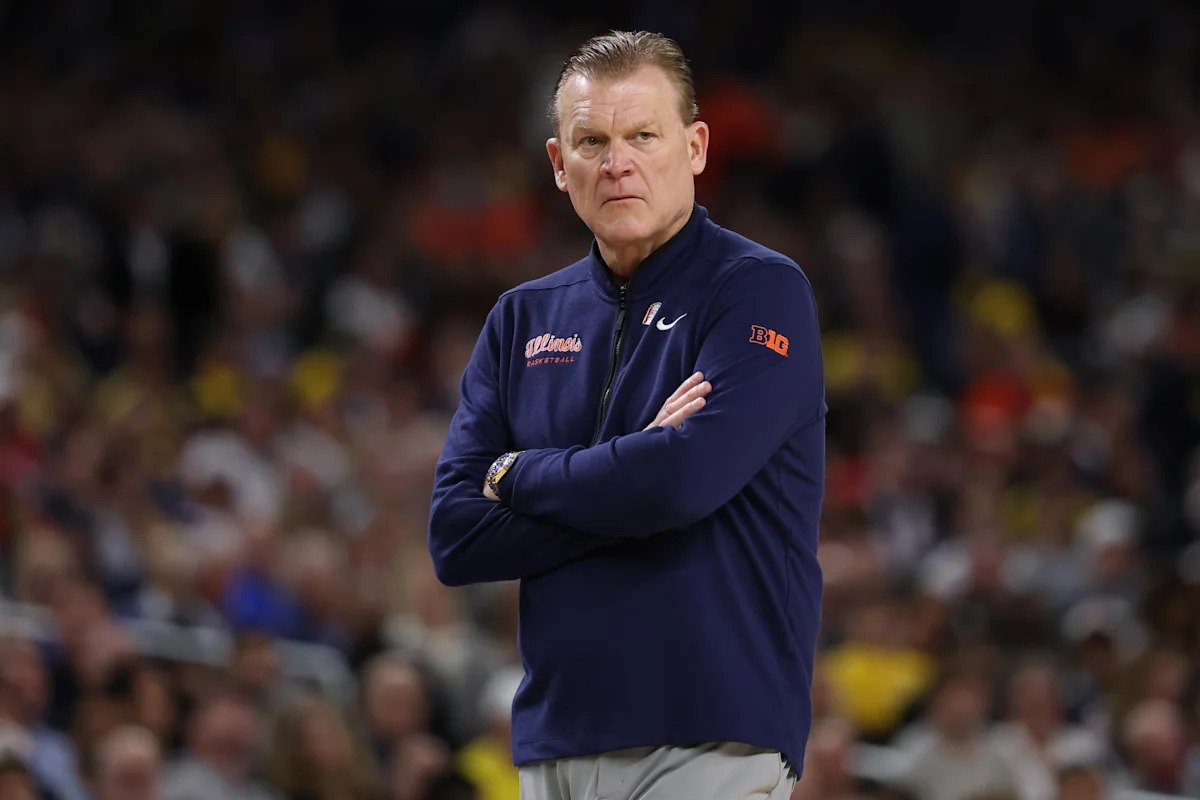
There is no team on this list that figures to start next season ranked higher than Illinois. Even with star forward David Mirkovic potentially being limited for a chunk of the beginning of the year after having offseason foot surgery, the Illini project as a preseason top five squad with everything necessary to get back to a Final Four for a second consecutive year.
The case for the Illini wining a title over the decade to come is just as easy to make as the one for them being a contender in the upcoming season. The program has money, it has elite support, it has history, it has elite location and conference affiliation, and it has a terrific head coach who appears to be in the prime years of his career.
There’s really not much else to say here. No one would be shocked if the orange and blue won it all before 2036.
Advertisement
Houston
Houston is an outlier on this list for a clear and obvious reason. While pretty much every other program here is loaded with NIL currently and in a great place to be financially well-off in the years ahead, UH’s own head coach referred to his program as “poor” just a few months ago.
“We have a very poor athletic department,” Houston head coach Kelvin Sampson said following a win over UCF back in February. “We’re poor. We were poor when I got here, and we’re still poor. We probably have the lowest budget of anybody in Power 4. The way our recruiting is going, we have to stop at some point because we don’t have the money to keep bringing in many good players. And that’s not easy for us to do.”
The financial uncertainty is really the only major question mark for the program at the current moment.
Advertisement
You can make the case that no head coach has done a better overall job over the last decade than Sampson. In 2014, he took over a dormant program that hadn’t won a game in the Big Dance since 1984, and somehow flipped it into a juggernaut that is virtually a lock to win at least 30 games every season.
Since 2019, Houston has been a No. 1 seed three times, never been worse than a 5-seed, and has never missed out on a Sweet 16. They went to the Final Four in 2021 and then came excruciatingly close to winning it all in 2025 before falling to Florida by a mere two points.
Sampson has somehow found a way to replace departing All-Americans with fresh All-Americans, ultimately producing seven NBA Draft picks since 2021. Is this sustainable moving forward given the admitted financial issues at hand? Until Sampson gives us a reason to believe otherwise, the safe bet is on his side.
Texas
For years and years and years … and years, we’ve heard about Texas being a “sleeping giant” in college basketball. They’ve got more money than anyone, they’re smack in the middle of one of the most talent rich basketball areas in the country, and they have a fan base that at least somewhat cares about the program being successful in hoops. And yet, despite all of those advantages, the Longhorns have been to just one Final Four since 1947, and none since 2003.
Advertisement
Is the giant finally …FINALLY … waking up? There are signs.
UT has been to the second weekend of the NCAA Tournament in two of the last four years. After their positive momentum was thwarted by the Chris Beard fiasco, they made a power move to steal “a reformed” Sean Miller away from his alma mater at Xavier. Now, they’re using their seemingly endless pocket book to bring some of the best recruits and best transfer portal players in the sport to Austin. The immediate result is a 2026-27 squad that figures to start the season ranked somewhere in the top 10. The longterm result very likely could be the program’s long-awaited first national championship.
St. John’s
The case against St. John’s being on this list is not hard to make. The Johnnies have only returned to national relevance because they hired arguably the greatest modern college basketball coach in history in Rick Pitino. Pitino is 73, and if St. John’s doesn’t win it all before he calls it a career at some point in the relatively near future, the program will immediately fall back to its standard status of Big East also ran.
Advertisement
Perhaps. But there are two easy counter-arguments.
1. Pitino winning it all before he calls it a career — let’s say seven years from now when he turns 80 — feels very possible, and that alone justifies the Red Storm’s inclusion on this list.
2. Who’s to say that Mike Repole and the other wealthy donors that Pitino has brought into the fold are immediately going to abandon the program the moment it isn’t being led by a Hall of Famer. The last handful of years have shown us that there are lots of New Yorkers who want to see St. John’s basketball thrive and be a part of the New York sports conversation during the winter months. Now that those folks have had a taste of top level success, maybe they’re locked in for life.
Dayton
Ok, hear me out.
Advertisement
For starters, we’re only six years removed from a season where Dayton fielded the national Player of the Year and was poised to be a No. 1 seed in the NCAA Tournament before COVID shut the world down. If nothing else, that 2019-20 squad proved it can be done.
Second, UD doesn’t get nearly enough credit for having one of the most loyal and passionate fan bases in the sport. The Flyers have been top 25 in attendance for 14 consecutive years, and when the opponent justifies it, UD Arena can be one of the more hostile places to play in the country. Toss in the fact that you have a pretty large and fairly well-off alumni base that (for the most part) cares way more about men’s basketball than any other sport, and you have the recipe for a pot of NIL dough that could compete with some power conference programs.
Sure it’s easier to make cases for programs like Missouri, Oklahoma, Kansas State, Memphis, LSU and others, but Dayton has the infrastructure in place to — maybe not consistently, but from time to time — pop as a legitimate national title contender in the new NIL world.

