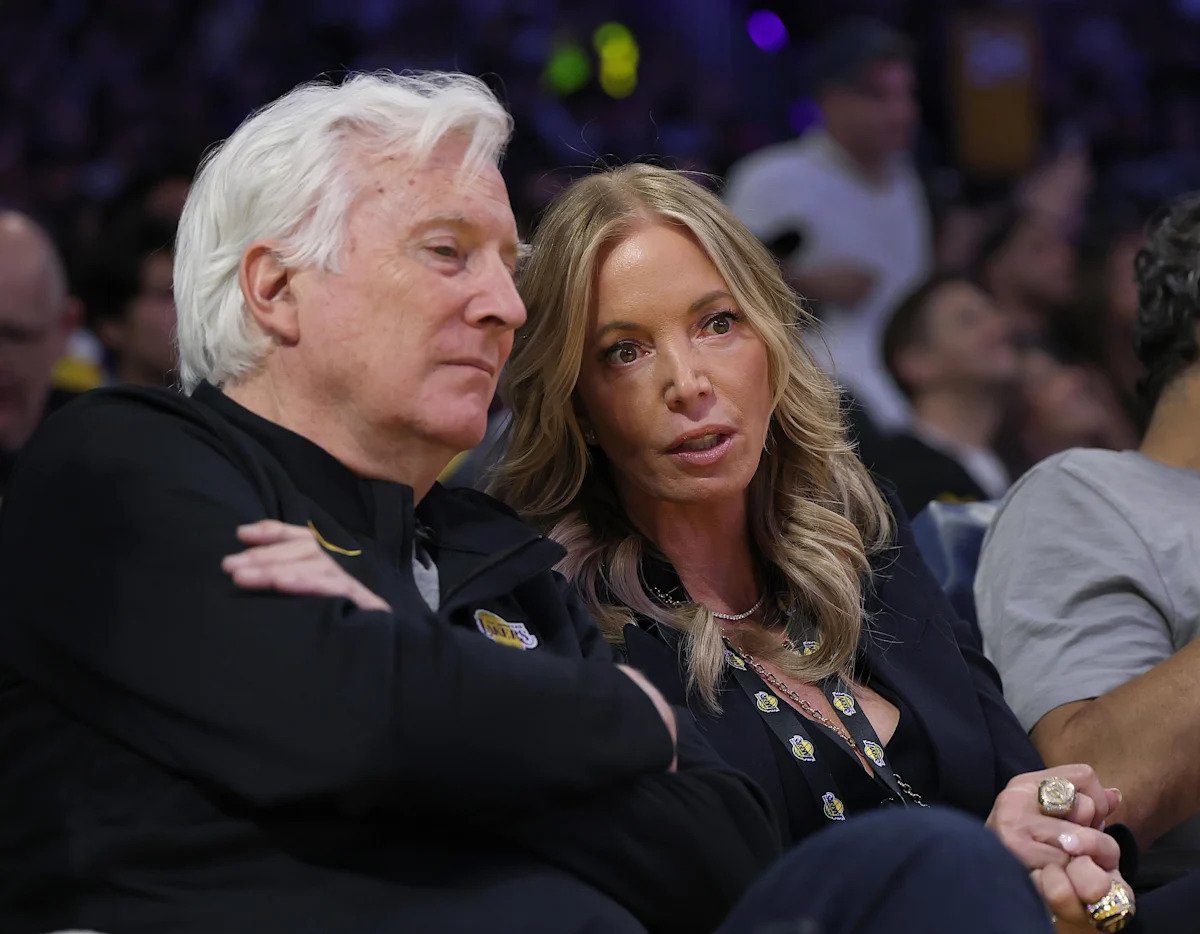
On August 12, 2026, ten months after he finalized the $10 billion deal to acquire the franchise from the hallowed and chaotic Buss family, Mark Walter sold the Los Angeles Lakers to a group led by Josh Kushner and Bob Iger at a valuation of just over $12 billion. His tenure at the helm is the shortest since the merger, by a factor of at least three: only Ted Stepien, who was possibly the most batshit decision-maker ever to own an NBA team, gets even close, and he lasted three years. This is without a doubt the most shocking sale of a franchise in my 25 years on this planet, and I’d guess that it’s probably the most shocking one anyone reading this can remember. This is the Lakers, the runners and gunners and star chasers and champions and the NBA’s crown jewel and the home of a million MVPs and the NBA’s biggest glamour market, and there are people in the world who might really saw off their own legs for a 20 percent chance at taking the reins. And this is also Mark Walter, the billionaire owner of the Dodgers who’s managed to bring a couple World Series to LA by paying just about every superstar imaginable and whose pockets previously seemed to run so deep as to appear endless, and whose organization has proven so successful that the upcoming MLB labor negotiations will in all likelihood take aim at him specifically.
Walter was supposed to bring some of that magic to the Lakers. Gone were supposed to be the days of Ramona Shelburne exposés and palace intrigue and the dropping-and-reading-of-tealeaves that had so long defined the Lakers after family patriarch Dr. Jerry Buss passed away. They were supposed to have money again, and they were supposed to be smart, and now Walter is gone. The timing of this is strange, and the facts of it make it look even stranger: the FBI investigation into some of his business dealings at Guggenheim, his seemingly desperate search for cash as his Delaware Life company attempts to pay down the $16 billion in loans that have made it the second-most exposed life insurance company in America, the involvement of a Kushner brother, and the recent reports that not only did Walter decline to seek other buyers but also decided to sell the team in the span of 72 hours. All of this might be damning, and then again it might not, and at least a few of these facts likely explain some part of his decision to sell what is at worst the fifth-most valuable asset in sports, and the most iconic in the NBA.
Advertisement
We are not likely to get an especially detailed picture of what happened here: there is enough weirdness to assume that something shady is going on, and men like Walter and Kushner are not usually keen on telling us exactly what they are doing. But even if this sale is the product of the incredibly specific conditions of an FBI investigation, a demand for quick cash, and a potential need to curry favor with a family allied with the Trump administration, this sale sets a new and scary precedent for NBA franchises. Speaking yesterday about the Walter era, ESPN reporter Dave McMenamin said this: “They added two rows of courtside seats. They fired a bunch of folks. They raised season ticket prices 40% for some folks. And they made $2 billion. Like, not a very impressive resume there for his time being the principal owner of the Los Angeles Lakers.”
. . .
In 1973, America had a problem. The golden age of American capitalism had technically begun at the end of the Second World War in 1945 (it’s hard to really wrap your head around how powerful America was in 1945). For example, as Hitler bled out in his bunker, the United States held about half the planet’s total capital and was the sole nation that could reasonably expect to exit the war intact. But its fundamental precepts—holding, in part, that strong labor protections, the so-called consumer economy, and greater public control over production would fortify the economic base and prevent the kinds of overzealous speculation that created the Great Depression—started gaining purchase in the early ’20s.
The idea, with roots in the work of John Maynard Keynes, was that long-wave crises in the style of 1929 (and 1905, 1894, and 1877) were endemic to an unrestrained market economy. There would always be too much money going places from which it could not return, and consumer demand that would collapse at the first sign of trouble and banks that could not be trusted to act responsibly. And while some titans of industry had clearly begun to recognize this in the 1910s (on the back of other, smaller crises), the depression of ’29 had kind of sealed the deal. The depression was, of course, the worst in recorded history, and on the ground, many did not think it was actually going to end. Keynes himself, in 1930, in an essay claiming that the storm would pass away in the morning, could not help but notice how “Today we have involved ourselves in a colossal muddle, having blundered in the control of a delicate machine, the working of which we do not understand. The result is that our possibilities of wealth may run to waste for a time—perhaps for a long time.”
Advertisement
And while the conventional narrative generally holds that the Second New Deal rescued the economy, this is not exactly true: as early as 1937-1938, only a few years after its passage, a minor recession had once again cast doubt on the ability of the country to actually figure a way out. It was not until the outbreak of war, and really the stunning wartime mobilization, in which new, highly subsidized factories appeared overnight, production quotas in crucial industries were set, and wages fixed, that the true promise of public control appeared as something other than a fever dream or a corporate specter. It was here, it was effective, and by the war’s end, it seemed a kind of perfect solution. Not only to the problem of waging the most involved and expensive war of all time, but also to mitigating, eliminating, and weathering the myriad crises that just a few years prior had troubled the most basic and fundamental belief in the capital order.
. . .
On April 26, 2023, the National Basketball Association and the National Basketball Players Association came to an accord. To the players, it was supposedly a very good thing: they managed to protect the 49-51 split of basketball-related income, raised contract extension limits for veterans from 120% to 140%, removed cannabis restrictions, and created new eligibility criteria for end-of-season awards tied to contract values (this is how you get at least one of Jamal Murray and Jalen Johnson on all-NBA, instead of Anthony Edwards). And for the owners, it was a coup: the most famous provisions increased luxury-tax payments and created a two-apron system for teams that spent over certain thresholds. Offenders would not only have to pay outlandish tax bills, but they would also lose the ability to aggregate salaries in trades, lose access to draft picks in trades, and lose access to the mid-level exception—a crucial lever for teams in tax trouble to acquire veteran talent at competitive rates.
What this means, in essence, is that the players got a little more so that the owners could pay a lot less. Owners of small-market teams, owners with small pocketbooks, and owners who, for whatever reason, could not justify the $450 million bill for one year of basketball that Warriors owner Joe Lacob gladly paid in 2017 to build the greatest team ever were not only protected, but also rewarded for their cheapness. The propaganda for these measures has emphasized that they serve to create a parity of competition, in the style of the NFL, that the NBA has never seen before.
Advertisement
It is very expensive to pay a lot of good players what they deserve now, and because punishments range far beyond money, cheaply is the best way to build a good team. You managed to draft three stars, but you have to give them max deals, or they walk? Well, you better hope your second-rounders and Carter Bryant can give you enough production so you don’t run your max guys into the ground before they get to the playoffs, because we’re not going into the second apron. You just traded for a superstar wing, making 35% of the cap to pair with your up-and-coming 30% wing? You better pray to God Karl-Anthony Towns doesn’t eviscerate Adem Bona in the playoffs, and Labaron Philon can be a good sixth man right away.
Where the long-established logic of NBA team-building has generally held that veterans are more reliable — and thus a team of veterans is a team ready to compete — these new economics have flipped the math on its head such that only a team of young players, and more specifically, a team of young players whom you do not yet have to pay, has a chance of sticking around. And even then, as borne out by the unique faces of each champion since 2019, the dynasties of old do not have fertile soil from which to spring.
. . .
So let us go back to 1973. the year of the oil crisis in Tehran and a few years after the Europeans had recovered enough to begin competing in the marketplace again and a year before Nixon resigned and two removed from the 25th anniversary of the quasi-Keynesian order of postwar America and nine after Goldwater lost and seven before Reagan won. The crisis began with OPEC’s embargo of oil sales to any nation that’d supported Israel in the Yom Kippur War—raising prices of that most essential material across the Western world. But really the crisis began much earlier. Already, consumer spending, that essential fuel of postwar growth, had reached a plateau near the end of the 1960s, precisely when foreign competition, with which this order had never had to contend, had begun to nip at corporate profits; already direct foreign investment had begun to collapse, most acutely with the collapse of Bretton-Woods in 1971 and the emergence of OPEC at the end of the ’60s, and also assuredly the wave of independence movements in the global south that defined the ’60s; and already had cheap and plentiful supplies of skilled foreign labor brought into question the necessity of this enormously expensive american workforce. In fewer and clearer words: the order had already begun to fracture.
Advertisement
The solution, as written ad nauseam at the time and after the fact, was neoliberalism; the slashing of social welfare programs and the breaking of American labor and the relocation of industry off American soil, and the rapid opening-up of all previously protected corners of the American economy to capital. Conventional narratives will point to the ’81’s failed air traffic control strike and the weakening of Glass-Steagall all throughout the ’80s and ’90s as the flashpoints of the new order, and they are not wrong; neither the complete destruction of a worker’s organization representing such a vital segment of the American economy nor the rapid merger of commercial and investment banking would have been conceivable prior to the crisis of ’73. But the real story of ’73 is the story of ’08, with the subprime mortgage crisis that plunged the American economy into the worst recession since ’29.
It is the “neoliberalism-response-to-crisis-of-accumulation-reagan-trickle-down-economics-offshoring-deregulation-austerity-death-of-the-middle-class-flint-michigan-we-don’t-make-things-anymore” story. Full of neighborhood bankers offering Americans ridiculous loans they knew they couldn’t pay back and selling that debt to other vultures who’d been told that it was safe and the constant gambling with all this debt on hospitals and tech companies and private prisons and oil concerns and a “real economy” that hadn’t actually grown in decades filled with ordinary Americans whose paychecks hadn’t risen either, and so when it crashed to the ground everything fell with it and no one knew if it could get back up, and this time nothing really changed, the banks got their money back and the gamblers were told to be more careful next time because there was sure as shit gonna be a next time because we sure as shit didn’t have any other ideas.
. . .
On August 13, 2025, on the precipice of a season that would end in their first playoff run in four years, the Portland Trail Blazers announced their sale, for a reported $4.25 billion, to Tom Dundon, a billionaire who made his cash as a subprime auto lender in the early 2000s. Since 2020, an unprecedented 25 percent of NBA franchises have changed ownership in the span of six years, owing in large part to the meteoric rise of franchise valuations; in 2025 alone, the Blazers, Celtics, and Lakers alone combined for an estimated sale price of $20 billion. This is a time of great change for the league, and upon Dundon’s arrival, the dimensions of this change would make themselves clear.
Advertisement
First was the announcement that Dundon had declined to pay for the travel and accommodations of Blazers support staff and their two-way players for the duration of their 2026 playoff run—a breach of the NBA’s long-established customs. Next were the rumors that interim head coach Tiago Splitter, who’d taken over for Chauncey Billups following his gambling arrest and who’d done a decent job coaxing a winning record out of a mismatched and mercurial roster, would not return to the Blazers the following season. The reason for the divorce, as alleged after the fact, was Splitter’s strange desire for a salary and contract length on the standard of other NBA head coaches. Finally, or at least most recently, are the troubling negotiations between Dundon and the city of Portland over the financing of the construction of a new arena (Dundon, of course, believes that the city should take much of the burden), with some not-so-subtle hints that Dundon aims to relocate the storied, though small-market, franchise.
I do not get why you would buy an NBA team if you did not want to, you know, run an NBA team, especially one like Portland with a long history of relevance, a legendary title, and a rabid fanbase. But I believe, taken together with the passage of the second apron provisions in the latest CBA, all this actually does make sense. For so long in the NBA, the idea has been that you can and should buy your way into relevance. Most every great and storied team in the league’s history has had an enormous payroll. You spend on talent, and you spend as much as you need to keep that talent around. But the second apron restrictions, with all their far-reaching implications, passed and agreed to precisely when valuations are reaching record highs and teams are being sold all over the damn place, have served to not only protect but also incentivize low spending. Every team certainly must pay at least 90 percent of the salary cap, but the logic of winning has clearly changed: the OKC Thunder won a championship with the 19th-highest payroll in the league; the Spurs and Pacers went to the finals in the last two years, each with the 17th-highest payroll in their respective seasons; and even the Knicks, the most recent champions who won with the seventh-highest payroll in the nba, were only able to secure the cap space necessary to build the team because Jalen Brunson left $113 million on the table. What is more, four of the teams with the 10 highest payrolls did not advance past the first round. For reference, only once during the fabled Bron-Steph years did either of those teams fall outside the top five in spending.
The problem is not that these owners are slashing budgets to raise profits, nor that the players are bearing the cost. Rather, what is happening is something far more insidious: the speculative turn of NBA team-building. With prices soaring, expansion looming, and more sales than ever before, there is a pretty obvious financial incentive for owners to cut costs where they can, especially owners who might soon put their teams on the market and don’t want to be dragging a $300 million payroll into negotiations. And for new owners, who again account for about 25 percent of league ownership—who bought in at this all-time high, and who, despite their vast individual wealth, have been frequently unable to amass the capital necessary to outright purchase their new teams on their own, some kind of austerity, or at least cost-deflation, probably looks appealing. The franchise is an asset now, and a ridiculously and increasingly valuable one at that. Considering all this, we are left with the big question: if the new logic of winning team-building just so happens to help out new highly leveraged owners, can all this focus on flexibility and cost-deflation really be divorced from the sales of franchises? Put another way, is it even possible to say anymore that these owners care about anything but the check they can get at the next sale?
. . .
Advertisement
This is a story of neoliberalism, but more specifically, it is a story of speculation. Where corporate butchers like Jack Welch began to understand that the numbers on the stock ticker were all that mattered, and the numbers didn’t care much for the reality of what a company was but more so the idea of what a company could be. Companies shrank their productive units or otherwise moved them to places where labor could be bought on the cheap; research and development budgets shrunk as corporations slashed their payroll and expanded to new lines of business, most especially financial. You know this story, but what matters here for our purposes is that this era no longer saw a future for itself. If the quasi-Keynesian tendencies of the old sought to address the root cause of crisis and calamity, the new order simply sought to survive.
Gone were the days ahead and the backward days behind; all that needed to exist here, in this increasingly wild domain, was increasingly unhinged capital. able to turn a profit in a jail cell and an operating room, and that did not care for the cities of the hungry and the shocked it left behind. And they certainly could not give less of a damn about the human meat it ground to a pulp across the pond. Because these actions looked good in the moment, the same as those piles of shit with the shine of the old-school blue chips that tore everything down in ’08. It didn’t matter if all our roads were so lined with shit that your car could barely move because the gamblers knew that they would be protected in the event of loss. And even if those subprime loans were now illegal, something close to it probably was, and as long as you stayed a few steps ahead of the crisis, you could do pretty well for yourself.
No longer was the nation willing to offer its citizens anything more than a pittance, and if they got sick or wanted a higher education or just looked a little funny at the powers that be, their lives were subject to complete upheaval. In ’97, just seventeen years after the collapse, 31 percent of Americans had no savings to cover surprise expenses; thirty years later, in 2026, the number of Americans fitting this designation may be as high as 67 percent. We understand that there is no one coming to save us and that if the whole thing falls down again, they’ll find a way to pick it back up and act like nothing ever happened. And all this means that there are no years anymore for millions upon millions of us, at least as we’ve ever been able to understand them; for us the horizon of the foreseeable future has slimmed to the few weeks just down the road.
. . .
Advertisement
We care about sports because the giants can fall down. In a second a man can be made a hero, and in less he can be made a villain, and every night twenty thousand of us gather in one place to yell and drink and boo, and it is all about luck and the gods, and even if these guys are kajillionaires and Adonis, we tell ourselves that they’re still like us, and we care about sports because we can absolutely ruin a billionaire’s night just by screaming. There is no reason I shut down for a couple of hours during Game 6 of the Nuggets-Wolves series last year and took a five-minute break in the middle of a rush at work to cry in the bathroom when my guys lost. We understand that our favorite players might have to leave one day and their bodies will break down, and glory doesn’t last that long. But for so long we understood that when you had a shot, you had to go all in, and if you got mad enough at the owner, you might be able to convince him to pay up.
Growing up, most of the team sales I recall were at least somewhat forced. Donald Sterling had to go, and so did Robert Sarver and so did Dan Snyder. The franchise was as much a public institution as anything else, and its owners were not good or generous people, but they were usually people who cared at least about the team and the city. and the better ones understood the business of sport was different than any other, where operating at a loss for a few years could be justified if you were winning and where there was a built-in consumer base that wasn’t going anywhere. There were easier ways to make a buck, and for many of them the franchise was something closer to a family heirloom than a business and a chance to have your name on a trophy and stand on a big parade float and wave at thousands of adoring lunatics. And so they would usually pay to keep our guys around, and they’d respect our little traditions and superstitions. They would be fixtures in our lives as much as anyone else, and for longer than any of the men they employed.
And of course, of course, of course, there were despots and union-busters and petty tyrants like Sterling and Sarver and Marge Schott. But you don’t have to mourn them to recognize that what they symbolized was a personal commitment to a city and a team with real obligations to both, and to recognize that the anonymous capital currently flooding the NBA does not see the franchise as anything but another asset in a portfolio, subject to the same economic pressures as anything else. Already they have been able to write off contracts and team purchases over 15 years using tax loopholes; already they have managed to squeeze cities for hundreds of millions in taxpayer funds for stadiums; already the franchise is an attractive investment vehicle.
Like any good investment vehicle in 2026, this one will hurt the masses hard. Our teams will be subject to complete upheaval the minute payroll sniffs the second apron. Our owners will jack up ticket prices, cheap out on contracts, and threaten their city with relocation for more favorable terms on arena funding, only to sell off for a tidy two billion in profit a year later to the highest bidder. All that we considered so fundamental to sports—all that we believed about the need to keep your guys around and to chase glory at all costs and to pay more than you should to get what you need—has been eaten alive by capital and its logic of speculation. And that just sucks.

