The Seattle Seahawks entered the 2026 season with plenty of young players looking for an opportunity, but the path from draft pick to NFL contributor is rarely straightforward. For Seattle’s rookie class, that process has already become more complicated. So far, Jadarian Price appears to be the only realistic option from the class to contribute immediately as a rookie.
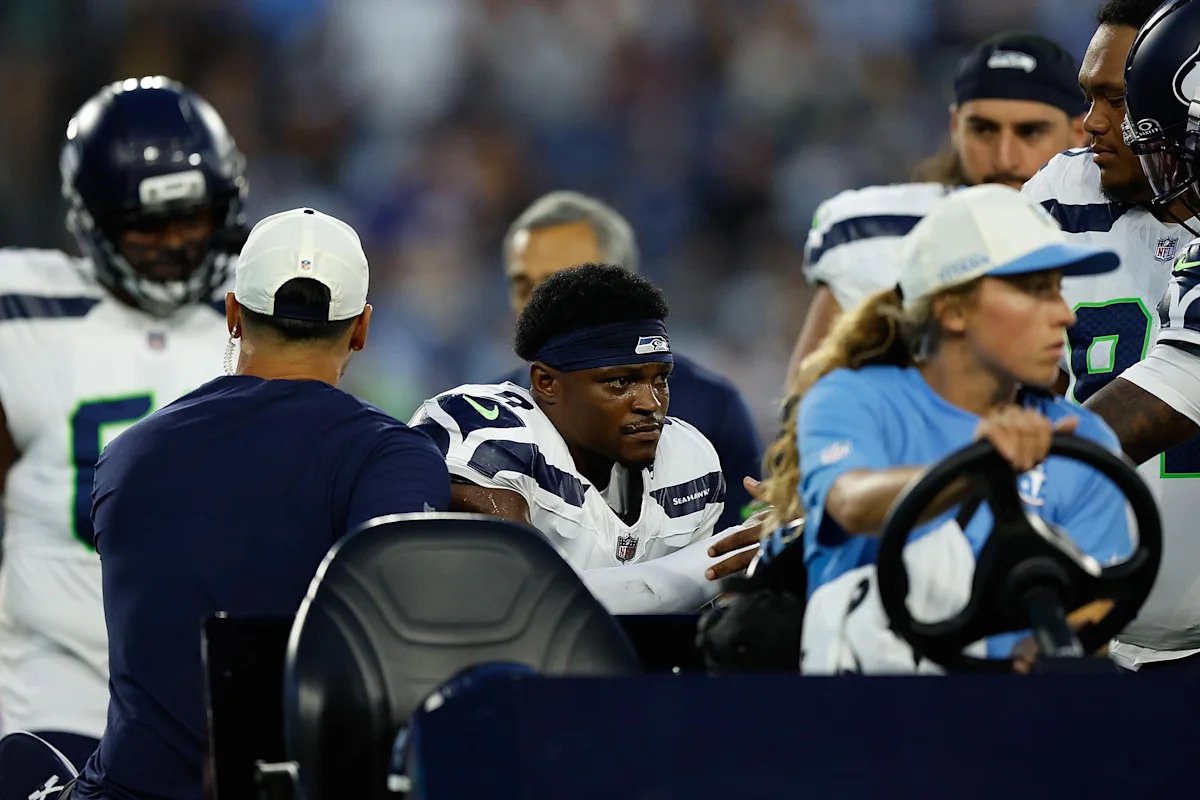
Bud Clark is out for the season after suffering a broken ankle on Seattle’s first defensive snap against the Tennessee Titans. Julian Neal is also dealing with an injury that has yet to be fully explained by the team.
Advertisement
Those injuries matter, but they are only part of the story.
The bigger question surrounding Seattle’s 2026 draft class may be much simpler: how many of these rookies will actually earn a place on the 53-man roster?
Clark was one of the rookies with the clearest opportunity to carve out a role in Mike Macdonald’s defense. The second-round pick out of TCU brought the versatility and coverage ability Seattle was looking for in its secondary, and his ability to contribute in different packages made him an appealing fit for the defense.
Instead, his rookie season is already over.
Neal presents a different situation. The third-round cornerback out of Arkansas had a legitimate opportunity to compete for playing time at a position where Seattle has several questions behind its top options. His injury now removes another young player from that competition, at least temporarily.
Advertisement
That could have a significant effect on the roster battle at cornerback.
With Neal unavailable, veterans such as Trevon Diggs and Noah Igbinoghene become more important, while Seattle has fewer opportunities to evaluate its younger options. If Neal’s injury keeps him out for an extended period, the Seahawks may ultimately have to decide whether they have enough depth at the position or whether they need to look outside the building.
But losing Clark and Neal doesn’t mean the draft class itself is in trouble.
In fact, the more immediate concern is what happens with the rest of the rookies.
Advertisement
Seattle has several other draft picks (notably Michael Dansby and Andre Fuller) competing for roster spots, and some of them face a much steeper climb than Clark or Neal did. By the end of August, the Seahawks have to determine which rookies have done enough to justify occupying one of 53 roster spots.
That’s where preseason performance becomes particularly important.
Beau Stephens is one of the more interesting examples.
There was some discussion that Stephens could potentially emerge as a player capable of challenging Anthony Bradford for the starting job. I’m considerably less convinced that’s where the competition currently stands.
Advertisement
Stephens has shown flashes, but he hasn’t demonstrated the kind of consistent jump that would make me believe he’s ready to unseat an established player. And, to be fair, some of what we’ve seen is perfectly normal for a rookie.
There have been good reps followed by mistakes. Plays where his technique and athleticism stand out, followed by snaps where he looks like exactly what he is: a young player still adjusting to the speed and physicality of the NFL.
That isn’t necessarily a bad sign.
Preseason is supposed to expose those inconsistencies, particularly for rookies. The important question is whether Stephens can turn those flashes into something more consistent as the evaluation period progresses.
Advertisement
For now, however, I wouldn’t frame him as the player who is going to take Bradford’s job, and that distinction matters when evaluating this draft class. The Seahawks don’t need every rookie to become a starter. They need enough of them to become useful NFL players.
Some will have obvious paths to playing time. Others may need to earn their roster spots through special teams, rotational snaps or simply demonstrating enough developmental potential for the coaching staff to keep them around.
That could be the first real test of Seattle’s 2026 class.
Clark is already lost for the season. Neal’s availability is uncertain. Meanwhile, several of the other rookies still have to prove that they belong on the roster in the first place.
Advertisement
That’s a very different challenge from simply finding immediate production.
And it is why the final week of preseason will tell us much more about this draft class than the draft grades ever could.
If several of Seattle’s remaining rookies emerge as legitimate contributors, Clark’s injury and Neal’s absence can eventually become footnotes in what could still be a successful class.
If, however, multiple picks fail to separate themselves from the veteran and undrafted competition, Seattle could finish the season with surprisingly little rookie production despite investing significant draft capital.
Advertisement
That’s the real concern right now.
The Seahawks don’t need this class to dominate in 2026. They need to identify which players can help them now, which players need more development and, perhaps most importantly, which players are worth keeping on the 53-man roster.
Clark won’t get the opportunity to answer that question this year.
Neal may have to wait before getting his chance.
For everyone else, the battle is just beginning.

