Week after week, month after month, Rúben Amorim sent out his Manchester United players in a 3-4-2-1 shape. Many considered it to be a mistake and, among the many gripes about Amorim’s play, the sentiment “it’s too defensive” was rife.
It is a familiar complaint with a back-three system; with three center backs as opposed to the more typical two you’d find in a back four, it’s easy to see how fans would think a team is setting up to be more defensive. But that’s not necessarily the case.
The last decade or so has been littered with examples of how a team playing a back three can be among the most attacking and aggressive in the sport — with one particularly extreme case currently on show in the Dutch Eredivisie — and even Amorim’s United debunked that theory to an extent. In the 20 Premier League games he managed this season, the Red Devils registered the most shots on target (109) and accumulated the third-most xG (36.14) in the league, behind only Arsenal (36.41) and Manchester City (38.02).
Now Amorim’s team had problems, let’s not pretend otherwise, and we’ll circle back to that a little later. But using a back three is not automatically a cue to sit back and defend, it can be a bold and innovative shape. Here’s why.
Wing backs are attacking, aggressive, and difficult to mark
A trademark feature of the back-three system is the use of wing backs, a position which occupies a unique place in football tactics. It can be difficult to classify them as defenders, midfielders, or forwards as they effectively play all three roles simultaneously in one of the most complex briefs the sport has to offer.
Very few wing backs are defensively minded. It used to be a joke in scouting circles that every full back is a failed winger who has been forced to drop deeper on the pitch, but in the age of “inverted wingers” and wide forwards who can score 40 goals a season, having a wing back who can bolster the attack is hugely beneficial, as their defensive duties are often covered by others.
Take Inter Milan’s duo of Federico Dimarco and Denzel Dumfries, for example.
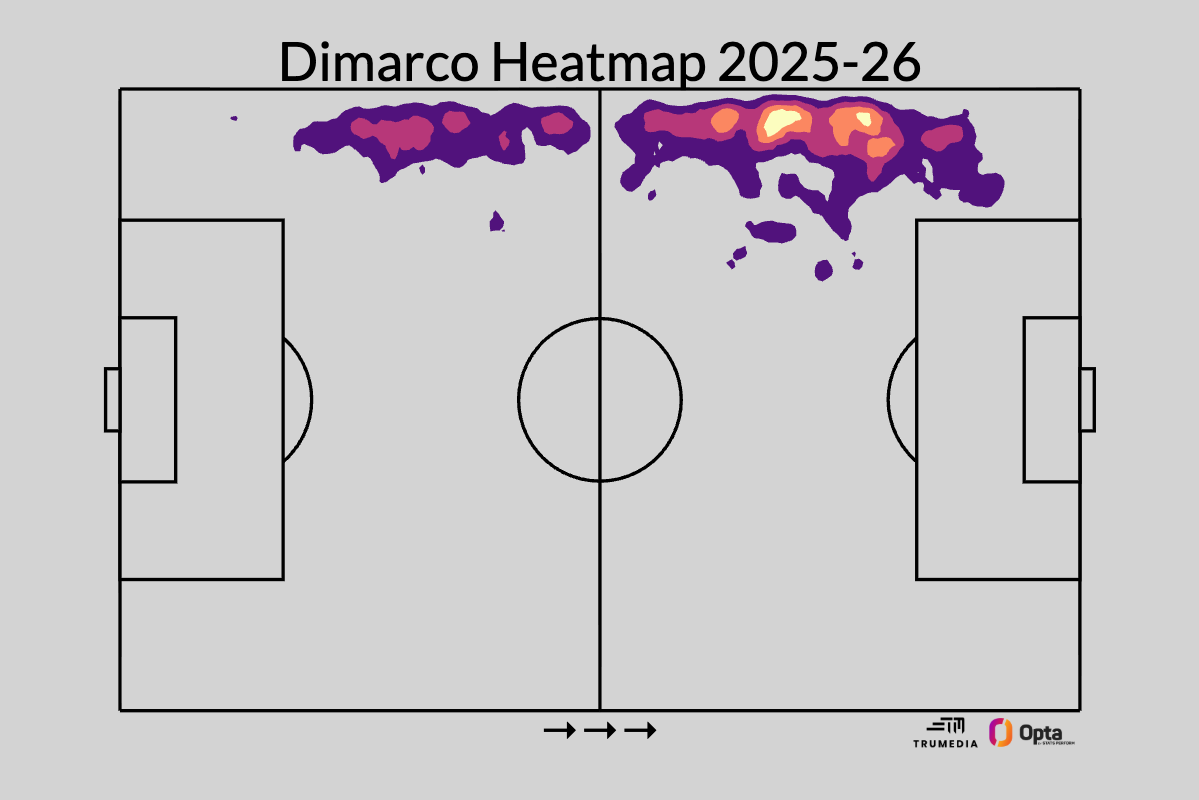
Left-sided wing back Dimarco has created the most chances by far in Italy’s Serie A this season (76), has the highest Expected Assists tally (8.49) too, which signifies the quality of the opportunities he fashions, and spends more time in the final third than he does anywhere else on the pitch.
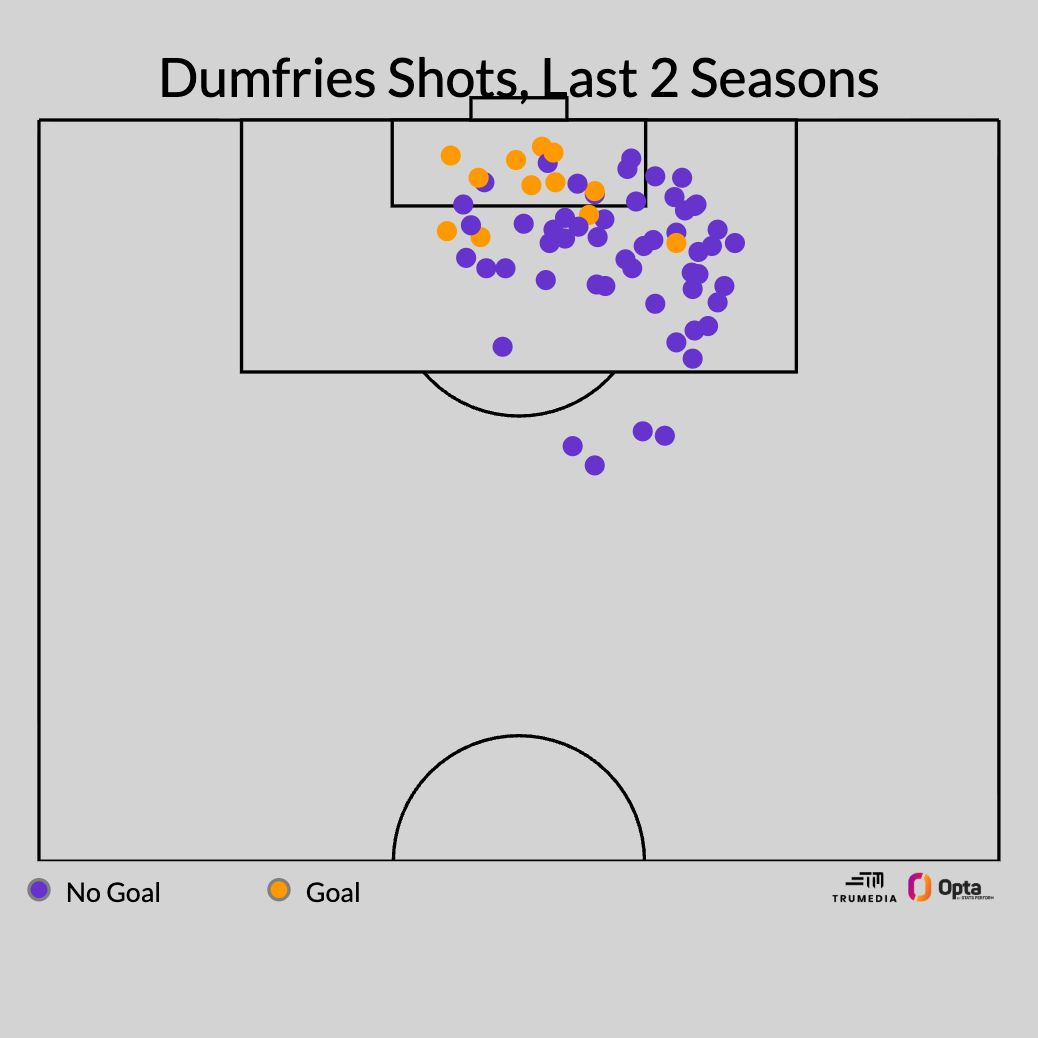
Meanwhile, on the right, Dumfries acts like a striker who has been forced to play elsewhere; he is constantly getting into the opponent’s box and offers a massive threat when he arrives at the back post.
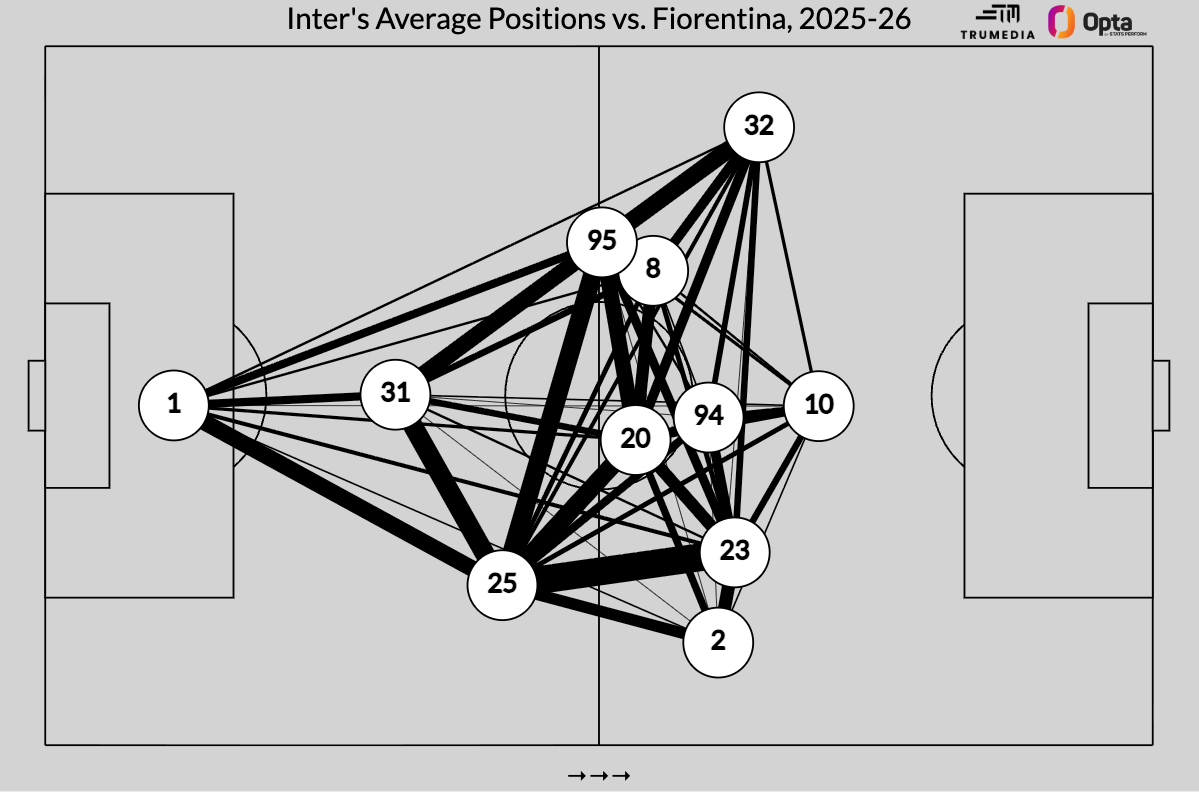
With both wing backs pushed up so high, it’s common for seven or eight of Inter’s players to record the majority of their touches in the opposing half, which would be unusual for most other teams.
Crystal Palace wing back Daniel Muñoz plays in a similar way. He has 15 goal involvements since the beginning of the 2024-25 season and, as with Dumfries, he can be hard for defenses to pick up because he often receives the ball in the space between their defensive and midfield lines. Plus, his incredible speed and stamina means he can run up and down the touchline relentlessly.
Certain coaches, such as Antonio Conte and Simone Inzaghi, have recognized the inherent value of wing backs and utilize them when possible. But in order to unleash them, you have to play a back three, or you’ll be too exposed in defense.
1:39
Hutchison: Carrick has made a mockery of Amorim’s Man United
ESPN’s Don Hutchison believes Michael Carrick has made a “mockery” of Ruben Amorim’s Manchester United.
Center backs can push into midfield
Playing a back three doesn’t necessarily mean you’re adding too much defensive personnel to your XI, however.
Some managers design their systems to allow one of the center backs to step up and join the midfield while in possession. So long as that player is comfortable on the ball, they can create a numerical overload in the middle of the pitch (while there are still two center backs covering behind them.)
Amorim has long been a proponent of this strategy. At Sporting CP, he asked Gonçalo Inacio to do this; while at Manchester United, he asked Lisandro Martínez, and later Luke Shaw, to carry out the role.
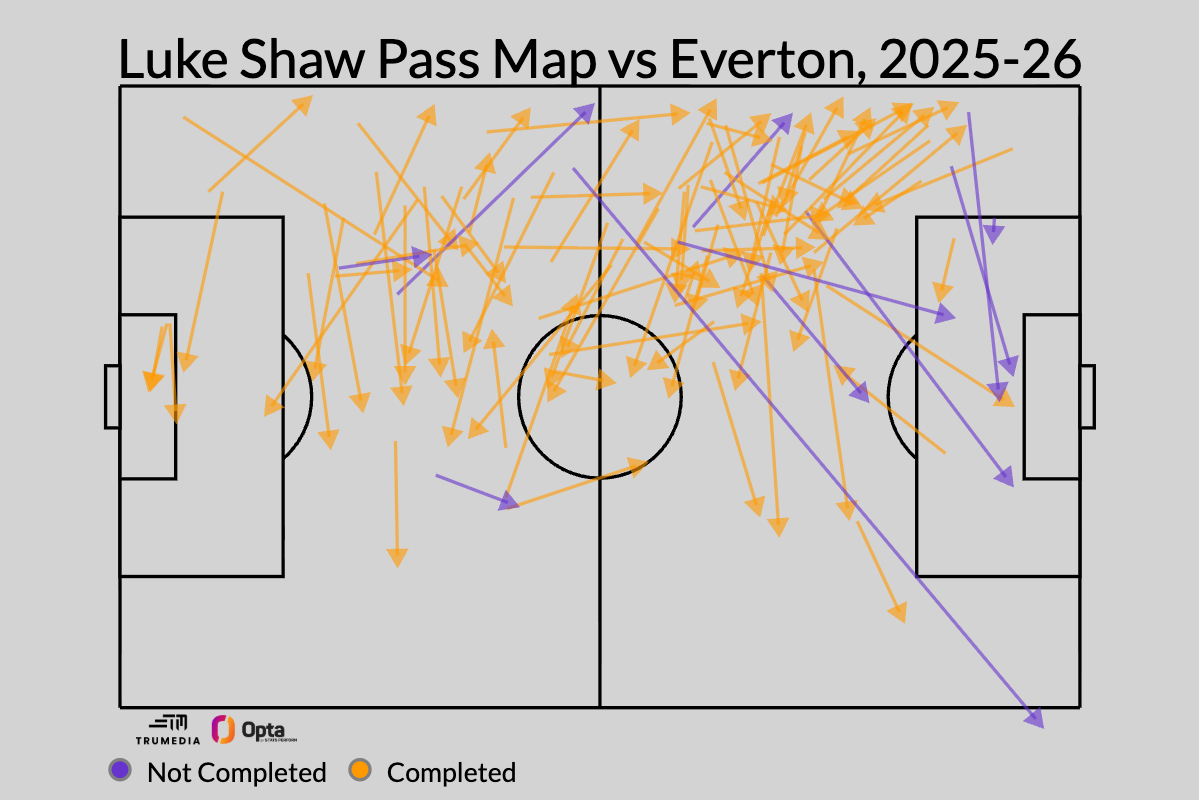
The pass map above shows the strongest cluster of passes coming from what is effectively a left center midfield — or even left No. 10 — space on the pitch. Much of the Red Devils’ passing volume went through Shaw (or Martínez) under Amorim, who pushed up and played very close to Bruno Fernandes and company.
Atalanta’s Giorgio Scalvini has also carried out this role from right center back in the past, Borussia Dortmund’s Nico Schlotterbeck also regularly dribbles into midfield from left center back, while Conte’s Premier League title-winning 2016-17 side at Chelsea encouraged Brazil defender David Luiz to roam forward and affect play however he felt best.
However, the best example of a center back pushing into midfield and completely changing a team’s dynamic is John Stones‘ role for Manchester City’s treble-winning side in 2022-23.
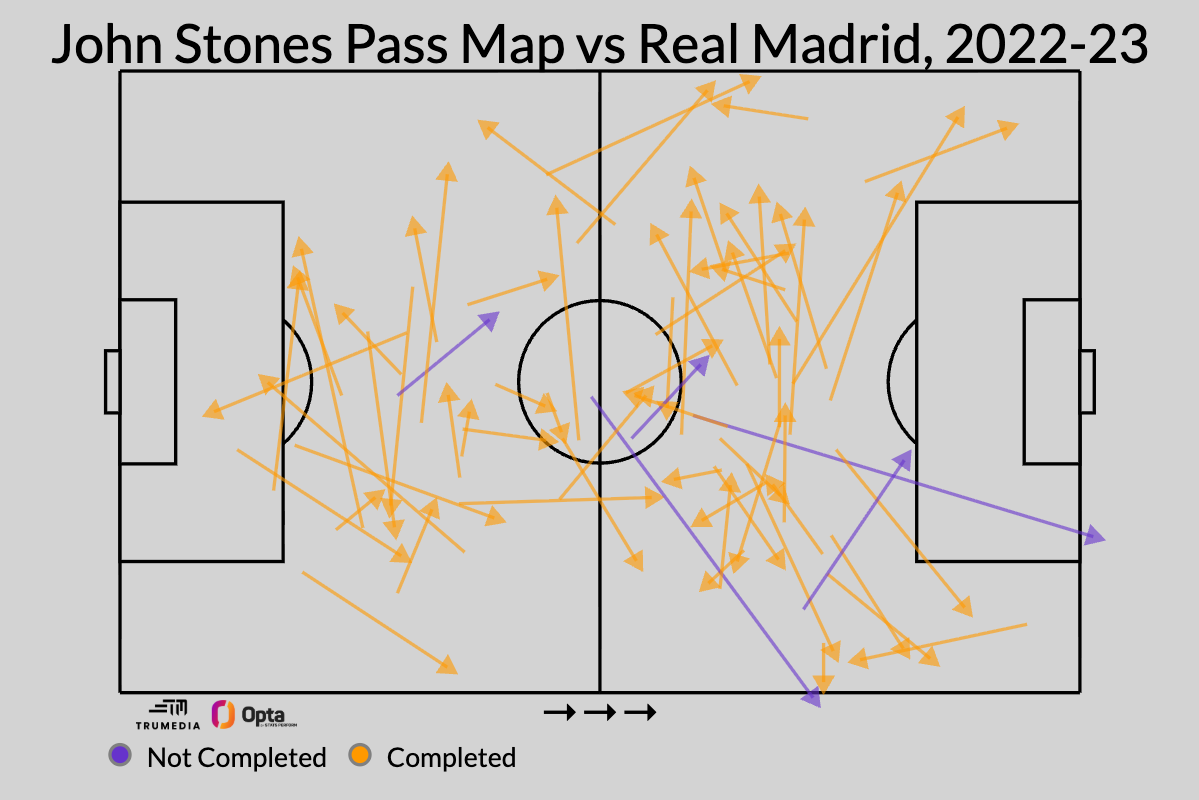
Just over halfway through that campaign, Pep Guardiola discovered a tactical tweak that no team had an answer for. He fielded four center backs (Stones, Rúben Dias, Manuel Akanji and Nathan Aké) in the defensive line, then asked Stones to join Rodri in midfield when the team were on the ball. That in turn pushed Ilkay Gündogan up next to Kevin De Bruyne, creating a 3-2-5 shape.
Stones’ role was to recycle the ball high up, as a midfielder would, but also form a barrier with Rodri to protect against counter attacks. That allowed Guardiola to use five players to attack, spread across the width of the pitch. A simple glance at his pass map (above) against Real Madrid in that year’s Champions League semifinal might fool you into thinking he purely played as a center midfielder … but he didn’t.
2:25
Marcotti ‘really disappointed’ in Guardiola’s tactics vs. Real Madrid
Gab & Juls react to Man City’s 3-0 loss to Real Madrid in the first leg of their round of 16 Champions League clash.
Center backs can join the attack
Some center backs even go beyond the central midfield areas and try to affect play in the final third more directly.
When Tottenham’s Cristian Romero played in Serie A for Genoa and Atalanta, he regularly steamed forward and joined the attack. Occasionally he’d appear next to the striker after a 40-yard dash, sensing the chance to arrive undetected and cause chaos.
These days, you might see Juventus’ Federico Gatti hammering up the pitch in a similar vein — although not always from a back three, which adds extra risk to the move — and then there’s Inter center back Alessandro Bastoni, who is a solid defender and a great long passer from the back, but also has license to push well beyond the midfield. In fact, the 26-year-old will regularly overlap his wing back (Dimarco), receive the ball and cross, or he’ll make an underlapping run and get into the opposition box himself.
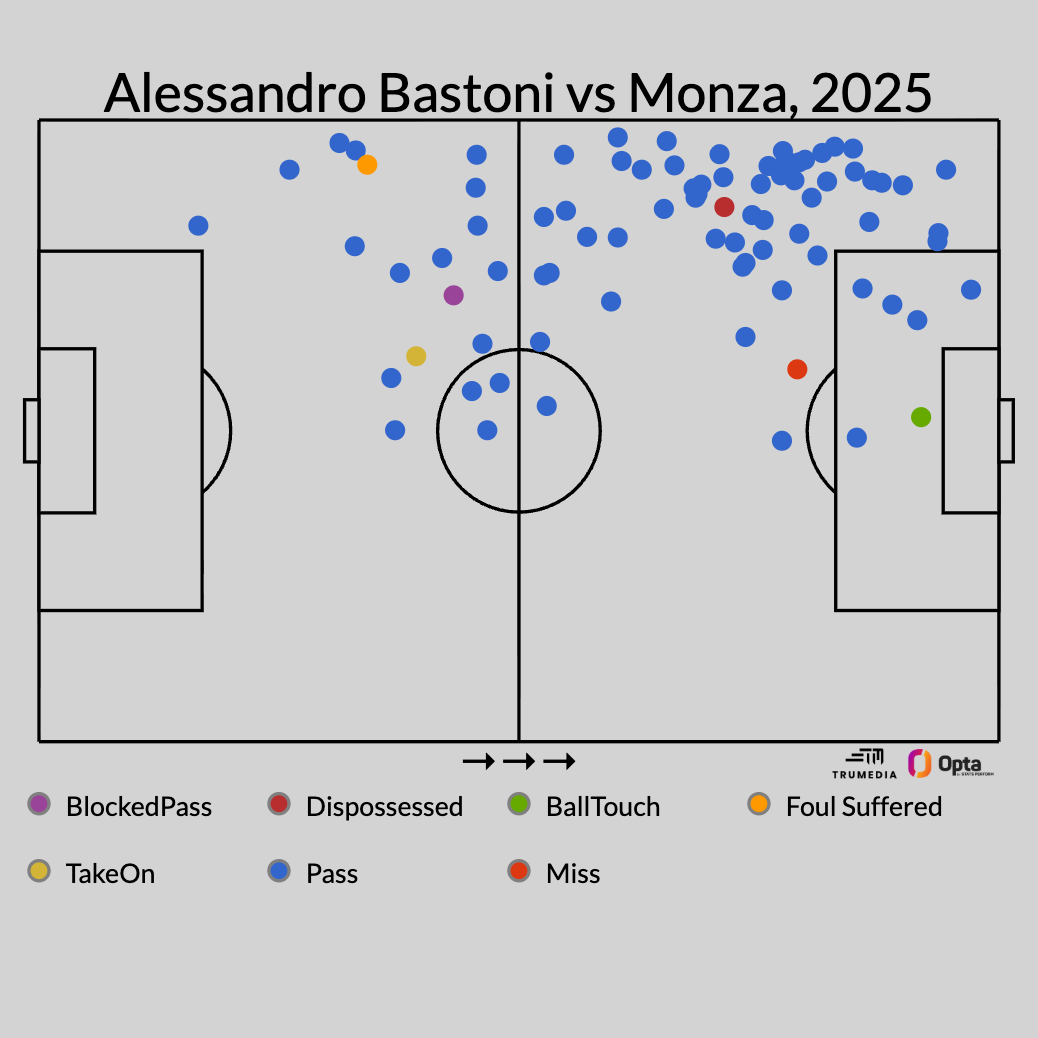
Bastoni has had an astonishing 477 touches in the attacking third this season, the 19th-most in Serie A; he heavily contributes to the league’s best attack, yet also remains integral to a defense that have conceded just 23 goals in 29 games.
But if you think that’s impressive then get ready, because NEC. Nijmegen take it to the extreme.
NEC have a remarkable story. A storied, small club from the Netherlands who have never won a major trophy, they currently sit third in the Eredivisie, above the giants of Ajax and other regular European qualifiers such as AZ Alkmaar and FC Twente.
And they’ve risen to this point by playing the most reckless football you will ever see this season. NEC build out from the back and attack in freeform fashion, with center backs steaming up the pitch to join the forward line, wingers ending up at the back and everything in between. Elazar Dasa, the right center back, has sent in 34 crosses this season, which is more than some teams’ forwards around Europe.
NEC’s base formation is a 3-4-2-1, but as soon as one player makes a pass, they move up the pitch and the shape melts. It is perhaps the ultimate example of why playing with three center backs doesn’t necessarily mean you’re playing defensively. After all, only champions-elect PSV Eindhoven have scored more goals (77) than NEC’s 67, while they’ve only conceded the joint-seventh-most (45), which is impressive given they can leave themselves hugely open at the back on occasion.
Pushing the limits
In the same way that no 4-4-2 is the same — Sean Dyche’s relegation-battling variant for Burnley, which hoofs the ball to a target man, is night and day to Unai Emery’s possession-based, controlled version at Aston Villa — a back three system is not necessarily defensive.
The proof of that is in the pudding: Inter are Serie A’s top scorers with 65; Dortmund are the Bundesliga’s second-top scorers with 55; and Lens are Ligue 1’s third-top scorers with 49. All those teams play a back-three system consistently.
Conte has unleashed a back three to great attacking effect over the years with various clubs such as Chelsea, Juventus and Napoli; while Manuel Gasperini, the creator of some wonderful Atalanta teams that have thrilled in front of goal, is also back-three stalwart.
ESPN’s Ryan O’Hanlon recently argued that the world — and most specifically the Premier League — needs more back threes, as the flexibility and ingenuity the shape allows could be an effective antidote to a world of man-marking, physicality and set pieces.
Not every back-three story is a success, though … and that brings us back round to Amorim’s Manchester United.
His side missed plenty of the opportunities in front of goal, as the Portuguese struggled to get the best out of young striker Benjamin Sesko and stifled creative midfielder Bruno Fernandes in a deeper role that heavily restricted his impact in the final third. Meanwhile, United were defensively poor; only six clubs let in more goals than their 30, as the system was forced on a squad which lacked the athleticism in center midfield to pull it off. And now interim boss Michael Carrick has ditched it for a back four, results have improved.
But don’t let that put you off. As several clubs, from last season’s Champions League finalists Inter to Dutch upstarts NEC are showcasing, a back three can be system that pushes the limits of “attacking” when deployed properly. And isn’t that just what football needs?

