For the first time, the WNBA offseason happened all at once. Free agency, the college draft and an expansion draft were squeezed into a 10-day timeline, forcing teams to make a flurry of moves. And with the increased salary cap, more money than ever is at stake if these decisions don’t go according to plan.
Rosters are still in flux, and a few of the league’s top players remain unsigned, though we’re pretty sure Minnesota Lynx star Napheesa Collier and the New York Liberty crew of Breanna Stewart, Jonquel Jones and Sabrina Ionescu aren’t going anywhere. Nevertheless, training camp starts Sunday, so now is a good time to assess how teams have fared in this historic period and what this activity means for the 2026 WNBA season.
Advertisement
Winner: A’ja Wilson and the Aces
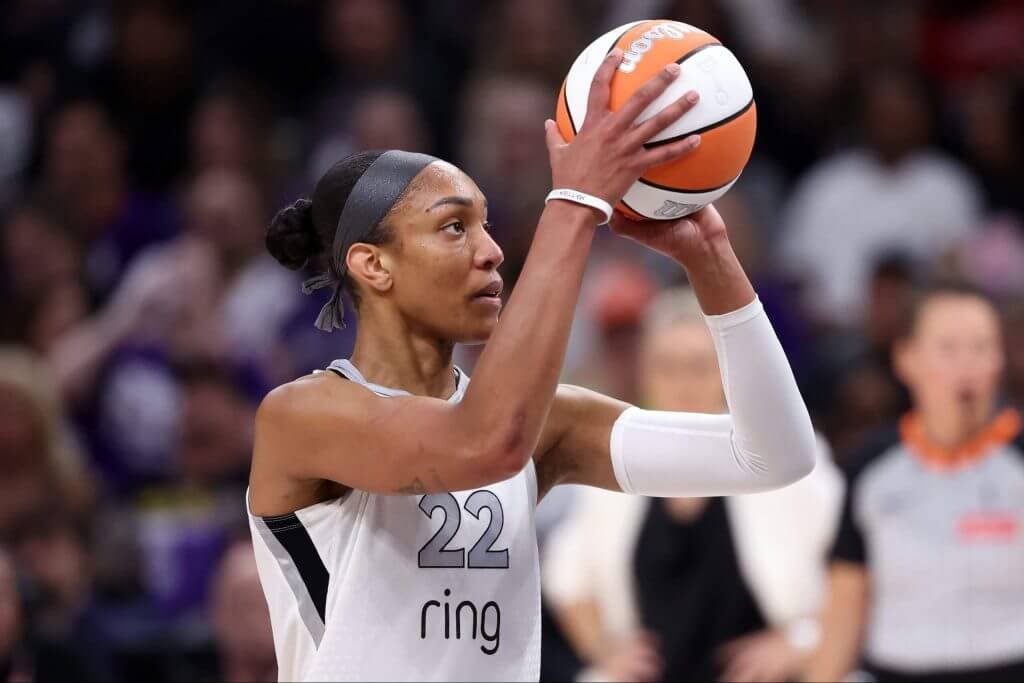
Wilson signed the richest deal in WNBA history, a three-year, fully-guaranteed supermax contract worth more than $4.7 million to return to the Aces. Given Las Vegas has won three of the last four WNBA titles and Wilson’s relationship with coach Becky Hammon, it seemed nearly impossible that she’d be headed anywhere else, but it’s still quite the pay jump for the reigning MVP — $200,000 last season to $1.4 million this year.
Her return is huge for the Aces, who bring back 90 percent of their scoring off the 2025 title team, including the top four leading scorers — Wilson, Chelsea Gray, Jackie Young and Jewell Loyd. With Wilson as the fulcrum and its foundation intact, Las Vegas enters the season as the heavy favorites to go for its fourth title in five years.
Bonus winner: Wilson will forever be a sports trivia answer. (Question: Who signed the richest deal in WNBA history when the 2026 WNBA collective bargaining agreement kicked in?)
Advertisement
Loser: Competitive balance
With the massive spike in the salary cap and two more teams entering the WNBA, the theory was that talent would get dispersed around the league as players chased their first seven-figure paychecks and lottery teams had to hit the salary floor. Instead, the Aces maintained their super-team (their outgoing players combined for only 131 postseason minutes over 12 games) while the Liberty also added an all-WNBA player, Satou Sabally, to their roster.
The consolidation of talent wasn’t just a feature of the old CBA. Star players are still willing to take discounts from their current team in the new cap environment if that franchise has proven that it can be a winner; Atlanta even kept its core to sub-max salaries after a strong regular season but without much playoff success. If an organization hasn’t yet demonstrated sustained success, free agents expect market value — Dallas had to shell out for some contracts — but winning, it seems, begets compromise.
Winner: Wings and Fever financial flexibility
Perhaps Dallas and Indiana were just playing the loooooong game when the franchises struggled from 2019-2023 — the Wings won 44 percent of their games and the Fever won just 26 percent in that span — positioning themselves to land top draft picks when players like Aliyah Boston, Caitlin Clark, Paige Bueckers and Azzi Fudd went pro.
Advertisement
Getting two No. 1 picks apiece during a four-year span is great for a franchise, but having those players on rookie-scale contracts also provided more financial freedom for their GMs to do work in free agency.
Dallas went after co-Defensive Player of the Year Alanna Smith, and bolstered its interior by also signing Jessica Shepard and Awak Kuier (committing 39 percent of the salary cap to that trio). Indiana signed Kelsey Mitchell to the supermax and re-signed Lexie Hull and Sophie Cunningham to keep the core of this team together while also bringing in Mo Billings and Ty Harris.
If Boston, Clark, Bueckers or Fudd had been free agents during this offseason, these teams certainly wouldn’t look the same or operate with the depth they project to have in 2026.
Bonus winner: Paige Bueckers’ aura
Bueckers was one of the strongest draws in free agency. Dallas reeled in three capable veterans, including one of the hottest players on the market in Smith, and re-signed Arike Ogunbowale. People want to play with Bueckers, even if the Wings haven’t always had the strongest track record. These signings came after Dallas finished tied for the worst record in the 2025 season; imagine the strength of Bueckers’ recruiting pitch after the Wings start winning some games.
Advertisement
Loser: Seattle Storm’s postseason hopes
Only six times in WNBA history have the Seattle Storm not made the playoffs — 2000, 2001, 2003, 2014, 2015 and 2023. But with rosters shaping up across the league and the fact that the postseason will remain at eight teams even with the additions of Portland and Toronto, the Storm could likely find themselves on the outside looking in when it comes to the 2026 playoffs.
After missing the playoffs in 2023, the Storm added Nneka Ogwumike and Skylar Diggins, and though Seattle couldn’t make it out of the first round (running into the Aces in a series in 2024 and 2025), the Storm’s return to the playoffs was important. But with free agency departures from Ogwumike, Diggins and Gabby Williams, this team will be much younger in 2026 and facing opponents who have far greater experience and talent across the board.
New York, Las Vegas, Indiana and Atlanta all retained top talent while also picking up key players through free agency, while Dallas, Phoenix and Atlanta appear to be primed for postseason runs. No coach can be better trusted to put together a postseason roster than Minnesota’s Cheryl Reeve, who has missed the postseason only once during her Lynx tenure (during her first season), but Collier’s availability remains unknown at this point and the Lynx will go as their franchise player goes.
Advertisement
That doesn’t leave much room in the playoff conversation for a young, rebuilding team such as Seattle. There’s no problem with acknowledging the runway for growth is long, but Seattle’s fans and the franchise are accustomed to winning titles.
Winner: 2025 Minnesota’s top rotation
Cheryl Reeve has long been known as a WNBA talent maximizer. She can bolster that reputation again this season.
Forward Alanna Smith and wing Bridget Carlton signed three-year max deals worth $3.75 million with Dallas and Portland, respectively. Forward Jessica Shepard inked a $2.1 million, two-year contract with Dallas, and sixth woman Natisha Hiedeman signed a $1.53 million, two-year deal with Seattle.
Advertisement
Combined, those four players made just under $490,000 last season, or roughly one-third of the Lynx’s salary cap. Under the new financial structure, that simply wouldn’t have been possible. Certainly there’s credit to be given to the Lynx for how each of those players’ careers blossomed in the Twin Cities … it just means they’ll be cashing checks elsewhere in 2026.
Loser: 2026 Minnesota’s depth
Because of changes in the financial landscape, and Minnesota’s best players no longer on rookie-scale contracts in 2026, it’s going to be impossible to keep all of Minnesota’s key players in the Twin Cities this season.
Among last season’s four WNBA semifinalists, the Lynx experienced the biggest hit to its depth. Picking up Natasha Howard is solid for Minnesota, but losing Smith, Carlton, Hiedeman and Shepard is significant. The Aces return their top six rotational players, Phoenix returns four of its top five (its one loss being leading scorer Satou Sabally), and Indiana re-signed six of its top seven players.
Advertisement
The Lynx’s top five — Collier, Kayla McBride, Courtney Williams, Howard and draftee Olivia Miles — will be good, but the drop off after that is the big question mark in Minnesota right now.
Winner: Kia Nurse and Toronto
When Toronto won the coin toss between the Tempo and Fire, the Tempo opted to take the No. 6 college draft pick over the No. 7 college draft pick. The result? Portland received the first pick in the expansion draft and all hope of bringing in Canadian Bridget Carlton came to an end when she became Portland’s first selection.
But fear not, Canada. Hamilton, Ontario, native Kia Nurse will return for the Tempo’s inaugural season, bringing homegrown talent to the WNBA’s first Canadian franchise.
Advertisement
It has been a long time coming both for women’s basketball fans living in Canada and Canadian players who’ve competed in the U.S. in college and in the pros. With a long line of talented Canadians in the league and developing in the American college pipeline, Nurse won’t be the last native Canadian to play for the Tempo, but it’s very cool that she’s the first.
Loser: Mystics front office
It isn’t often a top front-office executive is jettisoned at such a critical time in the calendar. Jamila Wideman lost her job as Mystics general manager a few days before the start of free agency and a week before Washington had three first-round picks in the draft. The Mystics said they parted ways because of “strategic and directional differences,” but then conducted a draft without a clear philosophy for how the team should look going forward. Washington has also been largely quiet during free agency, other than signing 2021 Rookie of the Year Micaela Onyenwere, who, as an assistant, coached two of her new teammates (Lauren Betts and Angela Dugalić) during the 2025-26 UCLA season.
If the disagreement with Wideman was over what kind of young talent to build around, Wideman’s resume in selecting Sonia Citron and Kiki Iriafen in the 2025 draft should have earned her another chance to make high draft selections. If the strategic difference was in how to surround the Mystics’ young players with veterans, it’s not as if the remaining front office managed to bring in any established players to help, like Brittney Sykes and Stefanie Dolson did last season.
Advertisement
Washington is still in a good position with its two sophomore All-Stars and Lauren Betts incoming. Plus, there is strategic upside to losing games in 2026 before a potentially generational draft in 2027. But the direction of the franchise seems a little muddled, as the rookies and sophomores don’t necessarily all fit together, or with re-signed Shakira Austin.
Winner: International talent
For years, the WNBA called itself the home of the best players in the world, even as many of them chose not to participate in the league. The likes of Alina Iagupova and Alba Torrens made waves in EuroLeague while taking their summers off and letting Americans rule the WNBA. Now, the league’s finances and player experience of the league have changed such that international players of all talent levels are flocking to the United States.
Young incoming rookies such as Awa Fam are starting their careers as franchise cornerstones. Other young players such as Pauline Astier (Liberty) are looking to make an impact on title teams while veterans such as Valériane Ayayi (Mercury) are finally realizing their value in the WNBA. Some fringe international players are even signing training camp contracts with no guarantees that they will make the final roster.
Advertisement
There are more opportunities for players around the world to compete in the WNBA with expanding roster sizes and more teams. Players are getting more compensation. Front offices are also paying more attention to non-American leagues and recruiting players with a better understanding of how they’ll fit in the WNBA. The Golden State Valkyries provided a template in 2025 for how international players can succeed right away.
All of the trend lines suggest that the WNBA will become increasingly global. For now, the league’s best talent is still American. Could a third foreign-born MVP join Jonquel Jones and Lauren Jackson anytime soon?
This article originally appeared in The Athletic.
WNBA
2026 The Athletic Media Company

