Players never enjoy being dropped and it would be easy to dismiss Liam Livingstone’s comments about his experience with England‘s management over the past 12 months along those lines. Put simply, Livingstone would still be playing international cricket if he had scored more runs, and he had plenty of chances to nail his place down in accumulating 100 caps, spread across the three formats.
But the claims he made about the England set-up in an explosive interview with ESPNcricinfo run deeper than a spurned player’s gripes about being left out. They raise uncomfortable questions for the team’s management, and lay bare the scale of the disconnect between the England team itself and the rest of English cricket.
Much of the reaction to Livingstone’s interview has focused on his run of poor form early last year, and the widespread criticism that he failed to take his many opportunities in an England shirt. He is clearly frustrated by how England used him and yet he was replaced in a like-for-like capacity by Will Jacks – another reluctant No. 7 but willing sixth bowler – who thrived in Livingstone’s old role at the T20 World Cup.
Yet the wider point is less about Livingstone himself, and more about whether this England regime functions in a manner that empowers players to maximise their potential. It has been widely reported that Key and McCullum are set to continue in their respective roles as managing director and head coach despite a 4-1 Ashes drubbing; if so, the ECB’s hierarchy must make abundantly clear to them both that results have not been good enough and that they must demand higher standards within their set-up.
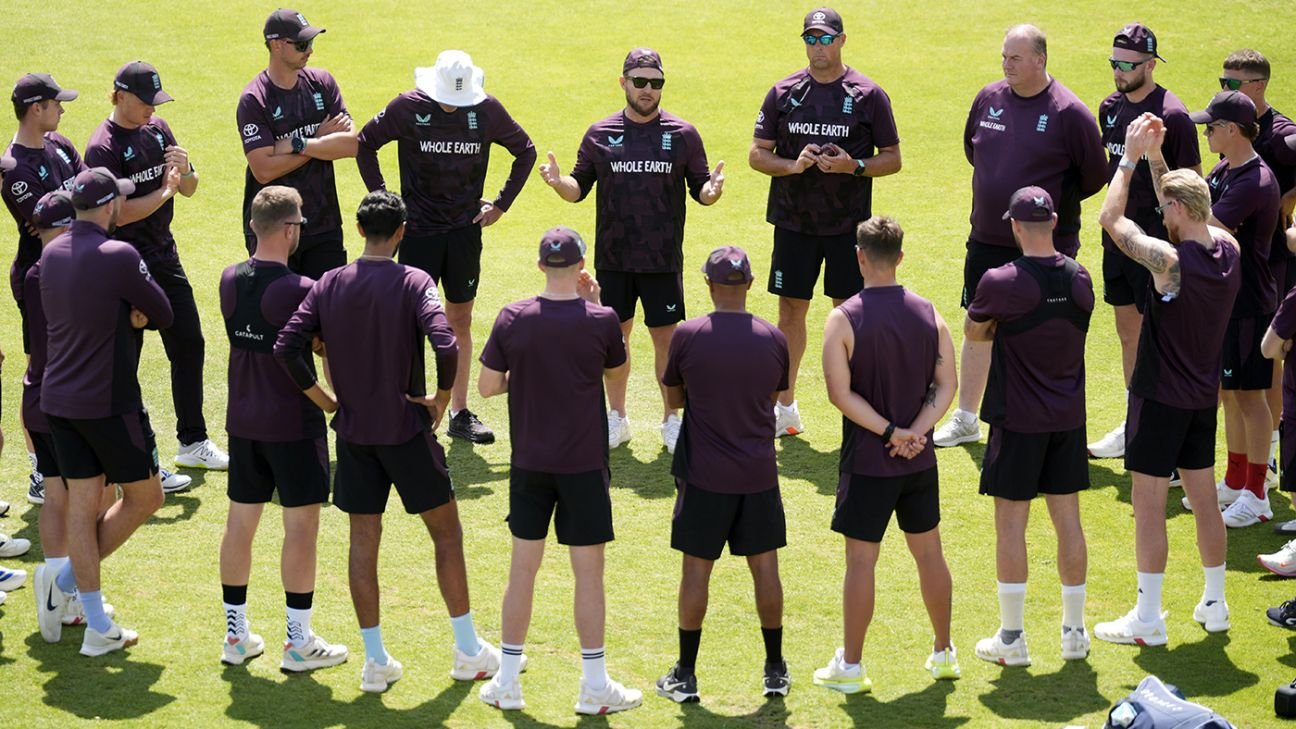
McCullum defended his “informal operation” after England’s semi-final exit at the T20 World Cup, which he said is designed to allow his players “to be as free as possible”. But the limitations of a uniform less-is-more approach were laid bare in Australia this winter, and hardly suggest a high-performance, international set-up.
Livingstone’s depiction of the England environment only furthered the impression left by their 4-1 Ashes defeat and the general sense of sloppiness that surrounded it. Batting coach Marcus Trescothick said that there had been “no discussions” about driving on the up between the first and second Tests, only to watch a series of batters succumb in exactly that fashion.
England only sourced a fast-bowling coach weeks before the start of the tour, and McCullum blamed the lack of a fielding specialist on its overlap with several franchise leagues. It is hard to believe that they could not source a single candidate who could help England’s catching, which improved notably when Carl Hopkinson returned for the T20 World Cup.
Livingstone’s comments also call Key’s man-management into question. Nobody would expect him to be in constant dialogue with a player who is out of the side, but Key is effectively the line manager for all England players with central contracts, as Livingstone was throughout last summer. Six months of silence followed by a terse phone call does not reflect well on him.
The nature of international sport is that there will be a level of turnover in personnel, and that players who have been left out are rarely happy about it. But Livingstone is not the first player to feel discarded by this England regime, even if most have kept their counsel publicly, and it is clear that communication has not been a strength of the selection panel.
Jonny Bairstow, Ben Foakes, Jack Leach, Ollie Robinson, Jason Roy, Reece Topley… the list of players who could reasonably feel as though they were dumped unceremoniously as soon as they became expendable is a long one. When teams are winning, such decisions are often framed as ruthless ones – but the fact is that England are no longer winning.
It feeds into the wider sense of detachment between the England set-up and the rest of the country. Surrey head coach Gareth Batty suggested on Tuesday that the route from county cricket to the international game has become “misted over”, while their captain Rory Burns joked that a “couple of shots on Instagram” could catapult a player into the selection mix – an apparent allusion to the left-field selection of Shoaib Bashir on the basis of his potential rather than his proven ability.
England have rarely paid much attention to performances in the County Championship in selection and are right that it does not replicate the demands of Test cricket. But the relationship between the two is governed by an unspoken social contract, which dictates that teams should be picked at least in part on performance. It cannot be healthy for the sport if that is broken.
One obvious solution will come when the ECB appoint a new men’s selector over the coming weeks to replace Luke Wright. Wright was never truly empowered in selection, and it was often Key who would explain decisions publicly; his successor must be an authoritative, independent voice, and must make themselves much more visible to the county game.
Key and chief executive Richard Gould are due to speak later this month to address England’s debacle of a winter, and their reflections will be instructive. The ECB’s hierarchy are clearly reluctant to make sweeping changes to England’s management despite their heavy defeat in Australia, but the status quo feels increasingly unsustainable.

