ClutchPoints women’s college basketball power rankings: The final countdown appeared first on ClutchPoints. Add ClutchPoints as a Preferred Source by clicking here.
As February draws to a close and the postseason looms, women’s college basketball has reached its most revealing stage. The early-season experimentation is gone, rotations are tightened, and roles are clearly defined. The strongest teams are no longer just talented — they are cohesive, disciplined, and battle-tested.
Advertisement
With conference tournaments about to begin, power ranking the national landscape requires more than simply counting wins and losses. Quality victories, consistency away from home, efficiency margins, adaptability, and late-game execution all shape where teams land before heading into March.
1. UConn (=)
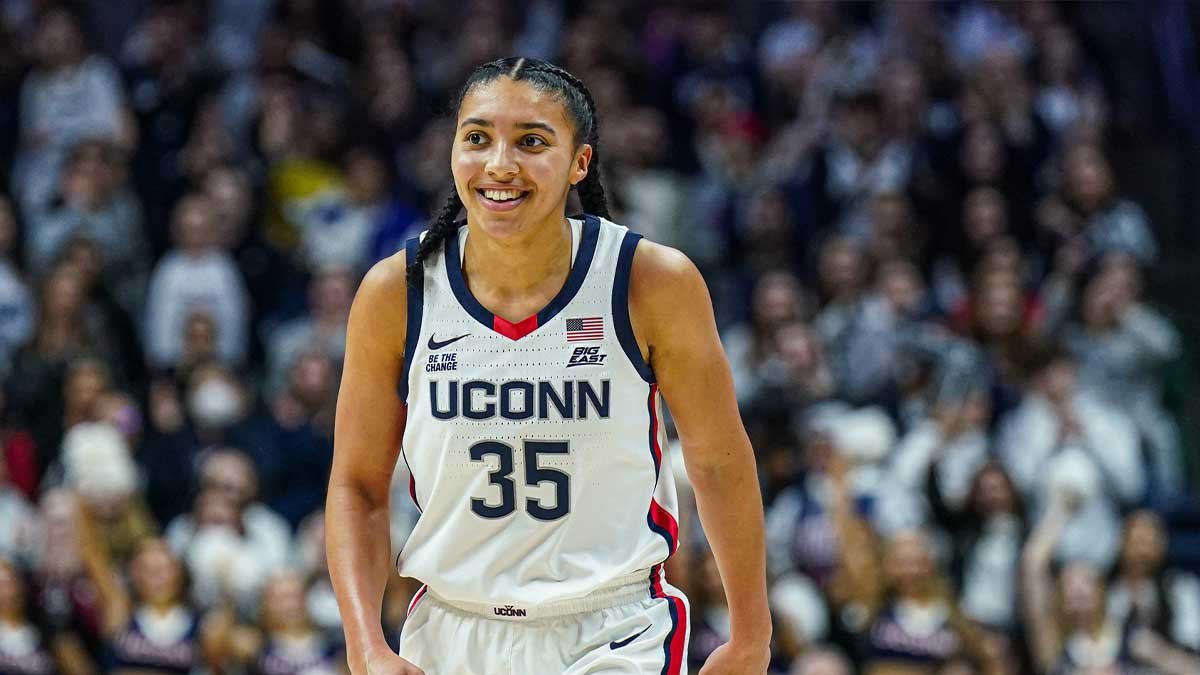
Despite trailing at halftime for the first time all season against Villanova, the UConn women’s basketball team remains the benchmark of women’s college basketball. The Huskies came back to win that game 83-69 and then blew out Providence 81-39, proving that there are still no cracks in their armor. The team’s ability to control tempo separates it from the field, as the players can accelerate into transition scoring bursts or methodically dissect defenses in the half court.
Advertisement
The Huskies’ offensive balance also stands out, with scoring threats existing at every level that force opponents to defend the entire floor. But what might be the most impressive is the team’s late-game composure. UConn executes cleanly when pressure rises, rarely turning the ball over or settling for rushed shots. Entering March, the Huskies look like the most complete team in the country and the clear favorite for the national title.
2. UCLA (=)
UCLA pairs athleticism with structure extremely well. Strong rebounding from players like Lauren Betts fuels a transition attack that can quickly flip momentum, while spacing and patience produce efficient scoring opportunities in the half court. The roster’s positional versatility allows flexible defensive matchups, especially on the perimeter.
UCLA women’s basketball has proven it can win close games by showing resilience in hostile environments, which is a crucial skill to have in the NCAA Tournament. Add in the fact that the Bruins are riding on a high after claiming their first solo conference title, and they clearly remain firmly in contention for the top spot.
Advertisement
3. South Carolina (=)
South Carolina’s identity centers on physical dominance and interior control. The team consistently wins the rebounding battle, generating second-chance opportunities while limiting opponents to one shot. Defensive intensity in the paint discourages easy drives, forcing contested jumpers.
The Gamecocks’ offensive balance prevents reliance on any one scorer, making defensive game-planning difficult for opponents. That’s reflected in South Carolina women’s basketball’s fifth-straight SEC regular-season title win, which the team solidified in a dominant 112-72 victory over Missouri on Thursday. Its 14-1 conference record will surely build up confidence as tournament play approaches.
4. Texas (=)
Texas women’s basketball thrives on defensive toughness. This approach worked effectively against both Arkansas and Mississippi State in the last week, earning the Longhorns a 93-62 and a 92-42 victory, respectively.
Advertisement
Offensive growth from the backcourt has improved decision-making in critical moments, notably from Rori Harmon, who racked up 18 assists over the two contests. Texas rarely loses because of effort or defensive breakdowns. Its grit and physical identity make it dangerous in tournament matchups.
5. LSU (+1)
LSU’s offensive ceiling rivals anyone’s. When perimeter shots fall and transition opportunities develop, scoring runs can overwhelm even elite defenses. The Tigers’ athleticism creates mismatches in open space, and rebounding strength sustains pressure.
Defensive lapses have appeared at times, particularly in the first three quarters against Ole Miss, but the offensive explosiveness the LSU women’s basketball team possesses is what enabled its bounce back 78-70 win — and led to its 108-55 beatdown of Missouri. The Tigers remain a legitimate championship threat.
Advertisement
6. Vanderbilt (-1)
Vanderbilt’s rise has been rooted in scoring efficiency as ball movement, careful shot selection, and low turnover rates define the offense. Mikayla Blakes has been a huge part of this for the Commodores, putting up 30 or more points in 11 games this season.
Vanderbilt now sits tied with Texas for second in the SEC, as consistency week after week has elevated its standing. The ability to execute under pressure strengthens its postseason outlook.
7. Oklahoma (+2)
Oklahoma plays with pace and confidence. Star freshman Aaliyah Chavez manages to find open driving lanes and perimeter looks, allowing her teammates to create offensively off the dribble.
Advertisement
Chavez has helped lead the Sooners to five wins in a row, with the last two being blowouts over a ranked Tennessee and unranked Arkansas. Momentum has steadily built through conference play, positioning Oklahoma as a serious contender.
8. Iowa (+6)
Iowa women’s basketball now looks like one of the most comfortable teams in the nation through its last five contests. Improved defensive communication has stabilized performances against stronger competition.
The Hawkeyes earned their biggest margin of victory of the season with a 62-44 win over Michigan on Sunday. The timing couldn’t be more perfect since the two Big Ten foes sit in a tie for second place in the conference. Iowa has righted the ship and is hitting its stride at just the right time.
Advertisement
9. Michigan (-2)
Michigan relies on half-court precision and defensive structure, but both of those skillsets fell short on Sunday versus Iowa. The Wolverines’ steadiness through most of the NCAA season makes it difficult to count them out completely, and they are still tied for second in the Big Ten. But a narrow 88-86 win over Ohio State might just give the team the confidence it needs to finish the regular season strong against Maryland.
10. Duke (=)
Duke’s length and athleticism generate 17 straight wins this season — until that came crashing down at Clemson on Sunday in a close 53-51 loss. The Blue Devils have usually competed at a high level, and an 80-52 win over Florida State showed that defensive intensity is still a signature trait. But what will really define Duke’s year is whether it can clinch the ACC title in the regular-season finale against in-state rival North Carolina on Sunday.
Advertisement
11. Louisville (-3)
Louisville’s strength lies in composure and experience, which is why its narrow 74-72 loss to Virginia on Sunday was so surprising. The Cardinals rarely beat themselves, and that consistency has translated into consistent results against quality competition.
But they were playing an extra motivated Cavaliers squad that was looking to secure its March Madness spot, leaving them sitting in second in the ACC. Louisville did manage to get back on track with a follow-up 69-50 victory at Georgia Tech, and the team should be able to handle an unranked Notre Dame in its regular-season finale.
12. TCU (=)
TCU’s development over the season has been nothing short of impressive. The team shows adaptability in tempo, comfortable both pushing pace and executing in the half court. Olivia Miles has been one of the team’s game-changers this season, finishing the Horned Frogs’ 90-73 win over Iowa State with her fifth triple-double of the campaign.
Advertisement
Meanwhile, Marta Suarez’s career-high 32 points in its 83-70 win over Cincinnati helped put the team on the cusp of another Big 12 championship. The confidence TCU has gained from recent victories has only solidified its standing in these power rankings.
13. Maryland (+2)
Maryland’s consistency has seemingly returned as the team rides a six-game win streak after dropped four in a row. The Terrapins look like a team capable of climbing higher following back-to-back blowouts of Purdue and Northwestern. Maryland has shown it has a lot of upside, but the real test comes in the season finale against Big Ten powerhouse Michigan.
14. Ohio State (-3)
Ohio State usually thrives on tempo and pressure, but that hasn’t been enough against its last three ranked opponents. Having lost three of their last four games, with the sole win coming against unranked USC, the Buckeyes aren’t in the most secure place heading into their last matchup at Michigan State on Sunday. Ohio State once sat firmly in the national picture, but now expectations are unclear as March Madness approaches.
Advertisement
15. Michigan State (+2)
Michigan State has shown nothing but offensive dominance since getting blown out by Michigan. The team topped Northwestern 104-68 in the follow-up game and then took down a ranked Minnesota squad75-61.
The Spartans’ structured approach can help keep contests within reach against more explosive opponents, which they’ll need to tap into versus Ohio State on Sunday. If Michigan State can maintain that steadiness, it will be invaluable in tournament settings.
16. Baylor (-3)
Baylor tapped into its perimeter presence after it fell to Texas Tech and claimed two wins over Arizona and Kansas State as a result. Physicality and tempo control allow the Bears to dictate the flow of games, making the team especially difficult to contain when shots are falling.
Advertisement
17. Kentucky (-1)
When shot selection remains disciplined, Kentucky’s intensity can overwhelm opponents. That strategy almost worked against top-10 Vanderbilt, but it ultimately wasn’t enough as the Wildcats walked away with an 81-79 defeat. A 63-56 victory at Auburn helps balance out that blow a bit, but Kentucky will have to tap into all of its strengths when it closes out its regular season against No. 3 South Carolina on Sunday.
18. West Virginia (+1)
West Virginia embraces physical defense, keeping it competitive against even high-powered offenses. That’s how the team claimed its third conference win of the campaign by 30 points or more in a 72-40 victory over Oklahoma State. The Mountaineers followed that with a sizeable win at UCF, putting them in position to end 2025-26 on a three-game win streak.
Advertisement
19. North Carolina (+1)
North Carolina’s inconsistency has limited sustained climbs in the rankings, but overall talent suggests it potentially has a high ceiling for March. The Tar Heels tied their highest-scoring quarter en route to a 78-50 blowout over Pitt and then doubled down on the impressive offensive output with an 82-70 win at Virginia. Even though both of those squads are unranked, it was solid preparation for Sunday’s big battle versus Duke.
20. Minnesota
Minnesota’s surge in February reflects its defensive tightening and improved interior stability, and nine quality wins in a row against competitive ranked and unranked opponents have strengthened its profile and validated its place in the rankings. The Golden Gophers slipped up against Michigan State, but they should have a much easier time versus Illinois on Sunday.
Advertisement
21. Princeton (+3)
Princeton’s consistency and structure make it a credible postseason threat out of the Ivy League. Even though the Tigers won’t play their final game of the campaign until nearly a week after every other conference, they still sit comfortably in first place after their decisive 69-37 win against Brown. With three matchups left on the schedule, it’s hard to see any Ivy League team dethroning Princeton.
22. Alabama (+1)
Alabama has hit a rough stretch towards the end of the regular season, with its only win being a 76-71 victory over Florida. Competitive conference performances have demonstrated resilience, but a massive 85-60 loss to Vanderbilt ahead of a showdown with Texas casts plenty of doubt on the team going into tournament play.
Advertisement
23. Ole Miss (-5)
Ole Miss relies on physicality and second-chance scoring, but unfortunately, South Carolina was able to disrupt that rhythm. With that defeat following a loss to LSU and leading to another loss to Florida, Ole Miss is heading in the wrong direction at the worst possible time.
The ability to grind out close conference wins reflects resilience, and the Rebels have not displayed that ability in their last three games. Ole Miss will have one last chance versus Texas A&M on Sunday.
24. Texas Tech (-3)
Texas Tech came off of its dominating upset over Baylor and fell victim to two upset losses of its own against Colorado and Kansas. Committing 17 turnovers versus the Buffaloes doesn’t bode well for the Lady Raiders, as they essentially beat themselves in that contest. Luckily, Arizona State is a final foe Texas Tech can likely beat to finish the campaign on a high note.
Advertisement
25. Tennessee (-3)
Tennessee women’s basketball’s late-season stall nearly drops the team out of the top 25 altogether. The Lady Vols have suffered some notable losses to ranked teams in their last five games, including Texas and LSU, and the odds don’t seem to be in their favor with top-five Vanderbilt up next.
As the 2025-26 NCAA regular season comes to an end, the outcomes reveal both clarity and opportunity. The top tier has separated itself through consistency and versatility, but the depth of capable challengers ensures that March Madness will not be predictable. Matchups, health, late-game execution, and more will ultimately determine the on-court results, but there’s no doubt that these top 25 programs represent the strongest and most cohesive forces in women’s college basketball today.
Related: Ohio State basketball bubble watch: Current NCAA Tournament odds, path to the Dance
Advertisement
Related: Auburn basketball bubble watch: Current NCAA Tournament odds, path to the Dance

