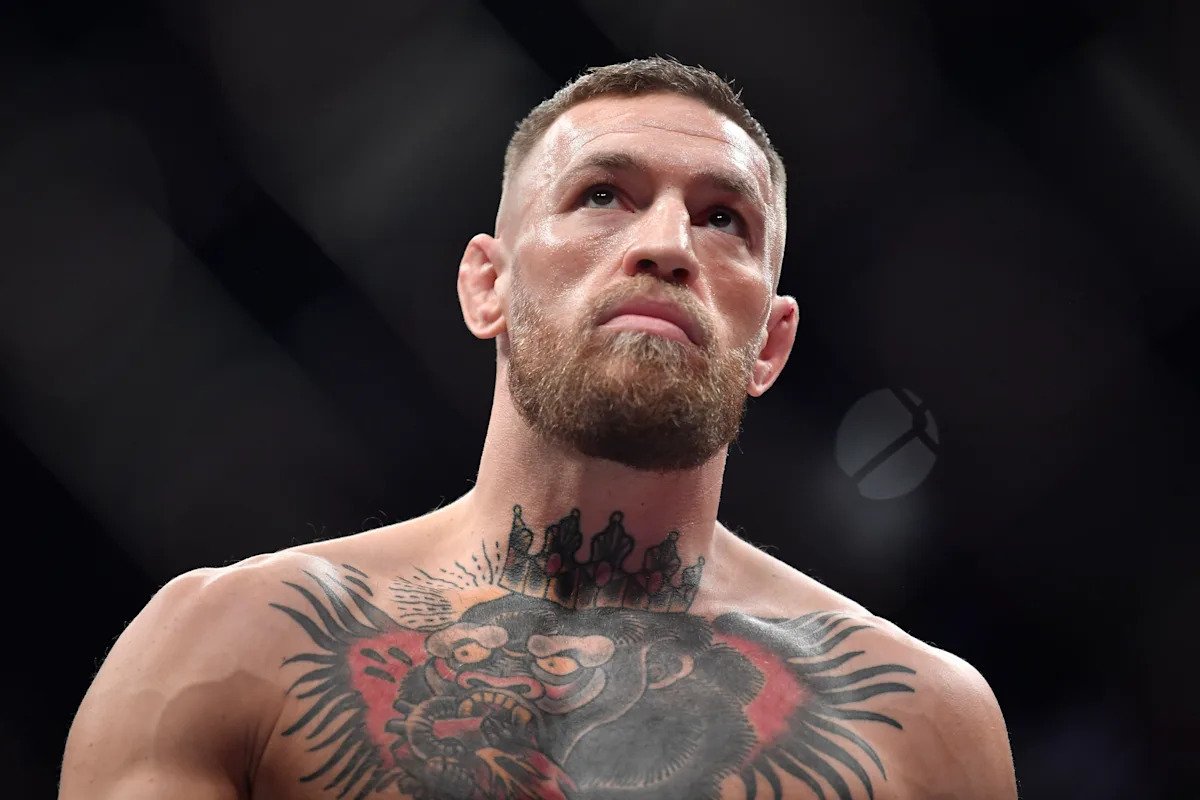
When former UFC two-division champion Conor McGregor returns to the cage at UFC 329 on Saturday, he’ll have gone a full five years between fights. Here we will pause to, as the kids say, let that sink in.
He suffered that broken leg in his loss to Dustin Poirier on July 10, 2021. He will come back to face Max Holloway on July 11, 2026. Five years almost to the day. We don’t often get that kind of clean symmetry amid the messy reality of fight sports, so it’s worth noting.
Advertisement
For the sake of perspective, five years is also how long it took to build the Hoover Dam. It’s about the length of the entire American Civil War, from the first shots fired at Fort Sumter to the surrender at Appomattox Court House. It’s about as long as The Beatles played to live crowds as a touring rock band. It’s a little more than a year longer than Ronda Rousey’s entire UFC career.
Five years is a long time to be absent from anything you might call a vocation, but it’s an eternity in fight sports. We can’t say McGregor has done no fight-related work in that time. He was gearing up for a comeback fight against Michael Chandler in 2024, before a broken toe convinced him to withdraw. But that’s not the same as slinging leather when it counts, under the lights, and against an opponent who genuinely means to do you great bodily harm.
Conor McGregor returns this Saturday at UFC 329 after five years away.
(Chris Unger via Getty Images)
McGregor’s been back in the gym and doing serious work for many months now, or so we’re told, so it’s not as if he’s going straight from the yacht to the Octagon. But leaving the cage on a stretcher and coming back five years later with a metal rod in your leg is a tricky business. We’ve seen it attempted before in this sport, but we haven’t seen it go all that well.
Advertisement
The example that leaps to mind is Anderson Silva, one of the true greats. The former middleweight champ suffered a horrific leg break in a UFC title fight in 2013, then returned to face Nick Diaz just a little over a year later, winning a lackluster decision that was later ruled a no-contest after Silva tested positive for banned substances.
Chris Weidman, who was the beneficiary of that injury to Silva in 2013, suffered an almost identical leg break in 2021. He returned two years later and lost a decision to aging veteran Brad Tavares, fracturing his other leg (though nowhere near as badly, if such a thing can be said of a broken leg) in the process.
You go down the list of other long layoffs in MMA and you see a pattern emerge.
Former bantamweight champion Dominick Cruz came back after more than three years away due to injuries and got TKO’d by Henry Cejudo.
Advertisement
Former two-time heavyweight champion Cain Velasquez was sidelined for roughly two and a half years, only to return and get starched by Francis Ngannou.
The most successful comeback was probably Georges St-Pierre, the former UFC welterweight champ who moved up to middleweight in 2017 after four years away and beat then-champion Michael Bisping inside of three rounds. One key difference in St-Pierre’s story, of course, is that he didn’t leave MMA injured when he departed in 2013. He didn’t even leave on a loss. He was inactive by choice, and had made enough money that he could sit back and pick his moment to return.

UFC great Georges St-Pierre is one of few fighters ever to return from a long layoff and find success.
(Brandon Magnus/Zuffa LLC via Getty Images)
McGregor at least has that last part in common with “GSP.” He didn’t need to take this fight at UFC 329. He had the luxury of choosing his own comeback path. That might also be part of the reason it took so long.
Advertisement
The man has a way of creating his own distractions. Whatever sense of urgency he may have felt at times, it was always subject to dissipating in a booze-filled fog in some European nightclub.
That, too, is among the many variables we have to factor in here. The question of whether McGregor can return to form against Holloway has to include some accounting for the way he’s spent his off-time these past few years. Let’s just say it hasn’t been all ice baths and sunrise yoga. There were a few years there where it seemed like he might never again fight while sober.
There’s also some reason to wonder just how familiar he’s remained with ongoing developments in tactics and techniques. When McGregor had his second fight with Poirier in 2021, he seemed surprised at how effective those calf kicks were at limiting his movement. It was as if the game had changed while he was busy elsewhere. It had evolved, as it is always doing. Suddenly he was struggling to catch up.
More than most sports, this one has a way of moving on quickly and leaving people behind when they take their eye off it, even just for a little while. I was at UFC 189, the first UFC numbered event McGregor headlined, back in 2015. Before we got to the point of the evening when Sinéad O’Connor serenaded him to the cage to face Chad Mendes, there was a prelim bout that included former welterweight title contender Mike Swick.
Advertisement
Swick had stepped away from the sport almost three years earlier following a knockout loss to Matt Brown in 2012. He’d spent some time recovering, working on the early stages of starting his own gym (he eventually founded AKA Thailand), maybe even questioning whether or not this was still the life for him.
Then he decided to come back and see what he still had left in the tank, so the UFC matched him up against Alex Garcia, who was then a relative newcomer.
It wasn’t a bad performance by Swick by any means, but he lost a decision. He told me afterward that he just couldn’t pull the trigger like he used to. Something felt off. What had once flowed smoothly now felt like it had to be forced. Nothing worked quite the same.
Advertisement
The thing that really made the point for him happened after the fight. I wanted to write a story about his comeback, so he offered to meet me at The Palms, which I thought was strange since the fight itself had been at the MGM Grand on the Vegas strip. But after I’d written my post-fight stories on McGregor and Mendes, I hopped in a cab and headed for The Palms. There I found Swick and his wife sort of wandering around the slot machine area.
I don’t get it, he was telling me. Where is everybody? This used to be the spot to party after the fights.
Now it was past midnight and the cleaning staff was zipping vacuums past our feet. We looked to be the only people in the joint who even knew what the letters “MMA” stood for. I think I muttered something about how times had changed. Swick looked seriously at me and agreed that, yes, they definitely had. He couldn’t avoid it now, with the metaphor driven home this obviously.
Anyway, that was also a July night in Vegas. International Fight Week, and all that. Somewhere across town, a 26-year-old Conor McGregor was celebrating his big win, certain that this was only the beginning and the ride would never end.

