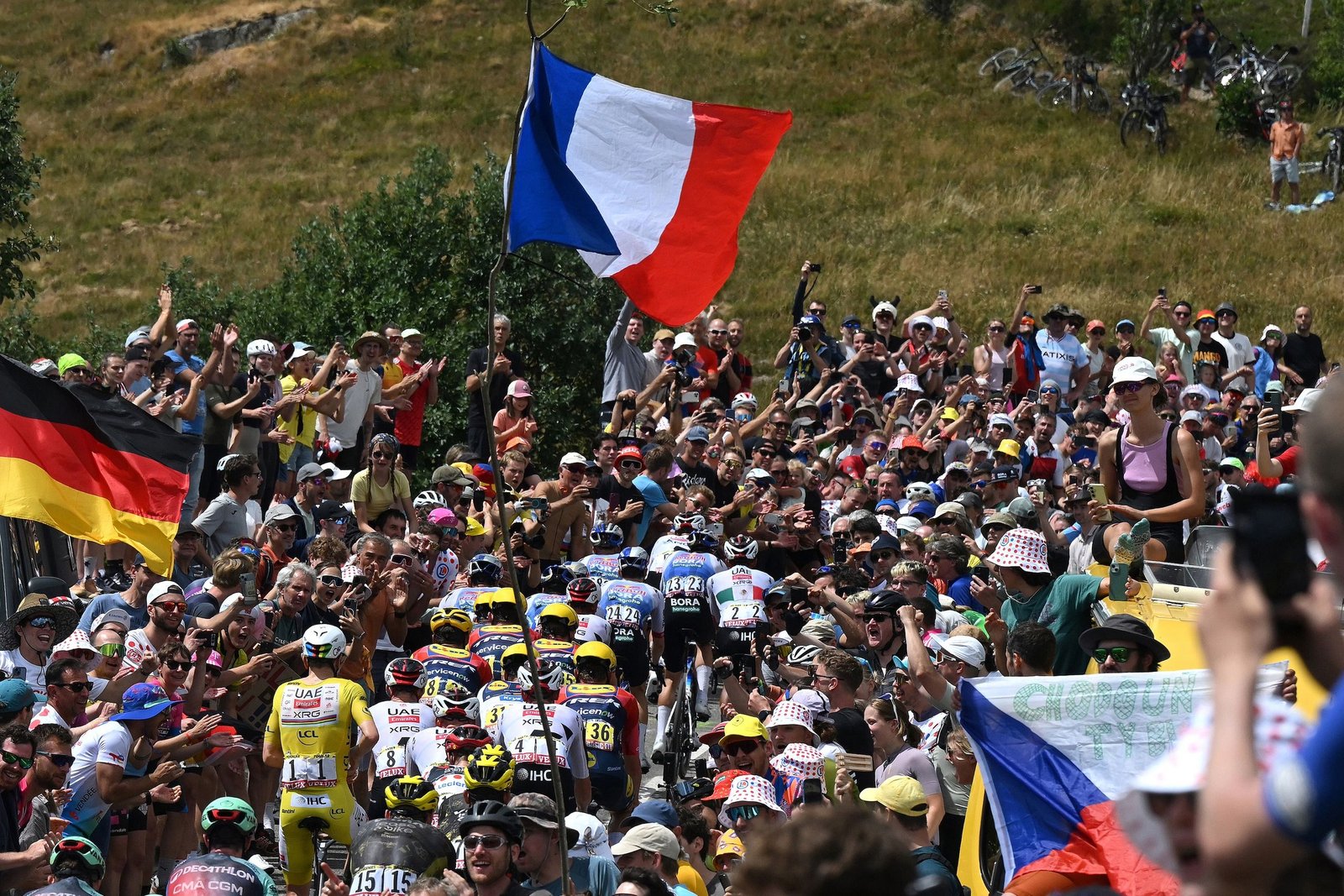
The body responsible for anti-doping in cycling has defended the nighttime tests carried out on Tadej Pogačar and Jonas Vingegaard at the Tour de France, saying they are part of “effective testing”.
On Sunday morning, ahead of stage 15, the pair were awoken – Pogačar of UAE Team Emirates-XRG at 5am and Vingegaard of Visma-Lease a Bike at 2am – by testers from the International Testing Agency (ITA).
The UCI’s anti-doping rules, Article 5.2, reads: “Unless the rider has identified a sixty minute testing window between the hours of 11:00 p.m. and 6:00 a.m., or has otherwise consented to testing during that period, the UCI will not test a rider during that period unless it has a serious and specific suspicion that the Rider may be engaged in doping.”

A spokesperson for the ITA confirmed the unusual tests on Sunday evening, and defended the decision to test in the night, after it was criticised by Pogačar, Vingegaard and Remco Evenepoel (Red Bull-Bora-Hansgrohe). Pogačar said he accepted the tests if they were necessary.
Evenepoel, the winner of stage 15, said: “It’s pretty disrespectful. To be honest, if I had it, I would send my team to wake them up to feel how it is. It’s something inhuman, it’s something that we should not accept as athletes.”
Vingegaard crashed out of the stage following the nighttime test, which Pogačar suggested was partly caused by the disturbed rest. He said: “In my interview with France TV, it got me thinking that it could be also like a small percentage why he crashed because he probably didn’t sleep good today.”
A spokesperson for the ITA said: “The International Testing Agency (ITA) has been entrusted by the Union Cycliste Internationale (UCI) to implement its anti-doping program in an independent manner since 2021. The ITA can confirm that anti-doping controls were conducted overnight involving riders participating in the Tour de France.
“The ITA is conscious that night-time testing may be disruptive to riders’ rest and recovery. Due consideration has therefore been given to minimise as much as possible the impact testing activities have on riders.
“However, the ITA, on behalf of the UCI, has the responsibility to ensure the effectiveness of the cycling anti-doping program and the integrity of cycling races. As such, effective testing must, in limited and justified circumstances, be capable to occur outside standard daytime hours.
“All testing activities conducted at the Tour de France and at any other international events, including decisions as to the specific timing of such tests, are carried out in accordance with the ITA’s testing strategy and subject to the safeguards established under the World Anti-Doping Code, the UCI Anti-Doping Rules and French law, with due consideration for riders’ welfare, equity and fundamental rights.”

