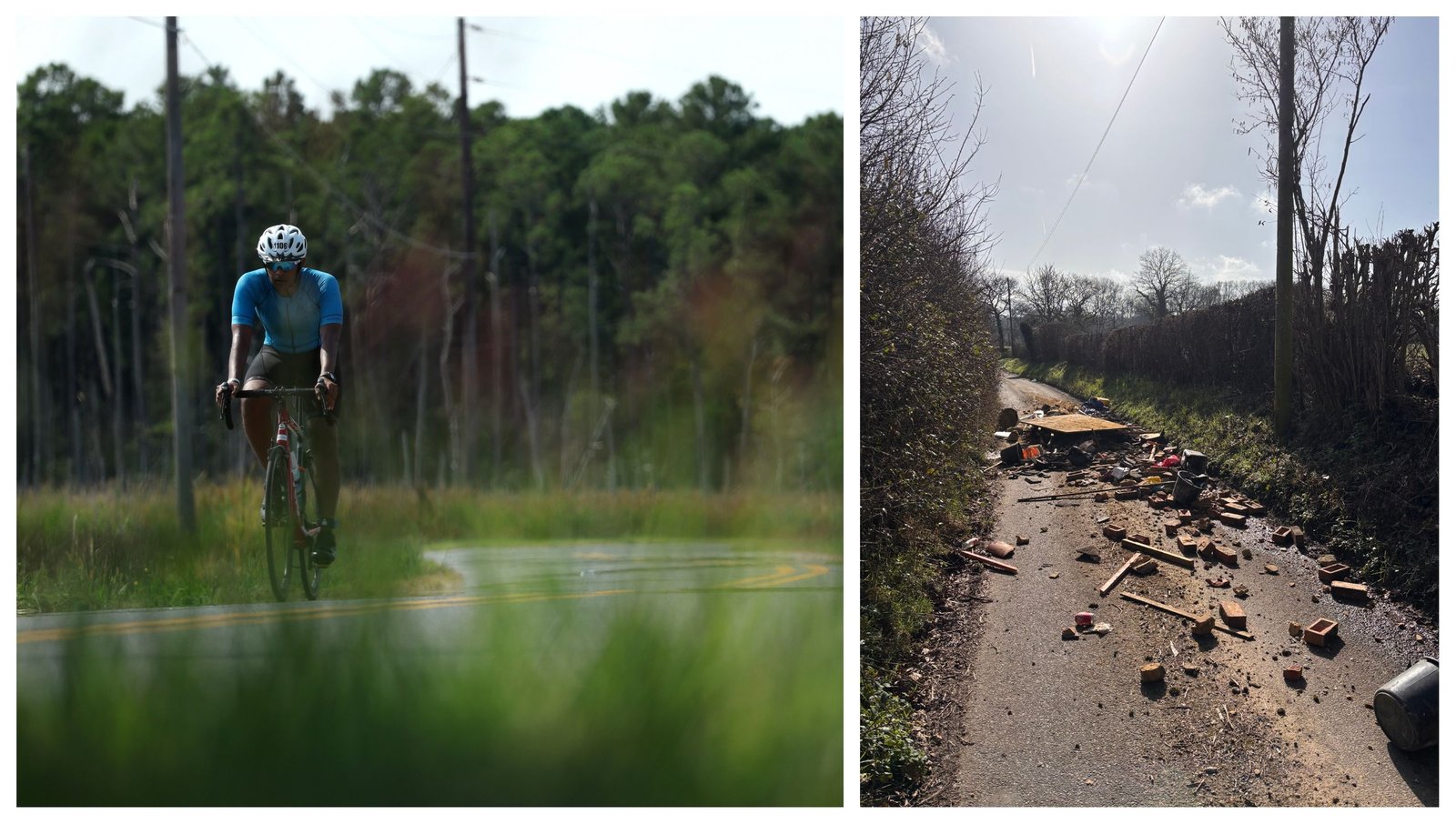
On Wednesday I took the day off to mark what was a momentous occasion here in the southern UK: the first warm, sunny day in what feels like forever. We’ve had the odd burst of brightness here and there but mostly it has just rained since the start of the year. If this sounds like an exaggeration to you, just don’t mention it to the residents of the Cornish village of Cardinham where, it’s official, February 19 marked 50 days of consecutive rainfall.
I was understandably determined that I’d make the most of this sunshine by actually cycling, rather than sitting at a desk writing about it.
James Shrubsall
Having been at Cycling Weekly for over two decades, and cycling a little bit longer, James is in a good position to tell you what’s good and what isn’t in the world of bike riding.
I’d liken that feeling of zipping along under a warm sun to arriving at a holiday destination, having unpacked and sat down poolside with that first cold drink. Pure bliss.
The bike thrummed on the tarmac with a surprising lack of rattle for such an old machine subjected to my often-patchy care regime; gears snicked into place on what are still the original cassette and chainrings with unerring accuracy and lack of fuss – a credit to its manufacturer and giving lie to the old adage ‘Campagnolo wears in, Shimano wears out’.
Lots of fellow riders apparently had similar ideas, and had taken the day off to soak up the sun – I encountered one or two sizeable groups and plenty of smaller ones. Most even returned my greeting. (My wife has told me this sounds like an angry bark, which might account for the ones that didn’t).
For all the life-affirming sunshine and the speedy-for-me progress, there was still the odd suspicious object floating in this particular holiday pool. Surrey’s disintegrating road surfaces were still present of course – though the switch from 45mm to 28mm tyres was less of a shock to the system in this respect than I predicted. But the proliferation of potholes caused by poor weather, slow-drying roads under the county’s many, many trees and heavy traffic, was an eye-opener.
Potholes themselves are nothing new in the UK, but these are a new breed. Sharp-edged and big enough to lose an entire wheel in (which is exactly what happened to my colleague Adam Becket on a recent ride), they’re not to be trifled with. So there was a lot of careful looking out on yesterday’s ride, made easier by the mostly dry roads.
Mostly dry, except when they weren’t. In the shaded and low-lying lanes, there were still plenty of puddles, and even, at one point, a mini-lake. From only a very short distance away, it could have been three feet deep, and would have taken a confident motorist to drive on through without getting out to inspect first. With the advantage of being up close, personal, and on the bike, I marvelled at how clear – and shallow – it was as I freewheeled carefully through, with only smooth tarmac visible under the surface.
Wayward drivers aside (I was grateful not to encounter any of those this time), poor roads and a bit of flooding were the only challenges I was expecting to find on this particular ride. But alas, it had more treats in store. A little way down a narrow, high-hedged lane at the far end of the loop I found something I’d not come across before: a pile of fly-tipped – illegally dumped for Americans – building rubbish blocking the road (There it is in the picture above). Usually these people have the decency to find a layby or a field, but whoever had left this little gift had presumably paused in the road, let it slide off the back of their truck and carried on their way. Efficient, though of course incredibly anti-social. The road had been closed.
While this was a new one on me, it’s not a unique occurrence. Only yesterday The Times posted a video on its Instagram account of a truck, tipper bed raised high, driving along an urban road in Willesden, North London, depositing a carpet of household and building waste – in broad daylight. Such behaviour seems to be on the rise and councils, said the post, had dealt with 1.26 million fly-tipping incidents last year – a rise of 9% on 2024, but that at the same time, the number of fines had fallen.
It’s an issue that costs the UK economy £1 billion a year, it said, with an increasing involvement of organised crime groups.
I was lucky enough to be able to pick my way over the mess and carry on my way, though the motorist who arrived at the scene just after I got there, having driven no small distance in vain, was not so lucky, and simply sat staring in understandable bemusement at the collection of junk blocking her path.
The chances of any of us coming across a pile of rubbish blocking the road next time out seem small, but it’s probably worth adding to the list along with potholes and mini-lakes as something to look out for. If you do come across something similar and the road has not already been closed, make sure to log a report with the local council or authrotiy, and careful as you go – there were enough upturned nails and sharp edges in my particular pile that I wouldn’t have wanted to slip over.
Good luck out there!

