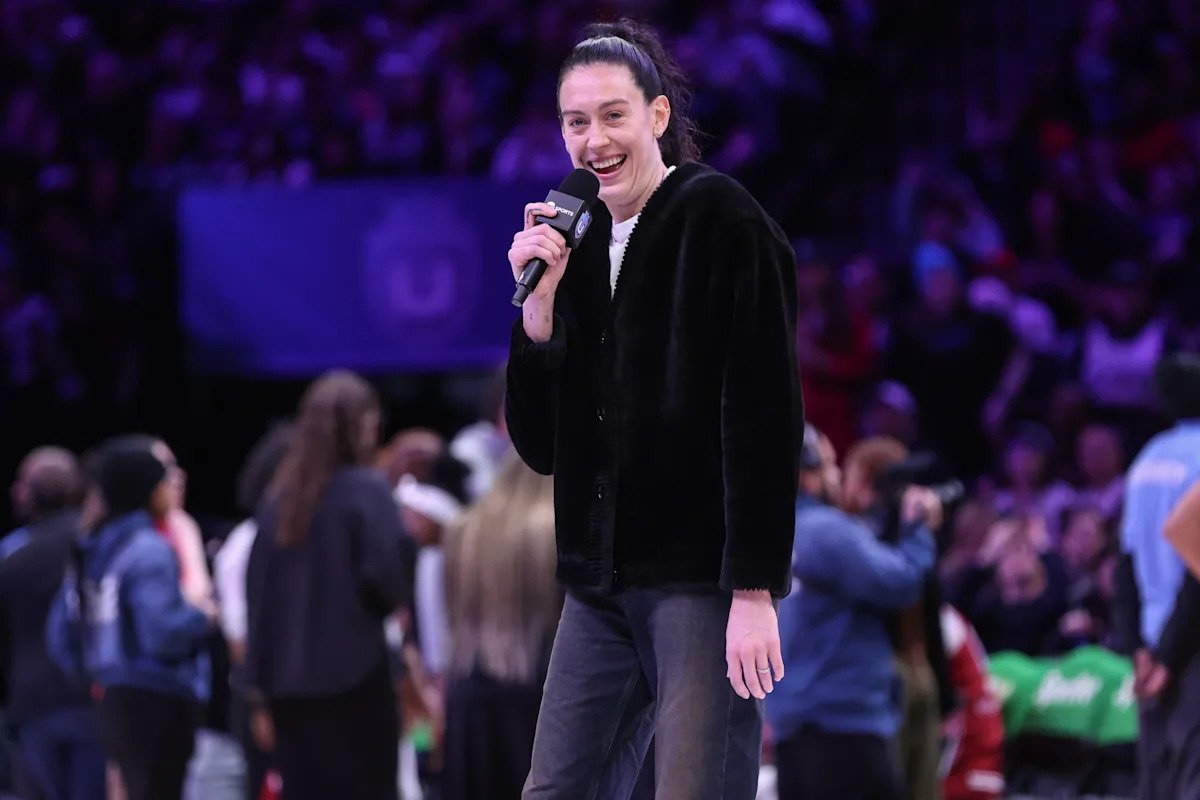
March is often a busy month for three-time WNBA champion Breanna Stewart, and this year is no exception.
Stewart, who won four consecutive NCAA tournaments during her time playing for the UConn Huskies, now serves as vice president of the WNBA players’ union, and was instrumental in labor negotiations between the league and WNBPA.
Advertisement
After more than 100 hours of negotiation since March 10, the two parties agreed in principle to a new collective bargaining agreement deal on the morning of March 18.
Following the negotiations, USA TODAY caught up with Stewart to discuss the CBA as well as March Madness. She also shared thoughts on name, image and likeness in the NCAA and forecasted the future of women’s basketball.
This interview has been condensed and edited for clarity.


Question: You’ve had a very busy offseason with very late nights. What have you learned about yourself through all of this?
Answer: I want to make sure I’m doing everything I can to make the sport and the league better. There are moments where I could say I’m tired, or I want to be with my kids and my family. But the way I expect greatness from myself on the court — it’s the same way off the court. I want to make sure I’m there to push things in the direction they need to go.
Advertisement
What does it feel like now to have a little more breathing room and free time?
The past week has been tough. I haven’t really seen my kids other than bringing them to school at 8 a.m. because I was coming home around 3 a.m. most nights. But those are the sacrifices everyone’s willing to make for a deal that is so transformational come to light. I’m happy to hang with my kids and my wife and just enjoy this last little bit of off-time before we go ahead and ramp right back up.
When you picture women’s basketball in 10 years, what does it have that it doesn’t today?
The standard is going to be set for how much we should be appreciated and valued. In some cases, it’s more than others. Right now you can say this league does this and that league does that. It’s not consistent across the board. But in 10 years, if you want to be successful, everyone is going to be up here. You’re really going to see that year-round.
How different do you think your college experience would have looked if you had played during the NIL era?
I would love to know what my NIL valuation would have been, just out of pure curiosity. But I’m happy with the era I played in. If you’re always looking at the things you missed, you’re never going to be happy. I’m just happy to see where things are going. You even see former WNBA players continuing to support us now, and with this transcendent CBA — they’re going to miss that, but they’re excited we’re finally at this stage because they know we deserve it. So having that type of mindset and support for those to have success after is really important.
Advertisement
What do you think this next generation of players brings that your generation didn’t have?
What this next generation brings is the NIL landscape — being able to build their brands, have their businesses, and have that carry over to the next level. They’re prepared for all the things that are going to unfold when they become pros, because they’ve been dealing with it already. Now it’ll be on a bigger scale. The biggest adjustment is just finding the time to do everything. They’re starting it early.
How do you choose which endorsement deals you do and what drew you to this one?
Yesterday was really cool for me to be able to get in the room with Reese’s and create my bracket between the men’s and women’s side. It wasn’t too difficult because I picked UConn to win both. But the challenge itself is really cool. With every bracket, if you’re trying to have the perfect bracket and it busts, you get Reese’s. But I’m hoping my bracket is going to be perfect. I’m hoping I’m going to be the one this year.
Advertisement
UConn is chasing an undefeated season, which you’ve done three times. Where is the trap game that feels hardest to protect?
The hardest game in the NCAA Tournament is the Final Four game, the one to go to the championship. Because you’re so close, but you’re not there yet. And if you think ahead too much, you’re not going to be in the moment, and that’s when anything can happen. I know we’re a few weeks away from that. But the semis before the championship is always the hardest.
Some people say repeating is harder than the first time. Was that true for you?
For me, the hardest was the first one. Every year is different. But my freshman year, we weren’t supposed to win. We had the most losses that I had in my entire career that year, and we took advantage of the moment. We peaked when we were at our best. Through the adversity of that year, we were able to figure it out. After that, I felt like we had the confidence. We knew what it took to get to where we wanted to be and win the whole thing. That’s why the undefeated seasons followed.
Advertisement
What is it like to experience the men’s and women’s teams win at the same time for the same school? That’s only happened twice, and you were part of one of them.
That year was crazy. It was really nuts. I feel like that’s why I tell people: It’s like the basketball capital of the world. We bring in the best products on both sides to go after an NCAA championship. Knowing that the guys were competing just as hard as we were, we were each other’s biggest support system.
You’ve now won at every level — college, Euroleague, FIBA, Olympics, WNBA and now Unrivaled. What does it feel like to win now compared to when you first started?
I don’t take it for granted. I really appreciate every moment I can be on the court. That came into play even more after I had injuries and ruptured my Achilles — you don’t really know until things are put into perspective. I’m playing for the competitiveness, to keep winning, for my legacy to be a winner. I’ve done it a lot. Every time you do it is different, and it’s really just chasing that.
Advertisement
Do you think that winning is the first thing people think about when they think about you?
I don’t really know. Hopefully, that’s what they think of me. I think they have to. It kind of speaks for itself.
This article originally appeared on USA TODAY Sports: After WNBA CBA deal, Breanna Stewart talks why it’s is ‘transformational’

