Expect American Women’s Swim Team to Continue Domination at Pan Pacs
This summer sets up as the quietest championship season for American swimmers since the COVID-19 pandemic pushed the Tokyo Olympics back by a year. USA Swimming will not hold a selection meet, having picked the team for the Pan Pacific Championships based on results from 2025. Moreover, Pan Pacs follows a rapid-fire four-day format, a different type of challenge compared to the eight or nine-day format of the Olympics or World Championships, at least one of which took place each of the past five years.
Still, the meet will allow top Americans to test themselves against rivals from Australia, Canada, Japan and other non-European countries, and the best results from that meet plus the Commonwealth Games, European Championships and Asian Games will determine the world’s best swimmers for 2026.
Determining what to expect from the American team entering Pan Pacs is a tricky task considering none have competed in a long course championship meet in almost a year, and many dealt with severe stomach illness before and during last year’s Worlds. The current world rankings show relatively poor American representation, due largely to a lack of selection meet. Still, the American women should be ready for another big medal haul in Irvine, Calif., after they won medals in every event but three at last year’s Worlds.
Gretchen Walsh — Photo Courtesy: Peter H. Bick
The core of accomplished, versatile veterans remains intact. Gretchen Walsh leads the way, her results thus far in 2026 making her the world’s top swimmer this side of Summer McIntosh. Walsh has already lowered her own world record in the 100 butterfly, claimed the global mark in the 50 freestyle and swam the second-fastest time ever in the 50 fly.
Before Walsh claimed that 50 free mark, University of Virginia training partner Kate Douglass held it for one week, and Douglass is also the reigning world champion in the 200 breaststroke with a medal-winning history in the 200 IM and 100 breast. Regan Smith has come up against dominant Australian Kaylee McKeown in the backstroke events at seemingly every major meet, but McKeown will be out of action this summer due to glandular fever. Smith also is the world’s second-best 200 flyer behind McIntosh.
Torri Huske is the Olympic gold medalist in the 100 fly and finished last year atop the 100 free rankings, and she remains dangerous across her remaining events, which should include some combination of the 50 free, 50 fly, 200 free and 200 IM. And who could forget about Katie Ledecky, still the dominant force in the women’s distance events at age 29?
If all goes according to expectations in Irvine, those five women will account for medals in 14 out of 17 individual events on the program, and with the elite of women’s swimming centered around the Pan Pacific region, expect top-three times in the world in all those cases. The only exception might come with Douglass’ events, as the 200 IM, 50 free and 200 breast all fall on the final day of competition. Douglass has already ruled out competing in all three.
But the U.S. still brings formidable representatives in whatever event or events she skips. Walsh will be favored in the 50 free regardless while Huske would be a tough matchup even for reigning world champion Meg Harris of Australia. Alex Walsh, another UVA swimmer and Gretchen’s older sister, has finished in the top-three in the 200 IM at every major meet since Tokyo (although she was disqualified in the Paris Olympic final). The elder Walsh is also the second-best American swimmer in the 200 breast.
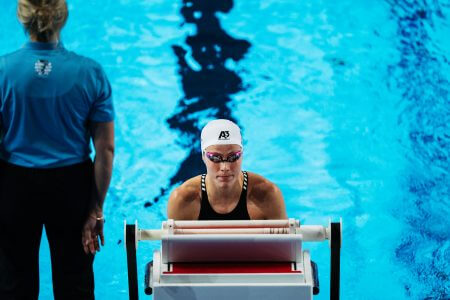
Katharine Berkoff — Photo Courtesy: Emily Cameron
The U.S. women traditionally excel the backstroke events, and this meet should be no different. Katharine Berkoff will be gunning for the world record in the 50 back, an event in which she won the world title last year. With McKeown absent, the Americans should easily go 1-2 in the 100 and 200 back; Berkoff has won 100-meter bronze at the last three major meets while Claire Curzan was the 200 back Worlds bronze medalist last year. Leah Shackley also looms as a threat to snatch away an A-final spot, with only two swimmers per country advancing.
The three less-convincing events are the 200 free, 50 breast and 400 IM, but in the 200 free, Claire Weinstein won World Championships bronze in 2025, the first U.S. swimmer aside from Ledecky to reach the podium in the event in a decade. Aussies Mollie O’Callaghan and Lani Pallister will present formidable challenges, but Weinstein could again be in the mix while someone else out of the group of Huske, Anna Peplowski and Erin Gemmell will try for a breakthrough.
The retirement of Lilly King stings somewhat in the 50 breast, but McKenzie Siroky might be stepping into that role. The Tennessee Lady Vol clocked 29.64 in the event during the Mare Nostrum tour, making her the second-quickest American ever and giving her the world’s second-quickest time thus far behind China’s Tang Qianting.
As for the 400 IM, Emma Weyant and Katie Grimes both struggled to approach their top form at last year’s Worlds, but they were both Olympic medalists behind McIntosh a year earlier. Thus far in 2026, Weyant, Alex Walsh and Smith have all posted times in the 4:35-range, but it will take quicker than that for even a Pan Pacs medal thanks to McIntosh, World Championships co-silver medalists Mio Narita and Jenna Forrester and McIntosh’s Canadian teammate Mary-Sophie Harvey all in the field. If the American women miss the top-three in any event at this home meet, that will be it.
Notably, the team will miss two swimmers who would chase individual medals with neither Anna Moesch nor Isabelle Stadden on the team. Moesch broke the American record in the 100 free in May while also posting formidable 50 and 200-meter times while a breakout campaign has Stadden ranked second in the world in the 100 and 200 back as well as fourth in the 50. Still, their American compatriots and global rivals will watch to see the efforts this duo of Virginia-trained swimmers achieves at U.S. Nationals two weeks earlier.
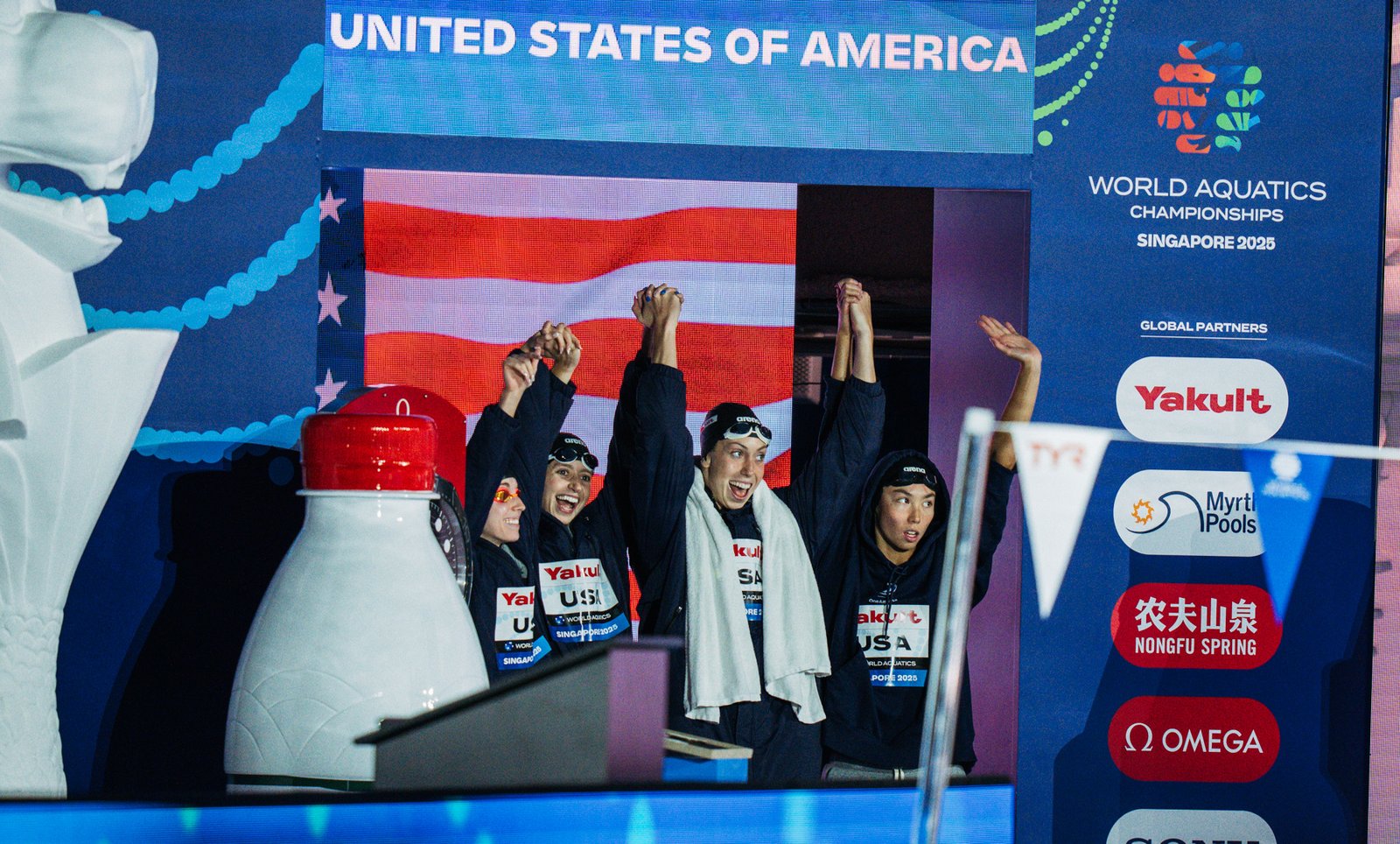
At Pan Pacs, expect two further duels between the United States and Australia in the freestyle relays, with the Aussies likely maintaining an edge in the 800-meter race while the Americans could be on the verge of a breakthrough in the 400, even without Moesch. Regardless, it would be stunning if any other country finishes the year with a time close to these two. Same story with the medley relay, except it’s the Americans all alone in front with the team of Smith, Douglass, Gretchen Walsh and Huske, the same foursome that established a world record at last year’s World Championships.
The story of this U.S. women’s team is continuity. Five year ago, Smith, Weyant, Douglass and Alex Walsh all won individual Olympic medals in Paris at age 20 or younger while Huske missed by one hundredth, Grimes place fourth in the 800 free, Phoebe Bacon was fifth in the 200 back and Curzan was an individual semifinalist and relay medalist. That group had serious potential then, and all have continued to excel, remaining key members of the American team racing at Pan Pacs.
Ledecky had long since established herself while Gretchen Walsh joined the central group in 2023. Pan Pacs will mark the group’s first opportunity to thrive against foreign opponents on home soil, with an even more consequential Olympic target in nearby Los Angeles looming.

