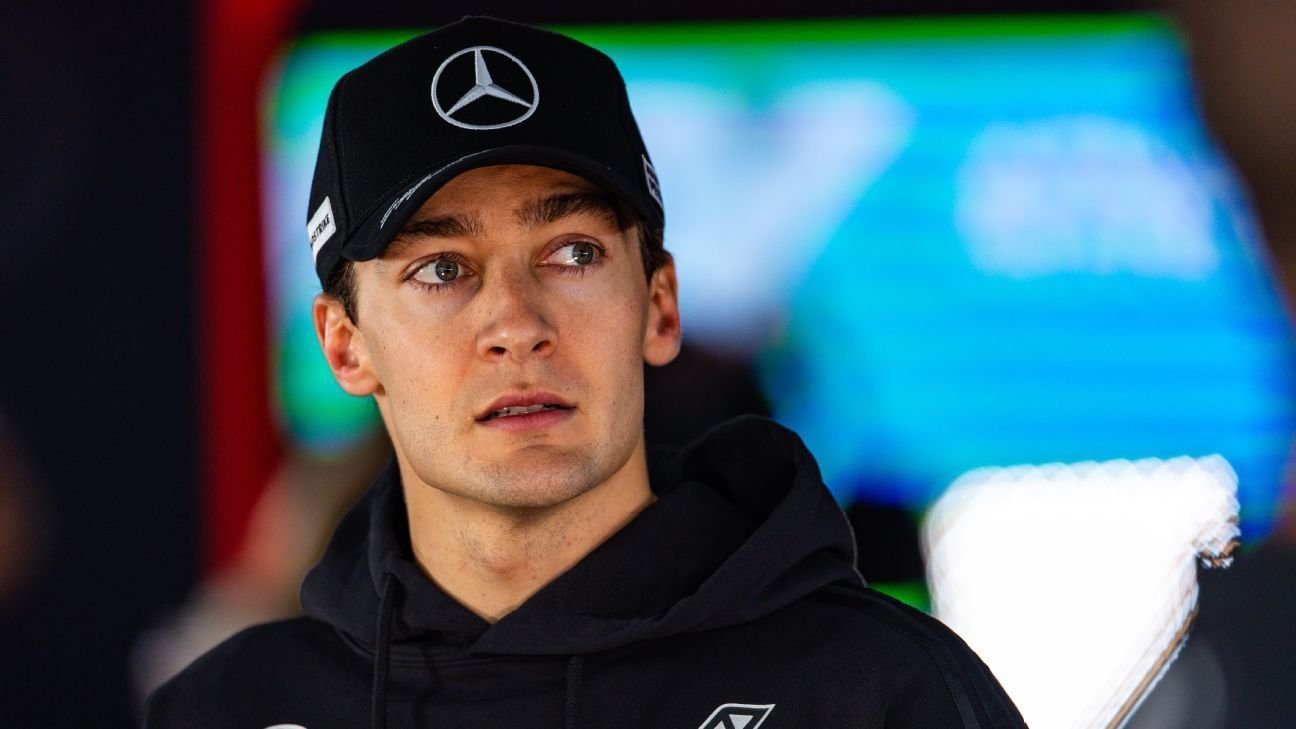
Mercedes driver George Russell has said Formula 1’s drivers are aligned on the changes that should be made to the sport’s regulations ahead of the next round in Miami and believes there is enough “low-hanging fruit” to improve the situation in the short-term.
After a series of complaints were raised about F1’s new rules following the first three races, the sport’s rulemakers are using the current month-long break in racing to evaluate potential tweaks to the regulations in time for the next round in Miami.
All main issues raised in the opening races stem from the three-fold increase in battery power permitted this year, which has left drivers focusing on energy management during qualifying laps and resulted in worrying closing speeds between cars that are deploying different levels of battery power.
A nasty accident involving Haas driver Oliver Bearman at the last round in Japan highlighted the dangers of the unexpected speed differentials, while drivers have raised multiple complaints about the need to manage energy in lieu of driving flat out on qualifying laps this year.
Russell, who is a director of the Grand Prix Drivers Association, said the drivers have been aligned on the priorities that F1 and its governing body, the FIA, should focus on.
“I think the two headline points are flat-out qualifying, so no lift and coast, and then reducing the closing speeds,” Russell said.
“The closing speed of the Bearman and Franco Colapinto crash was twofold. One, Bearman was on his [electric] boost button and giving himself 350 kilowatts [of power], so he had an abundance of power in an abnormal part of the track.
“And on the flip side, Colopinto used his boost on the main straights half a lap before and was low on his battery, so he had a lack of power. So that is, at least in my eyes, where these closing speed differences are coming from.
“And I think the FIA are definitely very much aware of that. From the driver’s perspective, just looking to reduce that closing speed in abnormal areas.”
– George Russell says he would understand if Max Verstappen quit F1
– ‘I’m happy’: Verstappen finding joy in his Nürburgring side quest
– Red Bull reshuffles technical department amid F1 woes, key departures
The FIA is holding three meetings this month to formulate ideas and finalise plans for changes to the rules ahead of the Miami Grand Prix at the start of May.
The first two meetings have been held to formulate ideas, among which have been changes to the way the power units deploy and harvest electrical energy.
One idea is to permit an increase in the amount of energy the hybrid system can recover when the driver is on full throttle — a process known as superclipping — from the current level of 250KW to a new level of 350KW.
Russell believes that is one clear way to reduce the amount of lift and coast around a lap — when a driver is saving energy by coming off the throttle completely before braking zones — and allow drivers to get closer to flat-out qualifying laps.
“There will be a compromise somewhere because right now the cars are set up to produce the fastest lap times possible, which is leading to this lifting coast driving style and a bit of energy management here and there,” he said.
“But there’s a lot of low-hanging fruit. For example, the minus 350 kilowatts superclip is a no-brainer and that already in itself is going to avoid a lot of lift and coast. And there’s other small parts of the regulation that say you can only derate the engine [reduce the electric output] at a certain rate.
“So on a very short straight, there isn’t enough time to go from 350 kilowatts [of deployment] to a superclip because the straight is too short. Some small changes around these regulations will have a major improvement for the overall driving experience. So this break has offered a good opportunity for everyone to go around that loop.
“The FIA have been in a lot of comms with a handful of drivers and that’s been sort of collective. And at least from the FIA technical standpoint, it’s probably the closest relationship we’ve had with them in numerous years. So that’s very positive to see.”

