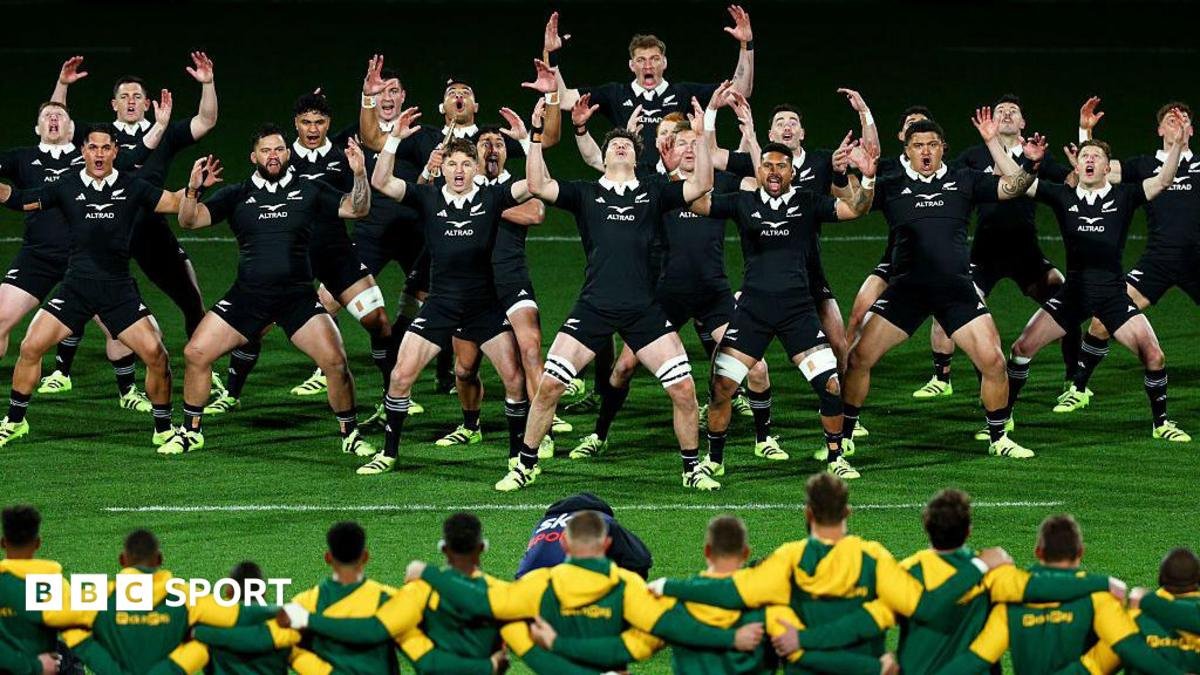
One point.
That is what separated South Africa and New Zealand in the 2023 Rugby World Cup final, as the Springboks went back-to-back to become the first nation to win the tournament four times.
Rassie Erasmus’ world champions sit top of the rankings and have also won back-to-back Rugby Championships. They are indisputably the game’s dominant force.
Their predecessors as rugby union’s supreme team were the All Blacks, who won their own back-to-back World Cups, in 2011 and 2015.
The landscape may have changed and their roles may have reversed of late, but they remain the game’s most glamourous and marketable teams.
And now they are poised to begin that most rare of modern phenomenons – a multi-week tour that includes a proper Test series.
This year’s Rugby Championship – the southern hemisphere’s premier international competition – has been cancelled to make room for the All Blacks’ tour of South Africa, leaving Australia and Argentina to arrange their own fixtures.
The first Test is on Saturday, when Dave Rennie – just three Tests into his reign as New Zealand coach – takes his side into the first of three Tests in South Africa as part of what has been dubbed the ‘Greatest Rivalry’ tour.
A fourth game – not part of the official series – will also be played in Baltimore, marking the first Test between the two long-time rivals on American soil.
Within an increasingly competitive sporting landscape, BBC Sport looks at why the tour is happening and what it could mean for the future of international rugby union.

