UFC’s landmark $7.7 billion deal with Paramount is supposed to be a massive boon for the industry.
Indeed, there have been some immediate and concrete positives. Let’s look at a pair of long overdue changes that have occurred in the last seven or so weeks of 2026: the bonuses have finally caught up to inflation, and the Meta APEX now has an expanded crowd section that makes events a bit more lively. These two changes could have been made at any point in the last couple years, but the Paramount deal seemingly lit a fire and made it happen. There are also vague mentions of increased overall athlete pay, but the jury is still out on that case.
Advertisement
Presumably, the influx of funds will also help fund the yuge UFC White House event, which should be quite the spectacle as well.
Unfortunately, there has been a very clear shift in company ethics that the broadcast team has been bold enough to announce up front. UFC commentator Laura Sanko said multiples times at UFC Vegas 113 that the pressure is now heavier than ever for athletes to finish fights. UFC has always skirted the line between entertainment and sport, but we’re already feeling a shift more towards the former.
Both matchmaking and roster management are suffering as a result.
Recall the first two numbered events of the year back in January, UFC 324 and UFC 325 headlined respectively by Justin Gaethje vs. Paddy Pimblett and Alexander Volkanovski vs. Diego Lopes 2. Two title fights in historically great divisions that under no circumstances should have been booked! Neither Gaethje nor Pimblett looked remotely elite or world-class in their sloppy barnburner, yet one of the three Lightweight titles was on the line anyway.
Advertisement
Why are there three titles at Lightweight again?
As for Volkanovski vs. Lopes 2, that was a disrespectful waste of Volkanovski’s remaining time. “The Great” isn’t likely to be around for that much longer, and he could’ve been in the cage opposite an undefeated ace like Movsar Evloev or Lerone Murphy. Instead, he danced circles around Lopes for the second time in 10 months, gaining nothing to his legacy in the process. Clearly, UFC wanted to give an entertaining and known contender like Lopes the shot over the aforementioned decision-heavy fighters, but their ambitions backfired with a lukewarm main event that felt repetitive and pointless.
Title fights that don’t feel like matchups between the best in the world are bad for business in the long term.
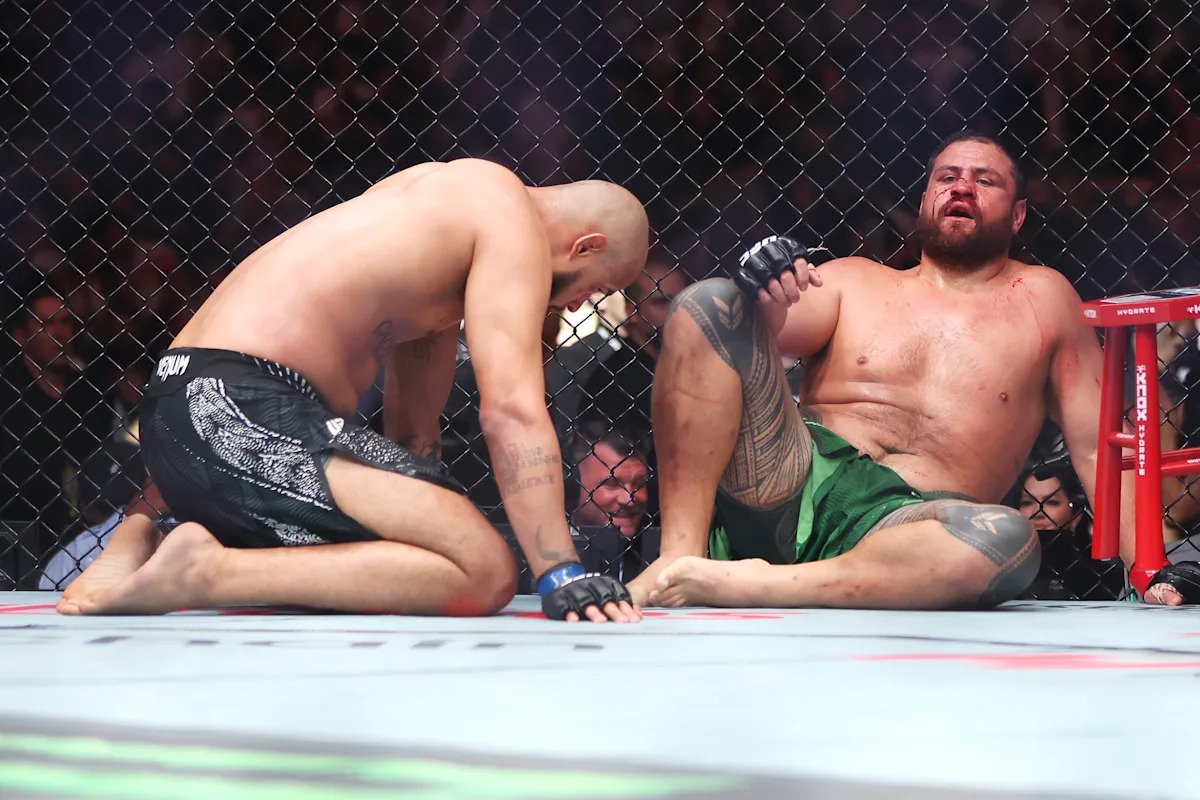
The roster management is becoming outright criminal. I fully comprehend that Jailton Almeida has put on some terrible fights lately — I wrote an entire article about his struggles here — but how is it reasonable to have him sign a new contract for a short-notice fight then fire him immediately when he loses? We’re talking about a top-ranked contender in the weakest division with an exceptional finish rate. Can we not afford a few stinkers to keep the division somewhat afloat? Meanwhile, UFC 324’s Tai Tuivasa vs. Tallison Teixeira should have taken place in a dive bar, yet it’s on paper a collision of Top 15 Heavyweights in the world’s premier cage fighting venue.
Advertisement
Cutting Javid Basharat is perhaps even more egregious. The elder Basharat does not look the part of a future champion to my eyes, but he holds a positive record in the promotion and has proven himself a skilled Bantamweight. After just seven fights, the 30-year-old has been cast aside for no real reason other than he hasn’t stopped anybody.
Has the promotion given up on letting fighters develop? 30 is not so old. Basharat could serve a valuable purpose testing other prospects, and perhaps he puts the pieces together and develops into something better a couple years down the line. One of the best parts of being a fight fan over a sport is boxing is watching the rare moments when a Charles Oliveira or Robbie Lawler suddenly click and become the best fighter in the world after previously racking up double digit losses.
If you cut ever moderately talented but not obviously great UFC fighter, there’s no chance of a late-career resurgence. How many uneventful decisions did Jorge Masvidal lose before he become a major star, BMF champion, and two-time title challenger? Those millions of pay-per-view (PPV) buys do not happen if you cut Masvidal after the Al Iaquinta split-decision.
UFC’s shift further towards entertainment feels like a direct result of Paramount’s influence, as the broadcasting company is motivated to recoup that $7.7 billion investment. Seemingly, the path to doing so is to raise the monthly cost, slap ads on every possible surface, and favor spectacle over sport at every opportunity. The first seven weeks of 2026 have felt tremendously short-sighted, lots of immediate payoff at the cost of longterm divisional harm.
Advertisement
I am reminded of every time some mega corporation buys the local restaurant chain. Before too long, your favorite sandwich is $4 more but has a fraction of the filling and comes on stale bread baked two days prior. The first quarter profit margins are great, and then the regulars stop showing up for lunch.
It’s a shame nobody watches PFL, because they’re in position to capitalize on UFC’s mismanagement.

