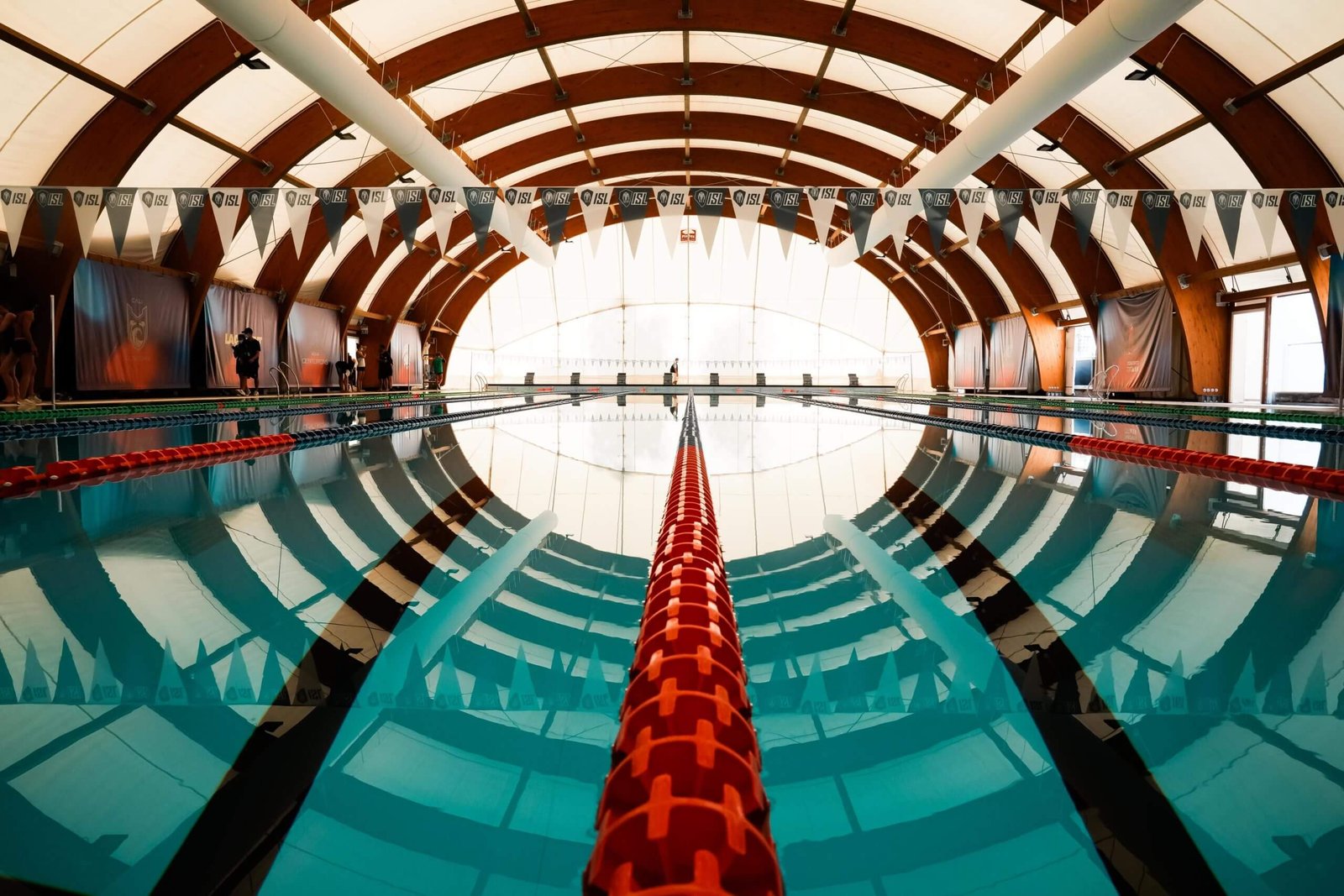
Fear. One simple word, yet one of the most complex and personal emotions we experience. It shows up in obvious ways: Fear of snakes, fear of heights. But for athletes, it often runs much deeper. Fear of failure. Fear of judgment. Fear of what comes after the so-called failure, when the results are posted and the lane lines disappear.
Fear is more common than many people realize, even among the most mentally tough athletes. It does not discriminate by level, age, or experience. Olympians feel it. College athletes feel it. Age-group swimmers feel it before a big meet, before a championship final, or before stepping onto the blocks knowing expectations are high. Fear can creep in quietly, disguising itself as pressure, nerves, or the desire to be perfect. And while fear is often viewed as something to eliminate or suppress, it is far more productive to understand it. When unpacked, fear can be transformed into a powerful and motivating force in the water rather than something that holds an athlete back.
At its core, fear of failure is rarely about the failure itself. More often, it stems from a fear of letting other people down. Teammates who count on you. Coaches who spend years on the pool deck guiding, correcting, and believing in you. Parents and loved ones who rearrange their lives around early mornings, long weekends, and countless miles driven to and from practice. The list goes on. For many athletes, the weight of these sacrifices becomes intertwined with performance, making it feel as though a single race carries the responsibility of repaying everyone who helped get them there.
I remember touching the wall in my final race and being flooded with emotion, not because of the time on the scoreboard, but because I felt I had not lived up to the sacrifices others made for me. In that moment, fear transformed into guilt and self-doubt. I replayed the race in my head, wondering if I had wasted opportunities, training sessions, or the faith others had placed in me. It was not the loss itself that hurt the most. It was the belief that I had somehow disappointed the people who mattered most.
This experience is far from unique. Many athletes internalize the idea that their value is tied to results, and when those results fall short, fear rushes in to fill the gap. Fear of being seen as a failure. Fear of losing identity. Fear of what happens next when the sport that once defined you no longer feels like a safe place. Over time, this feeling can become paralyzing, turning competition into something to survive rather than something to embrace.
But fear does not have to be the enemy. When acknowledged and understood, it can serve as valuable information. Fear often highlights what we care about most. It reveals commitment, passion, and the desire to do something meaningful. The key is learning to separate fear from self-worth. A race result does not negate years of effort, growth, or the relationships built along the way. Coaches do not invest in athletes solely for medals. Parents do not show up at 5 a.m. for times on a results sheet. Teammates do not support each other only when everything goes perfectly. They invest in the person, not just the performance.
Reframing fear allows athletes to shift their focus from outcome to process. Instead of asking, “What if I fail?” the question becomes, “What can I control in this moment?” Preparation, effort, mindset, and resilience are all within reach, regardless of the final time. When it is approached with curiosity rather than avoidance, it loses its power to dictate behavior. It becomes a signal to lean in, to compete fully, and to trust the work that has been done.
Ultimately, fear is not a sign of weakness. It is a sign that the stakes matter. The goal is not to eliminate fear, but to coexist with it, to understand where it comes from, and to use it as fuel rather than friction. When athletes learn to redefine failure and detach their identity from outcomes, fear no longer controls the narrative. Instead, it becomes part of the journey, one that shapes stronger, more self-aware competitors both in and out of the water.

