The Hall of Fame Index was first published in 201o. It had been in the works for nearly a decade at that point. The whole point was to establish a systematic way of looking at Hall of Fame candidates and those already in the Hall of Fame. At its best, it measures fitness for the Hall of Fame and aims to put players into groups with other similar players so we can compare them.
The sequel was published in 2020. It obviously updated numbers for players that were currently active, but also adjusted the formula as we got more information. One of the key things in statistical analysis is that we are always learning something new. The formula is similar to JAWS, but has a couple of key differences. First, it combines baseball-reference.com WAR and Fangraphs.com WAR into one number. I do that for two main reasons. First and foremost, the more data the better in most instances. It gives us a cross-section of what keen sabermetric minds feel about a player.
Advertisement
The second reason is that there is always an intellectual divide on these things. The old formulas included win shares, but since Bill James retired, there is no longer an update on current win shares, so that one has been dropped from the formula. Like JAWS, the index includes a peak value element. However, the peak value is made up of ten seasons. I have gotten push back on this and the push back is perfectly reasonable. I chose ten years because you need to play at least ten years to get into the Hall of Fame and ten years gives you slightly more data than the seven years that JAWS brings.
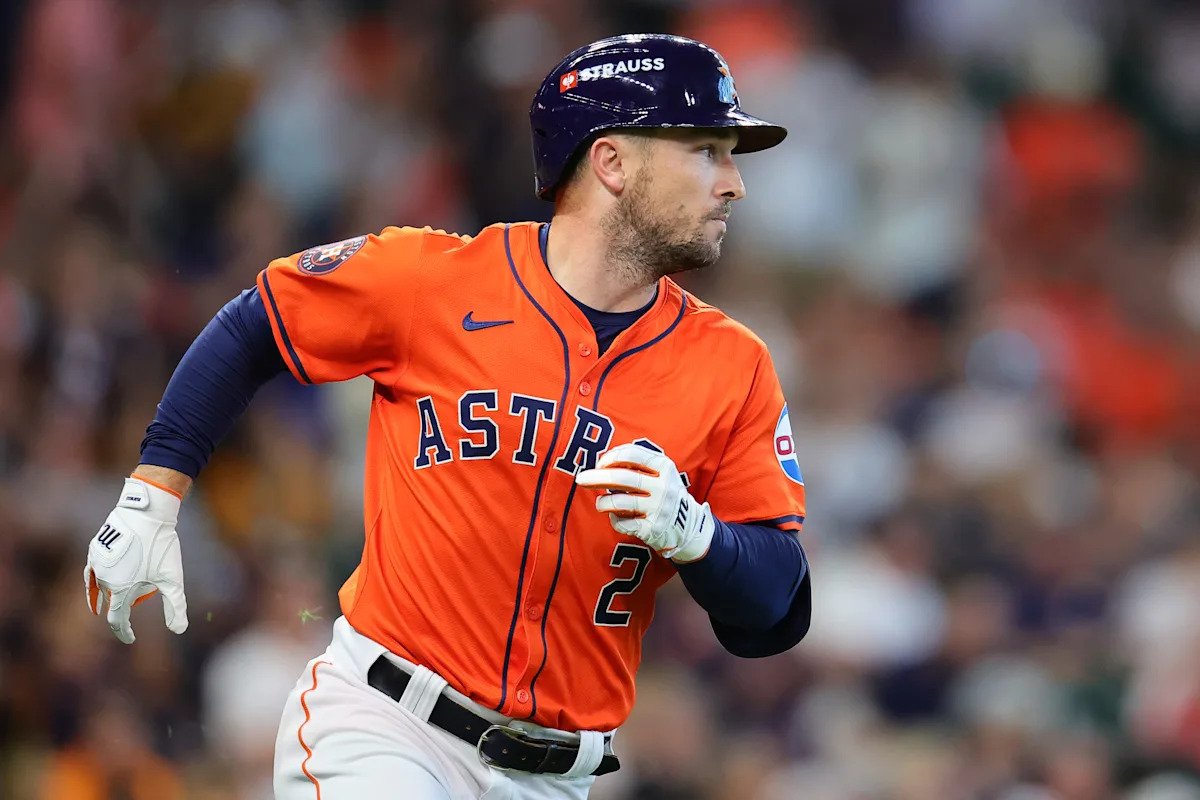
That is important distinction because I do not profile any players until they have been in the league for at least ten seasons. So, as we compare Alex Bregman to his contemporaries, there are five third baseman that make the list. I will not speak for Jay Jaffe (the creator of JAWS) but the index was never meant to rank order players. It was meant to place players into groups with other similar players so that we can directly compare them using other means. I have done this before with Bregman, but since we are at the midway point of the 2026 season, it is a good time to revisit it.
|
BWAR |
FWAR |
BWAR10 |
FWAR10 |
Index |
|
|
60.1 |
59.9 |
54.8 |
55.9 |
230.7 |
|
|
61.3 |
57.6 |
52.9 |
49.5 |
221.3 |
|
|
59.2 |
52.5 |
53.0 |
48.5 |
211.0 |
|
|
Alex Bregman |
45.1 |
49.5 |
44.1 |
43.2 |
176.9 |
|
44.5 |
36.3 |
44.5 |
36.3 |
161.6 |
It’s at this point where I feel the need to reiterate the idea that the index was not meant to rank order players. I would argue that Ramirez is better because he is still trending up where Machado seems to be spinning his wheels, but the numbers by themselves do not prove he is better. They show he is slightly more fit for Cooperstown and that is an important distinction. It is the other tests that will show who is actually better.
As for Bregman, these scores are meant to peg him historically so that we can talk about his career in the proper context. Ironically, he is most similar to another well-known third baseman that finished his career with the Cubs. Ron Cey finished with a higher career value than Bregman, but Bregman is still going. When the dust settles they will probably sit right next to each other and almost look like the same player.
Advertisement
I should point out that Chapman is officially in his tenth season, so anything he does for the remainder of the year will be added to the career and peak value categories. So, he is also close to Bregman in terms of value. If you read the Altuve article, you know we will look at offensive numbers, fielding numbers, MVP voting, and playoff numbers to give us an idea of who might belong and who might not.
Offensive Numbers
|
OPS+ |
rOBA |
Rbaser |
ROV |
OW% |
|
|
Jose Ramirez |
130 |
.369 |
49 |
.327 |
.658 |
|
Manny Machado |
122 |
.353 |
1 |
.291 |
.574 |
|
Nolan Arenado |
118 |
.362 |
-3 |
.295 |
.606 |
|
Alex Bregman |
130 |
.363 |
-5 |
.308 |
.631 |
|
Matt Chapman |
118 |
.340 |
7 |
.290 |
.558 |
I really invite you to read the Altuve article from Monday for a help with the statistical breakdowns. To put it in simple terms, rOBA can be compared to on base percentage and ROV can be compared to batting average. They both include both on base and slugging elements, but in terms of what is good or not good, they are fairly easy to interpret that way. Even without the explanation, we can clearly see that these guys are all fairly similar for the most part.
In a historical context this makes things challenging. How many Hall of Famers should an era have at any one position? If you are the fifth best third baseman from an era are you really a Hall of Famer? That’s a nuanced and difficult question to answer. Each period has strong positions and weak positions. We saw that second base is relatively shallow at the moment. We will see on Friday that shortstop is similar to third base in terms of depth. So far, none of these guys is really distinguishing themselves as above the rest. Ramirez comes closest in some categories, but we will need to look at fielding first.
Advertisement
Fielding Numbers
|
Rfield |
DRS |
OAA |
FRV |
|
|
Jose Ramirez |
34 |
36 |
57 |
43 |
|
Manny Machado |
93 |
93 |
25 |
23 |
|
Nolan Arenado |
172 |
172 |
113 |
94 |
|
Alex Bregman |
34 |
36 |
57 |
43 |
|
Matt Chapman |
121 |
121 |
71 |
64 |
Perceptive people will notice one thing immediately: Rfield and DRS are basically the same. It’s because they are the same. Why do we include both? BWAR officially bases the fielding part of the formula on Rfield. If you go to Fangraphs, you will see defensive runs saved (DRS), outs above average (OAA), and fielding run value (FRV). Those two numbers are usually lower because they are more recent and have some seasons missing, but also because they are compiled differently. FWAR is built using OAA and FRV and not DRS.
I’ve made no bones about the fact that I refuse to take sides in the debate over which metric is best. All three are designed by people far smarter than me. What we can see in a general sense is that all of these guys are considered to be at least above average with the glove. Arenado and Chapman are clearly head and shoulders above the other three.
Arenado is likely in the finishing stages of his career, so his defensive value will be fairly fixed. Chapman is still close to the prime of his career, so he still could add some value on the back end. Similarly, Ramirez is also closer to his prime, so he could add some value there as well. As an analyst, I would stay these numbers tend to put Arenado’s career in a much different light.
Advertisement
MVP Voting
|
Voting |
BWAR |
Diff |
Top |
|
|
Jose Ramirez |
37 |
29 |
8 |
1 |
|
Manny Machado |
26 |
26 |
0 |
0 |
|
Nolan Arenado |
26 |
33 |
-7 |
1 |
|
Alex Bregman |
12 |
15 |
-3 |
0 |
|
Matt Chapman |
7 |
15 |
-8 |
0 |
The MVP points test is important for two reasons. First, it is a different way of expressing peak value. It answers the question of whether a player was ever the best player in the league. According to BWAR, Bregman and Arenado led the league once in BWAR. Neither won an MVP. That spills us into the second reason why this test is valuable. It shows us the difference between how a player was perceived and how he actually performed. Four of the five third basemen here were under-appreciated.
The points are weighted more heavily the higher in the MVP standings you finish. Baseball-reference also does us a solid by enumerating how many times a player finished in the top ten in BWAR. In his landmark book “Whatever Happened to the Hall of Fame,” Bill James asks a series of questions. Usually it starts with how often you are the best player on your team? How often were you the best player at your position? Were you ever the best player in the league?
Answering no to any of those questions is not an automatic no. For instance, Tony Perez was never the best player on those Big Red Machine Reds teams, but fans and analysts alike would agree they aren’t who they were without him. However, an answer of yes in Bregman and Arenado’s case is a feather in their cap. It is another check mark on a spreadsheet of questions you ask if someone is trying to get into the Hall of Fame.
Advertisement
Postseason Numbers
|
PA |
SLASH |
HR |
Runs |
RBI |
SB |
|
|
Jose Ramirez |
190 |
.234/.316/.365 |
4 |
17 |
19 |
2 |
|
Manny Machado |
218 |
.209/.259/.423 |
12 |
23 |
27 |
1 |
|
Nolan Arenado |
35 |
.152/.143/.242 |
1 |
3 |
3 |
0 |
|
Alex Bregman |
447 |
.239/.349/.442 |
19 |
63 |
55 |
3 |
|
Matt Chapman |
26 |
.273/.346/.318 |
0 |
0 |
1 |
0 |
The spreadsheet motif fits here. I have a hard time taking anyone knocking Arenado based on 35 plate appearances seriously. He does not check the postseason success box. Chapman doesn’t either even those his numbers are not awful. Postseason performance is a function of opportunity and we could say Bregman has made the most of his opportunity. At least we could say he has done more with his opportunity than any of these players did.
Postseason success is a tiebreaker. If you aren’t sure where to go on a player then the success in the playoffs can push him over the top. Bregman is not a borderline Hall of Famer yet. He could be depending on what he does for the next few seasons in Chicago. If he finds his way into the neighborhood where Ramirez, Machado, and Arenado are swimming then his postseason numbers will help considerably.
Alex Bregman is closest to Matt Williams and Larry Gardner historically. Who is Larry Gardner you ask? If you have to ask then that tells you Bregman is not quite there yet. He will likely be close to the likes of Toby Harrah and Josh Donaldson at the end of the season. That’s good, but not quite good enough. If he throws a few more three or four win seasons on the board then we can start talking. Like everything else, it will all depend on how he ages.

