Punching down is never the right move. Win the battles you’re supposed to win, yes, but respect every opponent, no matter how small. Unless, that is, they’re poor and hail from a weak-ass conference. Then, hell with ‘em.
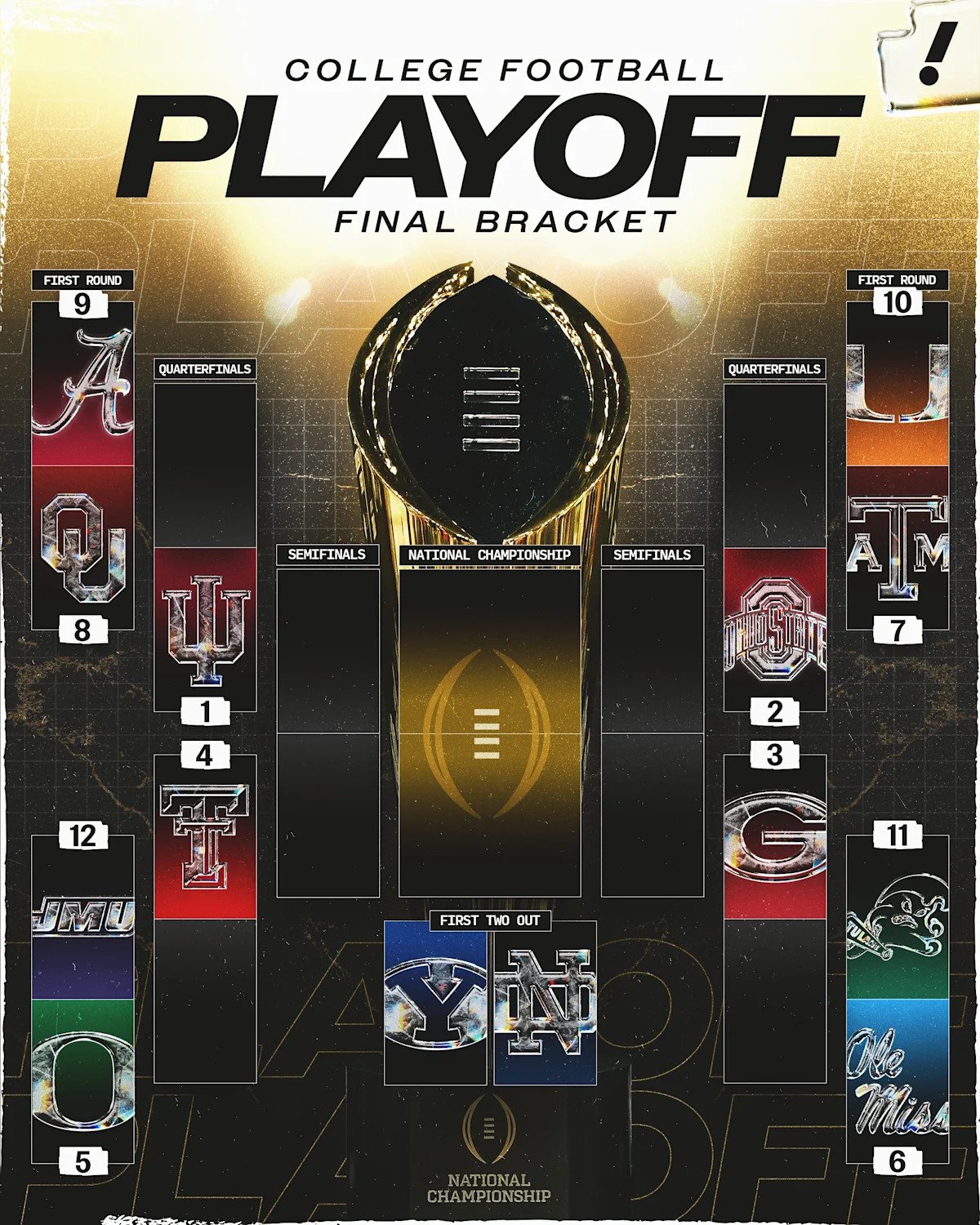
In the wake of the CFP bracket revelation that saw two Group of Five schools, Tulane and James Madison, make the field while bluebloods like Notre Dame and Texas missed the cut, there’s a whole lot of punching down going on … starting with the ESPN broadcast teams tasked with analyzing the bracket.
Advertisement
“No one, no one in America aside from JMU or Tulane thinks that JMU or Tulane can win a championship this year,” ESPN’s Booger McFarland shortly after the bracket announcement. “Like, that’s the matter of fact. But they’re in it because we had to include them based on the parameters we were given, and I think that’s going to rub a lot of people the wrong way.”
You know what’s going to rub a lot more people the wrong way? Excluding Group of 5 schools because they don’t belong to the Cool Kids’ Clubs of the SEC and Big Ten, or don’t spend the GDPs of European nations on their roster, or didn’t have the good fortune to align with the right conference 70 years ago. (For the record, there are other nobody-believes-in-them stories in the playoff. No one in America outside Tuscaloosa thinks this Alabama team can win a championship this year, but that’s another story.)
And hey, speaking of Alabama … guess who else piled onto the two G5s in the playoff?
“You’re going to have two teams in the playoff, no disrespect to the Group of Five, that are nowhere near ranked as highly as some other teams that are much better than them,” former Alabama coach Nick Saban said. “We can learn something from this that will help us come up with a little better criteria of trying to make sure we get the best 12 teams in the playoff.”
Advertisement
You know how you get the best 12 teams in the playoff? Make the field 16 teams, which is exactly what Saban’s College GameDay colleague Kirk Herbstreit is advocating.
“It’d be great if we had 16 teams,” Herbstreit told Pat McAfee earlier this week. “Maybe that’s the next answer, to get this thing up to 16 teams.”
(Yahoo Sports)
Guess what the next answer is to that? Twenty teams! Or 24! Or 36! Hell, let’s just do a full 64-team bracket, run the football season all the way to Memorial Day! (Conveniently enough for Saban, Herbstreit and McFarland, take a wild guess which network will be broadcasting the CFP — and any expanded-field games — through the 2031-32 season.)
Advertisement
All due respect to Saban and his seven national championships, and Herbstreit and McFarland’s indisputably successful careers … but these are analysts talking, not fans. Their view is from the club level, not the bleachers. Fans want to feel connected to the game they see on the field, and that only happens when the possibility exists that their team — provided they’re not a fan of one of the eight or so elites — has the opportunity to reach the big stage. It’s why the NCAA tournament is so popular; for one game, at least, the opportunity is equal.
The maddening aspect of ESPN’s line of criticism isn’t really that there are only 12 teams in the playoff … it’s that they’re the wrong 12 teams. “We’re trying to include (G5) teams to make them a part of this, when I think everyone knows that, yeah, they’re good, but can they play with the big boys on a year-in and year-out (basis)?” McFarland wondered. “I don’t know if that’s the case, and I think that’s what’s going to rub Notre Dame, Texas and Vanderbilt because they could absolutely get hot and win it this season.”
You know when a good time for Notre Dame, Texas and Vanderbilt to get hot would’ve been? When they were losing their games to Miami, Florida or Alabama, just to pick three of their combined seven losses on the season.
Yes, in all likelihood, Tulane and James Madison will get blown out on Dec. 20. They opened as 16.5-point and 21.5-point underdogs to Ole Miss and Oregon, respectively. That seems bad!
Advertisement
However, consider this: in the opening round of the CFP last year, a team from the mighty SEC — Tennessee — lost by 25 points to Ohio State. That same day, the ACC championship runner-up — SMU — got absolutely skull-dragged by Penn State, losing by four full touchdowns. Blowouts happen across the sport at every level, regardless of the pedigree of the losing team.
College football’s Powers That Be want to keep the club exclusive, but wild chaos-bringers keep crashing the party. Two years ago, if you’d suggested that Indiana and Vanderbilt were on the verge of becoming national powers, you’d have been laughed right off the internet. Four months ago, if you’d said that Penn State, Texas, Notre Dame and Clemson would all miss the playoffs, you’d have been accused of clickbait hot takes. And yet … here we are. And the sport is better for it.
I know, I know, this is a plea for honoring the wide-open spirit of college football rather than kneeling at the exclusive-club altar of greed. In every single instance, when tradition meets profit motive, money wins by six touchdowns.
But college football was built on the promise of the impossible. From then-unknown Alabama winning the Rose Bowl in 1926, to Appalachian State knocking off Michigan in 2007, to Indiana becoming the No. 1 team in the country in 2025, this is a sport that burns brightest when it belly-flops into glorious chaos. If you want grim, exclusive professionalism, there’s always Sunday football waiting for you.
Advertisement
The CFP has already choked the life out of so many of college football’s longstanding traditions. Regular-season losses are survivable, even irrelevant. The bowl system — love it or hate it — is effectively dead in the water. Saturday’s Big Ten championship was the least heralded No. 1 vs. No. 2 game in the game’s history. The sport’s kingmakers are doing all they can to orient the game around the playoffs, protect the biggest brands and keep the scrappy underdogs in their place.
When the CFP kicks off next week, the vast majority of America will be rooting against Alabama for obvious reasons. But for the sport’s livelihood, you might want to save a couple cheers for Tulane and James Madison, too. They, and what they represent, are what’s keeping this most American of sports weird and unpredictable. The way it ought to be.

