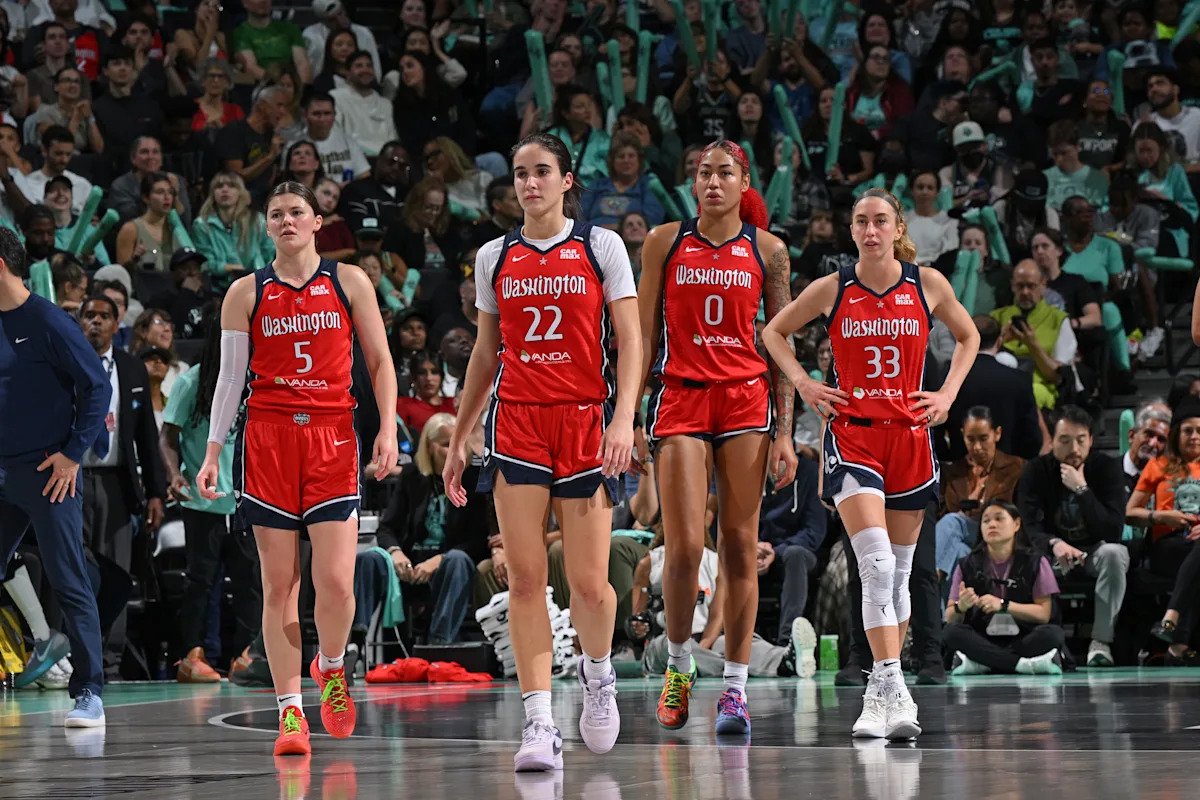
Yesterday, the WNBA and the WNBPA players’ union announced that they have reached terms for a seven-year Collective Bargaining Agreement from 2026 to 2032. After protracted negotiations and rumors of a possible work stoppage, cooler heads prevailed at the end of the day.
Here are some of the highlights.
Advertisement
Revenue sharing, salary cap, and salaries
-
$7 million cap per team in 2026, and could be as high as $11 million in 2032.
-
WNBA players will get a share of the revenue and their share will go up as the league’s revenue goes up. Exact terms aren’t clear, but let’s say the players will probably get more than 15 percent of gross revenue, but less than the roughly 25-30 percent they once bargained for.
-
The minimum salary is $270,000 to $300,000 per year. This is higher than a supermax salary last year.
-
The maximum salary is $1.4 million in 2026 and could go up to $2.4 million or so.
-
Players on rookie scale contracts in 2025 (ex. Washington Mystics guard Sonia Citron and forward Kiki Iriafen) will have their salaries adjusted to the new rookie scale. This means they will make over $300K. For reference, the first pick of the 2026 WNBA Draft will make $500,000 this season.
-
The salary cap remains hard, but it’s a bit softer than in the past. Exceptions will be made for players with season-ending injuries and pregnancy.
-
The core player designation will remain. However, WNBA players with seven or more years of experience cannot be cored.
-
Pregnant players have a no-trade clause provision. This means that they have to give consent to a trade should one occur.
-
WNBA players continue to get bonuses for winning awards or for winning the championship, among other things. WNBA champions now get $60,000 each, but that amount will now go up in future seasons, depending on how the WNBA’s revenue goes up as well.
-
The average salary will be $583,000 in 2026.
Roster size
-
All WNBA teams must have 12 active players, eliminating the 11 player minimum/12 player maximum loophole teams exploited for nearly a decade.
-
All WNBA teams can sign two more players on developmental contracts. These players are not playing games but will train with the team and get first dibs to play on the main team when injuries happen.
-
In short: WNBA teams now have 14 players each for 2026, including the developmental ones.
League standardization of player benefits
-
Travel is on charter only.
-
The WNBA will provide housing in 2026-28 to all active players (the 12 players) or give stipends. In 2029 and 2030, the WNBA will only give housing to those making $500,000 or less.
-
Players on developmental contracts get league housing.
-
Bonuses are given to league veterans and retirees depending on time of service.
-
There is a bullet point about players getting “expanded first-class travel accommodations.” This probably refers to the kinds of hotels players stay in while on road trips, not just the All-Star Game, etc.
Let us know what you think about these benefits in the comments below.

