EAGAN, Minn. — What are the Minnesota Vikings doing?
Are they bargain-hunting after two years of spending wildly in free agency? Does their relatively quiet offseason represent a course correction helmed by a loyal longtime employee?
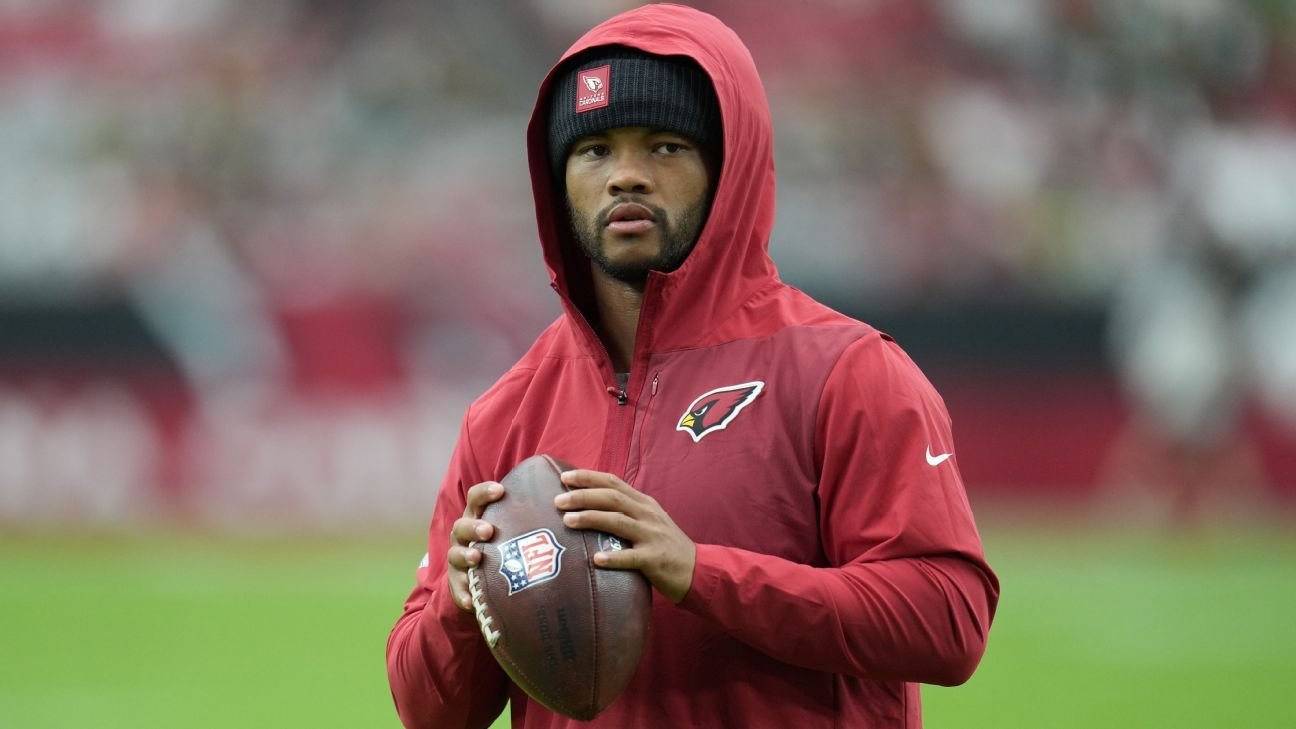
Or are the Vikings pushing for a playoff berth, as they have always done under the Wilf family ownership, even when an aggressive teardown might make more sense? Do they really think that quarterback Kyler Murray, signed as a free agent for $1.3 million, can elevate the team enough to get them there?
To all of those asymmetrical possibilities, the objective answer is “yes” — no matter how unsatisfying that answer might be.
During the first week of free agency, when almost all of the costly contracts are signed, the Vikings committed the NFL’s third-lowest amount of cash, according to Over the Cap. Their biggest deal was to retain linebacker Eric Wilson, who will be paid a total of $8.25 million in 2026, three of their other five transactions were for special teams players.
They’ve parted ways with four starters, although they have not given up hope that safety Harrison Smith will return to play for another season, and convinced another two — running back Aaron Jones Sr. and tight end T.J. Hockenson — to take pay cuts. They have also entertained the idea of trading linebacker Jonathan Greenard rather than give him a raise.
Even with Murray’s arrival, and his presumptive elevation over 2025 starter J.J. McCarthy, it has been the Vikings’ least active spring in recent memory. The last time they signed only one new starter during the opening round of free agency was 2020 (defensive tackle Michael Pierce).
The Vikings were roughly $43 million over the NFL’s $301.2 million salary cap at the end of last season, making for a “challenging year navigating our finances and our cap” this spring, said executive vice president of football operations Rob Brzezinski, who is serving as interim general manager following the firing of Kwesi Adofo-Mensah.
After talking to sources inside and outside the organization, the best way to think of the Vikings’ current approach is an aggressive right-sizing of their roster finances. The Wilfs did not order a lower cash payroll this season, multiple sources confirmed. The NFL is not structured for teams to have indefinite annual spending at the rate the Vikings have in recent years, and essentially the Vikings decided that 2026 was the time to eat their vegetables.
“We had a plan that we devised together,” Brzezinski said, “and I’m just really proud of the way everybody worked together, identifying some targets that we were able to reach agreements with. There’s others we weren’t, but I think I’m really most proud of the patience. … Really grateful also for [Hockenson and Jones] reworking their contracts to find a middle ground. These were two players and two people that are really important to our football team and to [coach Kevin O’Connell] in our locker room.
“So I feel like we’ve navigated responsibly the future versus being competitive this year. And I feel like we’re in a really good spot, but like we keep saying, there’s a long way to go.”
The cash spending of NFL teams can fluctuate over and under the league salary cap in any given year. If a team spends over the cap, it can account for the additional space in two ways: applying previous cap surpluses and/or pushing the remaining reconciliation into future years. Brzezinski made a point last month of noting that the Vikings spent more than $100 million in cash over cap in in 2024 and 2025. Over that period, they signed a total of 24 unrestricted free agents from other teams during the month of March. That bill has now come due.
At the moment, the Vikings have roughly $260 million in cash commitments for 2026. Over the Cap calculates their cash-to-cap ratio at 0.85, the third lowest in the league, but projects them to be roughly $67 million over the cap in 2027.
Brzezinski said last month that he envisioned the Vikings as a franchise that looks to “draft and develop and to retain our core, and supplement in free agency.” That served as a reminder that teams don’t just use cap space on free agency, but also — and often more importantly — on signing their existing players to contract extensions. Right tackle Brian O’Neill, receiver Jordan Addison are among the upcoming deals the Vikings have budgeted for. It’s also worth noting that Brzezinski described the Vikings’ 2026 roster build as being “barely out of the gate here,” implying there are other ways than free agency to make substantive roster improvements.
So it’s wrong to say the Vikings are looking for ways to save the Wilfs money, but they also haven’t taken every step imaginable to optimize their 2026 team. Adofo-Mensah once called that approach a “competitive rebuild,” a phrase he later regretted using but retains a level of accuracy today.
What are the Vikings doing? They’re planning a run at the playoffs while resuscitating their financial outlook and adjusting, for at least one year, a quarterback plan that went awry.

