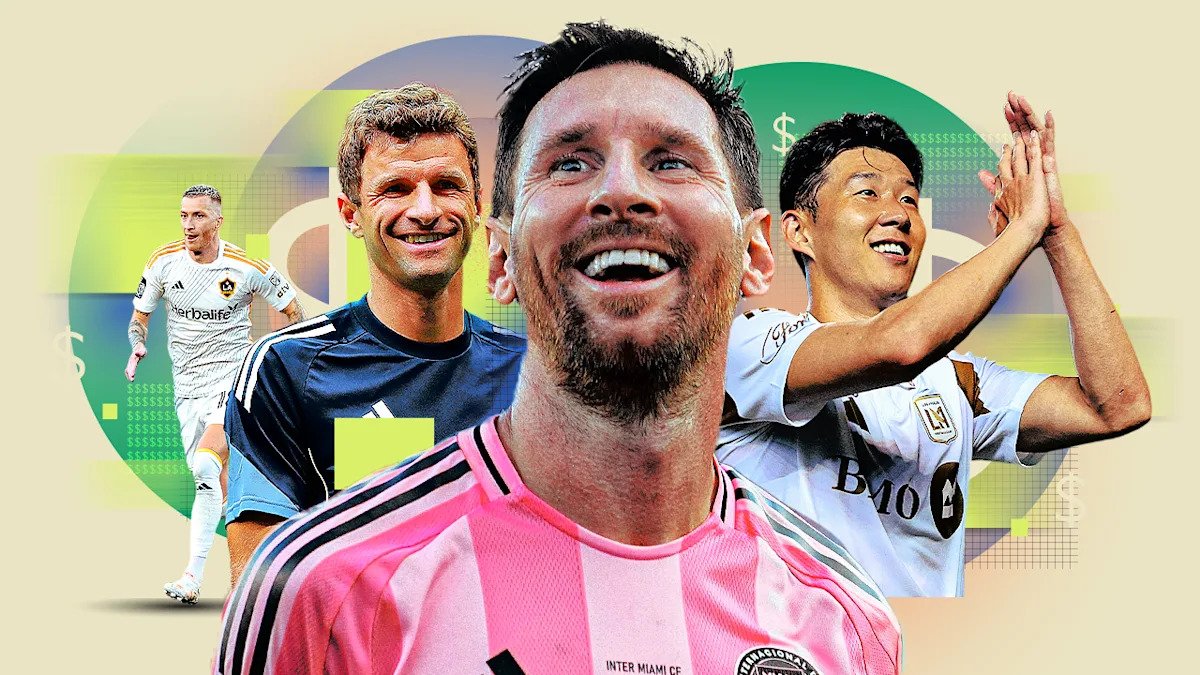
The MLS season kicks off next week with Inter Miami versus Los Angeles FC at the 77,500-seat Memorial Coliseum. LAFC moved the game to accommodate demand for a matchup between the league’s two biggest stars, Lionel Messi and Son Heung-Min. Apple should also bank a massive streaming audience for the first MLS game between Messi and Son.
Miami-LAFC and the game’s star talents are what MLS founders dreamed of when the league launched in 1996 on the back of the first U.S.-hosted World Cup. Now, with another World Cup headed to North America, the league is poised for transformational change, with a flipped calendar to match those of other global leagues.
Advertisement
More from Sportico.com
Yet, MLS is also grappling with how to manage a growing divide between the league’s haves and have-nots regarding team revenue and player spending, as well as a group of owners who want revamped roster rules to spend more on players. Messi and Son are MLS’ two highest-paid players, while their teams have the league’s highest revenue, by far.
Over the last month, Sportico spoke with more than 60 people inside and outside of MLS, including owners, team executives, bankers, investors and media experts, to gauge the business of the league. The bifurcation of team revenue and valuations was a consistent theme, with a trio of macro changes coming between the flipped calendar, an earlier Apple deal expiration and potentially new MLS leadership.
The average MLS team is worth $767 million, by Sportico’s count, up 6% from last year. The gains are largely concentrated at the top of the financial table, fueled by investor interest and new facilities in the pipeline.
Advertisement
Inter Miami ranks first at $1.45 billion, up a league-high 22% and ahead of LAFC, which led Sportico’s first four MLS valuations. LAFC is close behind at $1.4 billion, up 9%. The bottom 12 clubs inched up only 2% on average, and a trio of teams—the San Jose Earthquakes, Vancouver Whitecaps and CF Montréal—fell in value.
The 30 teams are collectively worth $23 billion, including real estate and team-related businesses held by owners, such as NWSL clubs in four markets. Our valuation estimates are based on control sales, versus limited partnership deals.
The average club rose 39% from Sportico’s first MLS valuations in 2021, while the least-valuable club is up only 13% during that time. For comparison, the NHL “get-in” price is up 217%, with the NBA (199%) close behind and the NFL (159%) in third, off a higher base. MLB’s entry price is up just 16%, as the league most impacted by the cratering regional sports network model.
Team Economics
Last season, the 30 MLS teams generated an estimated $2.5 billion, or $83 million per club, from game days, sponsorships and non-MLS events at venues they own or operate (player trading revenue is excluded). Regular-season attendance fell 5% to 11 million, including declines in 19 markets, but overall ticket revenue rose, thanks to higher prices and strong premium sales. Sponsorship revenue increased more than 10%.
Advertisement
The $2.5 billion figure includes an MLS distribution from league media deals, sponsorships, shared gate receipts and the league-owned Soccer United Marketing (SUM). In reality, teams don’t receive an annual check from MLS. Its single-entity structure means most player contracts are “owned” and paid by the league. The costs of players and league operations exceed central revenue, requiring teams to fund those expenses via an annual assessment.
San Diego FC thrived in its first year since Egyptian billionaire Mohamed Mansour agreed to pay a $500 million expansion fee. The club finished first in the Western Conference, with a record 63 points for an expansion team, before losing to Vancouver in the conference finals. Attendance ranked fourth in MLS, and Sportico values the team at $765 million, No. 10 in MLS.
“It’s been a great investment for us,” Mansour said in a video interview. “San Diego is a soccer city, and it was yearning for a professional team to come in after the Chargers left.”
Mansour owns clubs in Denmark and Egypt, as well as Right to Dream, a network of youth academies on three different continents. Mansour said he was attracted to MLS because of the size of the American market, in addition to Mexico and Canada, and the potential player pool that an academy in San Diego can draw from.
Advertisement
Miami’s local revenues topped $200 million, split roughly evenly between matchday and commercial, as Messi delivered the franchise’s first MLS Cup. The tally includes a $21.05 million payout from competing in the FIFA Club World Cup last summer—LAFC ($10.55 million) and the Seattle Sounders ($9.55 million) also qualified for the competition and earned prize money
Inter Miami continues to be a financial juggernaut, and a record seven teams—including San Diego—cracked $100 million in revenue, up from four in 2024, but a handful of clubs, including Vancouver, Montreal and Colorado, had local revenue in the $35 million to $40 million range.
Every sports league faces financial disparity among teams, but it is more pronounced in MLS because of the lack of national media revenue to prop up teams at the bottom of the financial table. The result: Inter Miami ($1.45 billion) is worth 3.4 times more than Montreal ($430 million). The gap is 2.8 in the NBA and 2.3 in the NFL. Five years ago, the MLS valuation gap was 2x, and fit more closely with the league’s desire for parity via its salary cap.
MLS’ original 10-year Apple deal, signed in 2022—it was revised in November—was worth $250 million a year on average, but teams were on the hook for production costs, resulting in a recent net of around $5 million per club. Among the five biggest North American sports leagues, the NHL has the second-lowest media revenue, but its teams are on track to receive an average of $40 million per club after the latest NHL TV deal with Rogers Communications.
Advertisement
The value of the cheapest NBA and NFL teams has soared, thanks to the big guaranteed yearly check coming from the league office.
Team Sales
Last year, the Miller family, which previously owned the NBA’s Utah Jazz, purchased Real Salt Lake and NWSL team Utah Royals for a combined $580 million, including $150 million in debt. It had been three years since a controlling stake in an MLS club was sold—RSL was the previous MLS team to sell in 2021.
The deal valued RSL at $480 million and the Royals at $100 million, according to three people familiar with the transaction who were granted anonymity because the details were private.
Advertisement
The RSL deal marked an MLS record before Sporting Kansas City minority owner Peter Mallouk reached an agreement last month to take control of the club at an enterprise value of roughly $700 million in a deal that has closed, according to someone familiar with the details.
There have also been a series of LP transactions over the past 12 months that provide a window into MLS franchise valuations. Austin FC added a handful of new investors at a valuation of $912 million. Last year, Minnesota United sold roughly 10% of the club to local investors at an enterprise value of around $650 million.
A pair of MLS teams are currently in search of a new control owner. In December 2024, the Vancouver Whitecaps hired Goldman Sachs to sell the team. Months later, John Fisher retained Moelis & Co. to sell the San Jose Earthquakes. Neither process has been robust, with both clubs requiring significant investments in facilities on top of the purchase prices.
“We had like more than 30, almost 40 groups who signed an NDA and went into our data room and did a full analysis on our situation,” Whitecaps CEO Axel Schuster said last month during a press conference. “Not one single one is interested in buying even 1% of this club, because all of them think that our setup here, the market and the situation we are in is not something where you can invest.”
Advertisement
Sportico values San Jose at No. 23 and $585 million, down 3%, and Vancouver at No. 29 and $450 million, down 4%.
The Seattle Sounders are also in the market seeking outside investors for the first time since the club joined MLS in 2009. In October, the team retained Moelis to explore a “strategic capital raise,” and the team is expected to generate significant interest as a top-tier MLS club.
Four years ago, MLS revenue multiples were tops among the five biggest North American sports leagues at an average of 12 times revenue, versus 7.8 in the NBA, 6.4 in MLB and 6.2 in the NFL, as World Cup hype and a pending TV deal fueled gains. MLS multiples have returned to earth at 9.2 on average and now trail the NBA and NFL.

What’s Next
MLS will be well represented at the 2026 World Cup, with the sixth-most players by league, behind only the Big Five European leagues. MLS needs to capitalize on the opportunity by converting more sports fans into domestic soccer fans, and the league tapped its clubs to fund a major marketing campaign during the World Cup.
Advertisement
The biggest shift ahead for MLS is moving its schedule to match the FIFA calendar, with a season that runs from late summer through May, with a winter break. The new setup starts in the summer of 2027 after a “sprint” campaign in the spring. MLS says the current schedule footprint will 91% overlap with the current February-December one, but it gets the league’s biggest games—the MLS Cup playoffs—away from the two-headed hydra of college and pro football that sucks up most of the mindshare and viewership among sports fans in the fall.
The May playoffs should help the next media deal, set for 2029 after MLS and Apple amended their partnership to end three-and-a-half years earlier. MLS will be paid $200 million for its 2026 season, $107.5 million for the shortened 2027 season, and $275 million each for the 2027-28 and 2028-29 seasons, as Sportico previously reported. The revised Apple deal also removes the need for an MLS Season Pass subscription. The league and teams are optimistic for higher viewership without a “double paywall,” which could also help boost sponsorship dollars.
The calendar flip triggers multiple business opportunities for clubs. Some teams expect to generate an additional $10 million-plus from non-MLS events, with the summer opened for concerts and other events. It also improves transfer opportunities. The previous MLS calendar was hard for clubs to sell top players on in the busier summer window while competing for a playoff spot. Last year, MLS said it spent $336 million on transfers, up 75% versus 2024, led by Son at $26.5 million.
The new calendar does pose challenges for northern clubs, from increased costs and fan bases exposed to more cold-weather games. “It wasn’t my preference,” said Minnesota United owner Bill McGuire, who remains skeptical of the transfer opportunity. “There’s a good story that you’ll have access to more players, maybe better players if you’re in the primary transfer widow like everybody else. But we don’t know that that will be the case, that you will be able to sell your players if you’re into that more easily.”
Advertisement
Several small and mid-size MLS markets have built thriving local businesses, including Austin, Cincinnati and Columbus. One of MLS’ biggest challenges was getting its large market clubs outside of Los Angeles up to par, but that tide is turning.
In Chicago, owner Joe Mansueto committed last year to privately finance an $750 million soccer-specific stadium to open for the 2028 season. It should more than double club revenue. The Fire had the second-biggest valuation gain this year, up 20% to $690 million and up six spots to No. 16 overall.
New York City FC ranked fifth at $1.12 billion, up 12%, as it readies its new $780 million venue set to open in Queens ahead of the 2027-28 season. The team already sold out its eight Pitchside Lounges and has leased roughly half of its more traditional suites. Annual local revenue should approach $200 million when Etihad Park opens.
For MLS, Inter Miami will remain the league’s biggest story in 2026. Lionel Messi re-signed through 2028, and the team will open its new 25,000-seat stadium, the first step in an eventual $1 billion, 131-acre mixed-use development. The club already has more than $900 in contractually obligated income tied to the stadium.
Advertisement
Inter Miami does not have the media revenue of NBA or NFL teams, but it is targeting a venue naming-rights contract that approaches top deals in those leagues. Miami’s revenue should hit $250 million in 2025, with only a sliver of that from MLS. For context, only half of NFL teams and about eight NBA teams will generate more than that from gameday and commercial revenue this year.
Best of Sportico.com
Sign up for Sportico’s Newsletter. For the latest news, follow us on Facebook, Twitter, and Instagram.

